
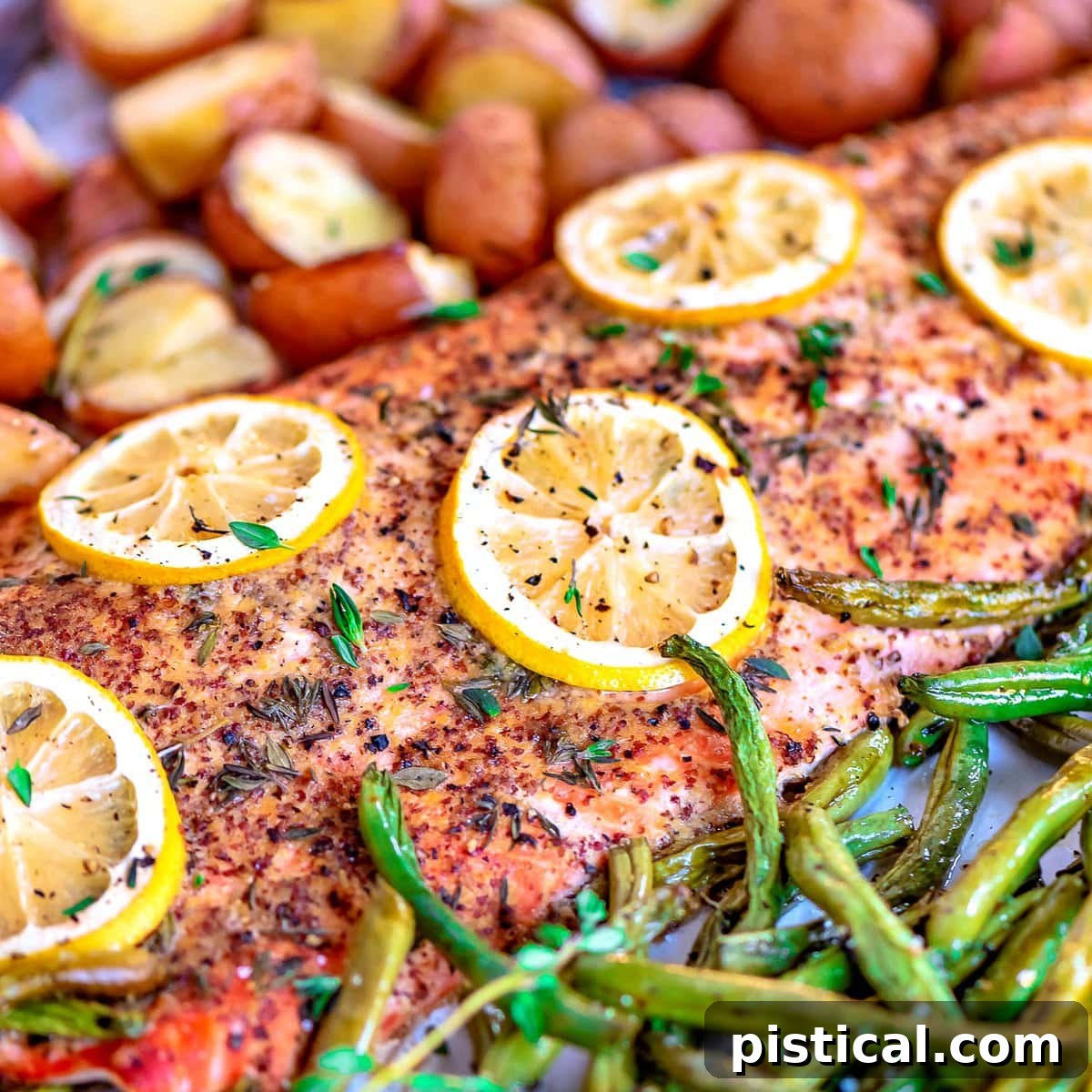
This easy Baked Salmon recipe is a true game-changer for busy weeknights, delivering a healthy and incredibly flavorful meal that comes together in under 30 minutes. Featuring fresh salmon fillets glazed with a simple yet irresistible honey dijon sauce, then baked to flaky perfection, this dish is a testament to how quick cooking can still be gourmet. It’s perfect for anyone seeking a delicious, wholesome dinner without spending hours in the kitchen.
Looking for more fast and fabulous dinner ideas? Try our easy Chicken Stir Fry, the 20-Minute Skillet Monterey Chicken, or our famous One Pot Zuppa Toscana!
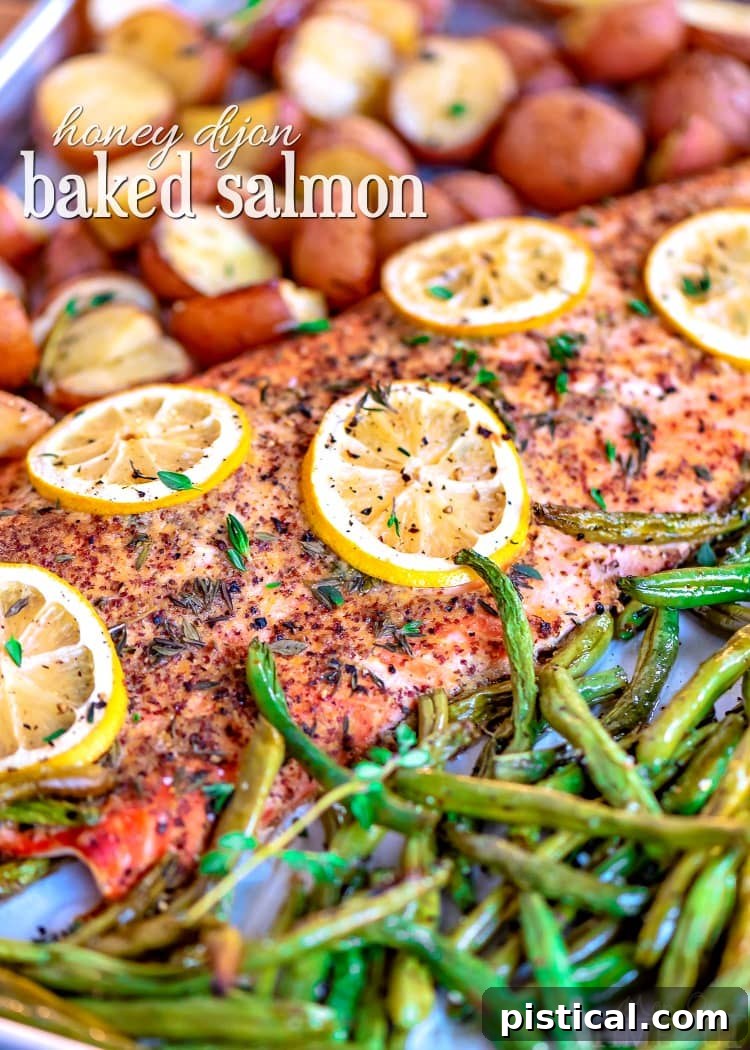
Effortless Baked Salmon for a Healthy Home
Hello, and welcome back to quick and wholesome cooking! After the indulgence of the holidays, I always find myself craving meals that are both nourishing and easy to prepare. This baked salmon recipe perfectly fits the bill. It’s a dish my family absolutely adores, and for good reason!
I’m incredibly fortunate that my children genuinely love salmon. They frequently ask for it, and I’m always thrilled to oblige because I know just how beneficial it is for their growing bodies and for my own well-being. Rich in Omega-3 fatty acids, protein, and essential vitamins, salmon is a nutritional powerhouse.
When it comes to preparing salmon, I don’t believe in getting overly complicated. Life is busy enough, and let’s be honest, you and I both need recipes that deliver big on flavor without demanding excessive time or effort. That’s precisely what this easy oven-baked salmon offers: simplicity meets exquisite taste.
The Secret to Irresistible Oven Baked Salmon: Honey Dijon Glaze
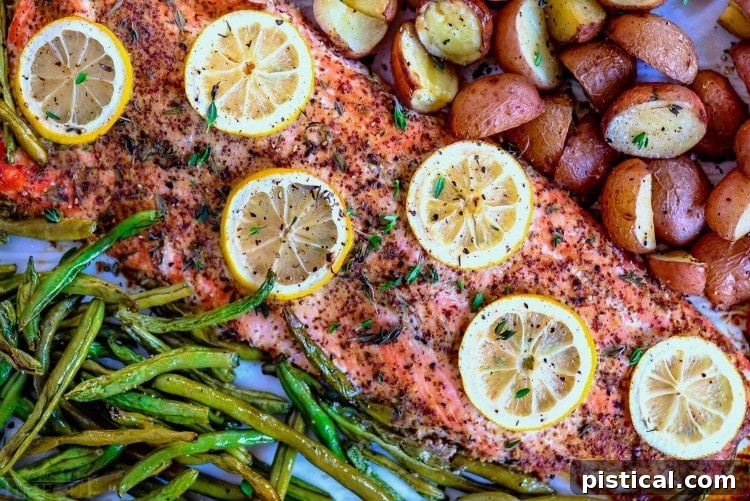
What truly elevates this baked salmon from good to exceptional is its super easy, yet incredibly delicious, honey dijon glaze. This sweet and tangy coating caramelizes beautifully in the oven, creating a golden crust that locks in moisture and adds an incredible depth of flavor. As an added bonus, I often transform this into a convenient sheet pan meal by adding some vibrant vegetables right alongside the salmon.
Easy salmon recipes have become a cherished weekly tradition in our home. It’s a meal everyone eagerly anticipates, and I love that it’s something we can all enjoy together. The beauty of this recipe is its efficiency: dinner can be prepped in less than 5 minutes – often before the oven even finishes preheating. We’re usually sitting down to eat less than 30 minutes later. In my book, that’s a definite win!
Gather Your Ingredients for a Perfect Sheet Pan Meal
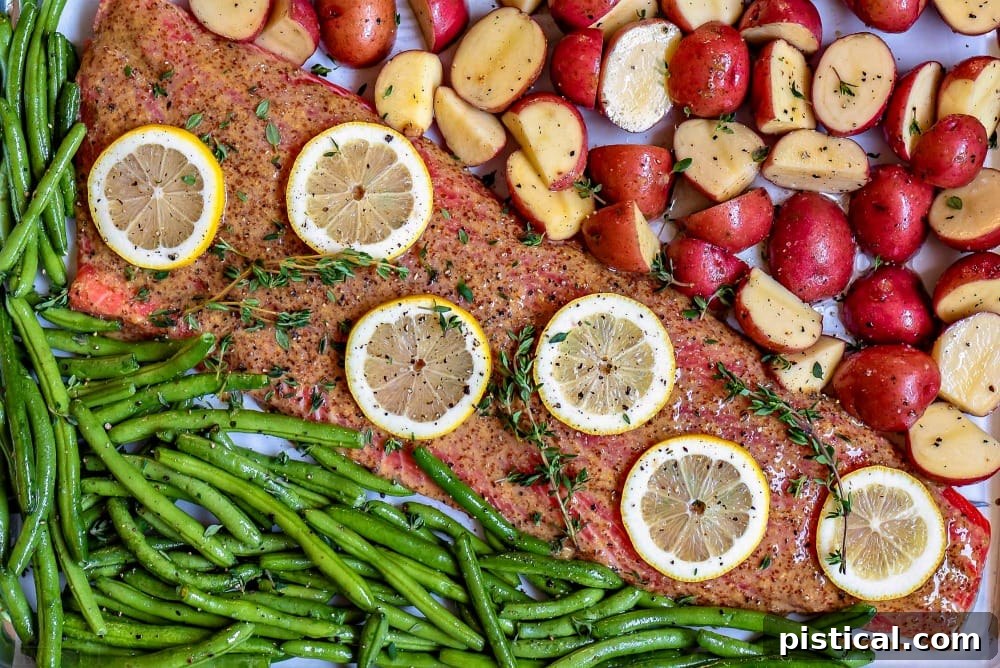
This recipe is designed as a complete sheet pan meal, making cleanup a breeze and ensuring a balanced dinner. If you prefer to bake the salmon on its own, simply omit the green beans, potatoes, and a portion of the olive oil, salt, and pepper. Note that cooking time for salmon alone will be significantly shorter, closer to 15 minutes, depending on the fillet’s size.
- Salmon Fillet: Opt for a skin-on salmon fillet, ideally between 2 to 3 pounds, with pin bones removed. Skin-on helps keep the fish moist and prevents sticking.
- Whole Grain Dijon Mustard: Or country Dijon mustard. This provides a wonderfully tangy and slightly coarse texture to the glaze.
- Honey: A natural sweetener that perfectly balances the sharpness of the Dijon. Maple syrup or agave nectar can be used as alternatives.
- White Wine Vinegar: Or champagne vinegar. Adds a subtle acidity that brightens the entire dish.
- Fresh Thyme Leaves: Adds an aromatic, earthy note that complements both the salmon and vegetables beautifully.
- Kosher Salt: Essential for seasoning both the fish and the vegetables.
- Freshly Ground Black Pepper: For a fresh, pungent kick.
- Lemon: Thinly sliced, these add a vibrant citrus aroma and flavor as the salmon bakes.
- Fresh Green Beans: Trimmed. These delicate vegetables roast quickly and add a pop of color and freshness.
- Baby Potatoes: Halved (red, yellow, white, purple – any variety works). These become wonderfully tender and slightly crispy when roasted.
- Olive Oil: Used to coat the vegetables, ensuring they roast evenly and achieve a delicious golden finish.
Flexibility with Salmon Fillet Sizes
Absolutely, you can use smaller, individual salmon fillets with this recipe! In fact, I frequently purchase individually frozen salmon portions for quick lunches or smaller meals. These fillets typically weigh between four and six ounces each. I’ve used them many times with this exact honey dijon glaze, and they work perfectly. Just remember to allow ample time for them to defrost thoroughly in the refrigerator, preferably overnight, for best results.
Using smaller fillets offers an additional advantage: a reduced cooking time. Because it’s not one large slab of fish, heat penetrates more quickly, meaning you get to enjoy this deliciousness even sooner! You can expect to shave off anywhere from 5 to 10 minutes from the total baking time when using these smaller portions, depending on their exact thickness. This makes it an even faster option for those extra-busy evenings.
Understanding Salmon Variations for Perfect Results
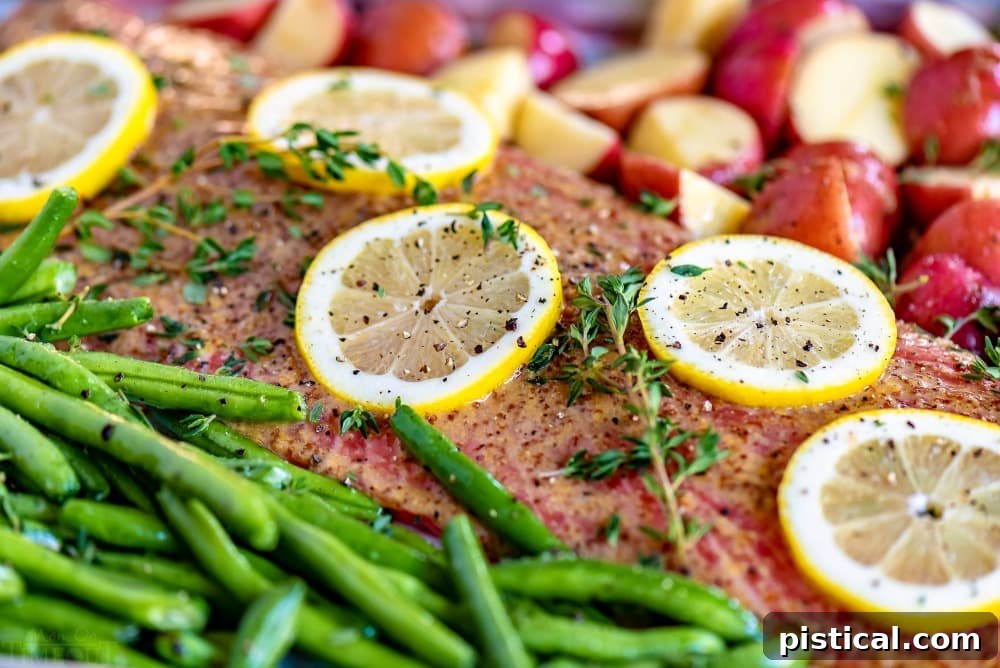
The world of salmon offers wonderful variety, but this also means that cuts, thickness, and fat content can vary significantly. These variations play a crucial role in how salmon cooks. Therefore, it’s essential for you, the home cook, to keep a watchful eye on your salmon to ensure it doesn’t overcook and become dry. Overcooked salmon can quickly lose its delicate texture and flavor.
Once you discover a specific type, size, and shape of salmon fillet that you particularly enjoy and that consistently cooks well for you, try to stick with that choice. This consistency will help you quickly dial in the perfect cooking time for your preferred cut, leading to consistently delicious results every time. Whether it’s a thicker center-cut or a leaner tail portion, knowing your salmon will lead to culinary success.
The Best Way to Cook Salmon: Oven Baking Explained
Baked salmon is, without a doubt, my absolute favorite method for preparing this versatile fish. It’s the trifecta of cooking: Quick, Easy, and Delicious. Here’s how to achieve perfectly baked salmon every time:
-
Prepare Your Baking Sheet: First and foremost, you’ll want to line your baking sheet. Salmon, whether you choose a skin-on or skinless variety, has a tendency to stick, even to a well-greased pan.
Salmon is naturally sticky. I highly recommend lining your baking sheet with parchment paper. This simple step ensures easy, pain-free removal of the salmon, keeping its beautiful presentation intact and making cleanup a breeze.
-
Check for Pin Bones: Secondly, before seasoning, make sure to thoroughly check your salmon fillet for any lingering pin bones. Often, these tiny, sharp bones are removed by your fishmonger, but a quick check is always a good idea:
- Gently run your fingers along the flesh of the salmon, feeling for any small bones protruding.
- If you find any, use a pair of clean kitchen tweezers or small tongs to carefully pull them out in the direction they naturally lie.
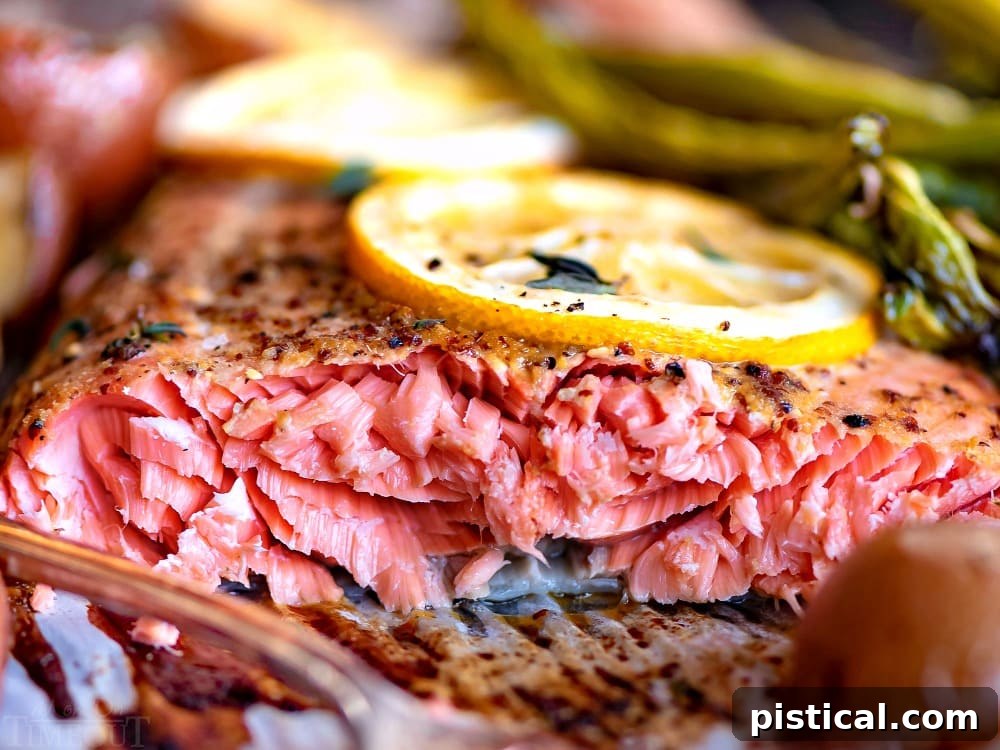
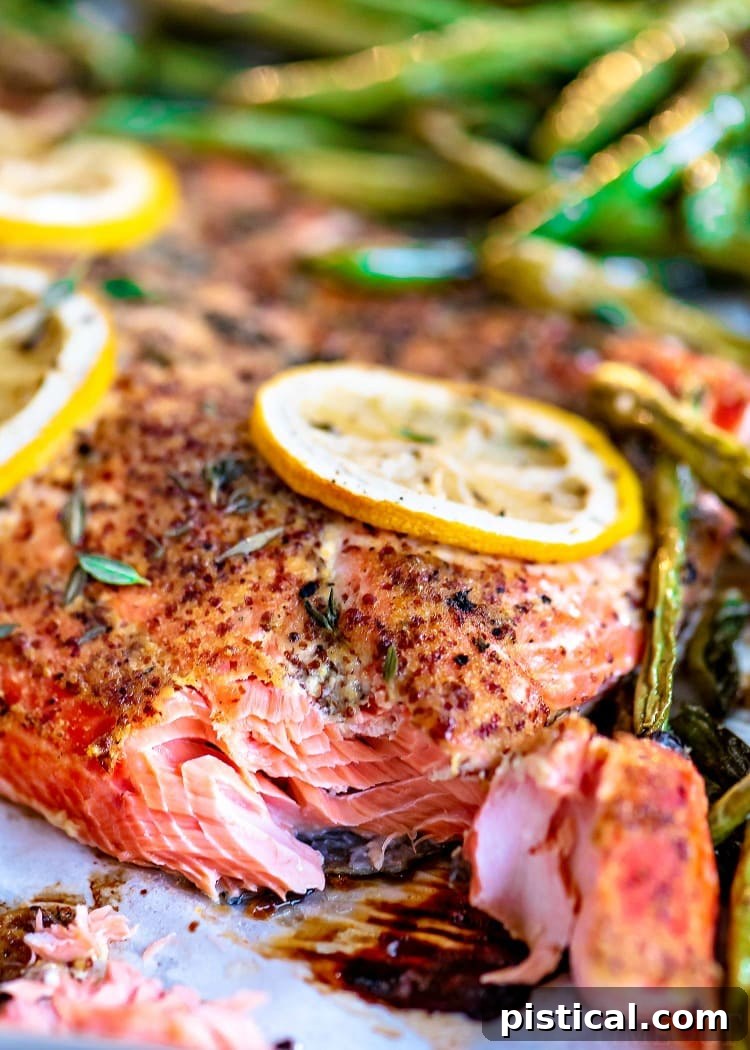
- High Heat for Speedy Cooking: Thirdly, I prefer to cook my salmon at a higher temperature, specifically 450°F (232°C). This high heat method ensures that the salmon cooks quickly and efficiently, preventing it from drying out. You’re aiming for salmon that flakes gently with a fork and is visibly moist and opaque throughout.
Achieving Perfect Doneness: How Long to Bake Salmon
Determining the exact baking time for salmon can vary considerably based on several factors, including the size and thickness of the fillet, as well as the specific type of salmon you are using.
- Consider Salmon Type: Wild salmon, for instance, tends to have a lower fat content compared to farmed salmon. This means wild salmon can overcook and dry out more quickly. If you’re using wild salmon, pay extra attention during cooking and aim for an internal temperature of around 130°F (54°C) for a moist finish.
- Even Thickness is Key: When selecting your salmon, try to find a fillet that has a relatively even thickness throughout. While this can sometimes be challenging to find, the more uniform the thickness, the more evenly your salmon will cook, leading to better results.
-
The Indispensable Meat Thermometer: The most reliable way to ensure your salmon is cooked to perfection without overcooking is by using a meat thermometer. Always insert the thermometer into the thickest part of the salmon fillet to get an accurate reading.
For ideal doneness, cooked salmon should register an internal temperature above 110°F (43°C) and ideally less than 140°F (60°C). If the temperature is below 110°F, the salmon will be undercooked and raw in the center. Conversely, if it exceeds 140°F, the salmon will likely be dry and overcooked, losing its tender texture.
-
General Timing Guidelines:
- For a larger 2 to 3-pound salmon fillet (especially when cooked with vegetables on a sheet pan, as in this recipe), you can expect a baking time of approximately 20 to 26 minutes in a 450°F (232°C) oven.
- For smaller, individual salmon fillets, typically between 4 and 6 ounces each, the cooking time will be reduced to about 12 to 15 minutes in a 450°F (232°C) oven.
Versatile Vegetable Combinations for Your Sheet Pan Salmon
While the green beans and baby potatoes are fantastic with this baked salmon recipe, this dish is incredibly versatile, allowing you to pair it with almost any vegetable you love. Here are some of our favorite variations to inspire your next sheet pan creation:
- Asparagus: A classic pairing with salmon, asparagus spears roast beautifully alongside the fish.
- Bell Pepper Strips: Colorful bell peppers (red, yellow, orange) add sweetness and a lovely crisp-tender texture.
- Broccoli Florets: Roasting broccoli brings out its nutty flavor and gives it a delightful char.
- Cauliflower Florets: Similar to broccoli, roasted cauliflower florets are tender and satisfying.
- Brussels Sprouts: Halved Brussels sprouts become tender on the inside and crispy on the outside when roasted.
- Zucchini or Other Squash: Sliced zucchini, yellow squash, or even butternut squash (cubed, may need a head start) are delicious additions.
Tip: For denser vegetables like butternut squash or carrots, you might want to toss them with olive oil, salt, and pepper and roast them for 10-15 minutes before adding the salmon and other faster-cooking vegetables to the pan, ensuring everything finishes cooking at the same time.
More Delicious Dinner Ideas to Explore
If you’re looking to expand your recipe repertoire, these other family-favorite dinner ideas from Mom On Timeout are sure to please:
- Homemade Mac and Cheese
- The BEST Tater Tot Casserole
- Classic Tuna Casserole
- Flavorful Turkey Meatballs
- Easy Slow Cooker Shrimp Boil
- Simple Stuffed Shells
- The BEST Chicken Marinade Recipe
How To Make This Baked Salmon Recipe

Print Recipe
Pin Recipe
Baked Salmon with Honey Dijon Glaze
This easy Baked Salmon recipe is so simple to prepare and cooks incredibly fast! Fresh salmon is coated with a simple honey dijon glaze and baked to perfection. Enjoy a healthy, delicious meal prepped and cooked in less than 30 minutes!
Dinner
American
baked salmon, baked salmon recipe, salmon, honey dijon salmon, sheet pan salmon
5 minutes
20 minutes
6
477 kcal
Trish – Mom On Timeout
Ingredients
- 2 to 3 pounds skin-on salmon fillet (pin bones removed)
- ½ cup whole grain Dijon mustard (or country Dijon mustard)
- 2 tablespoons honey
- 1 teaspoon white wine vinegar (or champagne vinegar)
- 1 pound baby potatoes (halved – red, yellow, white, purple – any will work)
- 2 tablespoons olive oil (divided)
- 1 ½ teaspoons kosher salt (divided)
- 1 teaspoon freshly ground black pepper (divided)
- 12 ounces fresh green beans (trimmed)
- 1 tablespoon fresh thyme leaves (removed from stems)
- 1 lemon (cut into thin slices)
Instructions
- Preheat your oven to 450°F (232°C). Line a large baking sheet with parchment paper for easy cleanup.
- Carefully place the salmon fillet, skin-side down, onto the prepared parchment-lined baking sheet.
- In a small bowl, whisk together the whole grain Dijon mustard, honey, and white wine vinegar until well combined. This is your delicious glaze.
- Using a pastry brush, evenly brush the honey dijon mixture over the entire top surface of the salmon fillet.
- In a medium bowl, toss the halved baby potatoes with half (1 tablespoon) of the olive oil, half (¾ teaspoon) of the kosher salt, and half (½ teaspoon) of the black pepper. In a separate bowl, toss the trimmed green beans with the remaining olive oil, salt, and pepper.
- Arrange the seasoned green beans on one side of the salmon on the baking sheet, and the seasoned potatoes on the other side. Ensure they are in a single layer for even roasting.
- Place the thin lemon slices directly on top of the salmon. Sprinkle the fresh thyme leaves over the salmon and vegetables. Add additional salt and pepper to taste if desired.
- Bake for 20 to 26 minutes, or until the internal temperature of the salmon reaches your desired doneness (125°F/52°C for medium, 140°F/60°C for fully cooked). If you don’t have a thermometer, the salmon is typically done when the top is no longer shiny and appears opaque, and it flakes easily with a fork.
- Once baked, remove the sheet pan from the oven and let the salmon rest for 5 minutes before serving. This allows the juices to redistribute, ensuring a more tender and flavorful fish.
Video
Watch a video demonstration of this Honey Dijon Baked Salmon recipe to see how easy it is to prepare!
Notes
If your potatoes aren’t quite tender enough after the salmon and green beans are cooked, simply remove the salmon and green beans from the baking sheet and return the potatoes to the oven for an additional 5 minutes, or until they are perfectly cooked through.
Tools Needed
You’ll find these tools helpful for this recipe: Baking Sheet | Parchment Paper | Meat Thermometer | Pastry Brush
Nutrition Information (Approximate per serving)
Calories: 477kcal | Carbohydrates: 25g | Protein: 49g | Fat: 20g | Saturated Fat: 3g | Cholesterol: 125mg | Sodium: 925mg | Potassium: 1585mg | Fiber: 4g | Sugar: 8g | Vitamin A: 552IU | Vitamin C: 25mg | Calcium: 74mg | Iron: 4mg
Frequently Asked Questions About Baked Salmon
- What makes this baked salmon recipe so easy?
- This recipe is designed for simplicity. It involves minimal prep work, a super straightforward glaze made from just three ingredients, and the convenience of a single sheet pan for both the salmon and vegetables. It cooks quickly at a high temperature, meaning less time monitoring the oven and more time enjoying your meal.
- Can I use frozen salmon fillets?
- Yes, absolutely! Frozen salmon fillets work wonderfully. The key is to ensure they are fully thawed before you begin cooking. Transfer them from the freezer to the refrigerator the night before, or use the cold water thawing method if you’re short on time. Once thawed, pat them dry with paper towels to ensure the glaze adheres properly and the salmon cooks evenly.
- What if I don’t like Dijon mustard? Are there alternatives for the glaze?
- While Dijon mustard provides a unique tangy flavor, you could experiment with other glazes. A simple lemon-garlic butter glaze or a teriyaki sauce would also be delicious. For a completely different profile, a sprinkle of fresh herbs (like dill or parsley) with a squeeze of lemon juice after baking is always a winner.
- How do I prevent my salmon from drying out?
- The best way to prevent dry salmon is to use a meat thermometer and cook it to the recommended internal temperature (125-140°F). High heat cooking also helps sear the outside while keeping the inside moist. Additionally, letting the salmon rest for a few minutes after baking allows the juices to redistribute, resulting in a more tender and flavorful fish.
- Can I prepare this recipe ahead of time?
- You can whisk together the honey dijon glaze a day or two in advance and store it in the refrigerator. You can also wash and chop your vegetables ahead of time. However, it’s best to glaze the salmon and combine everything on the sheet pan just before baking for the freshest and best results.
- What side dishes pair well with this baked salmon?
- Since this recipe is a sheet pan meal with potatoes and green beans, it’s already a complete dish! However, if you want to add more, a simple rice pilaf, quinoa, or a light green salad with a vinaigrette dressing would be excellent choices. Crusty bread is also great for soaking up any leftover glaze.