
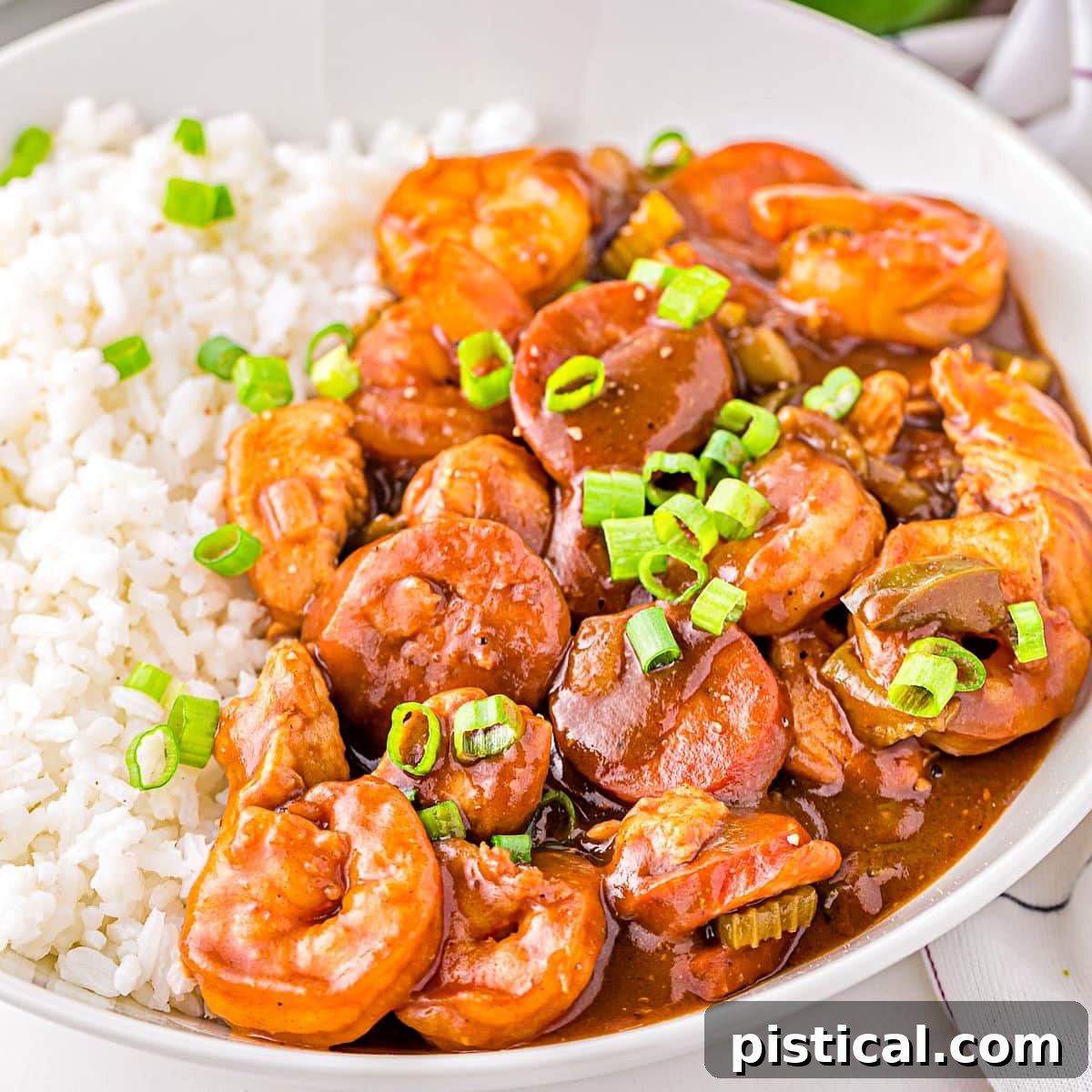
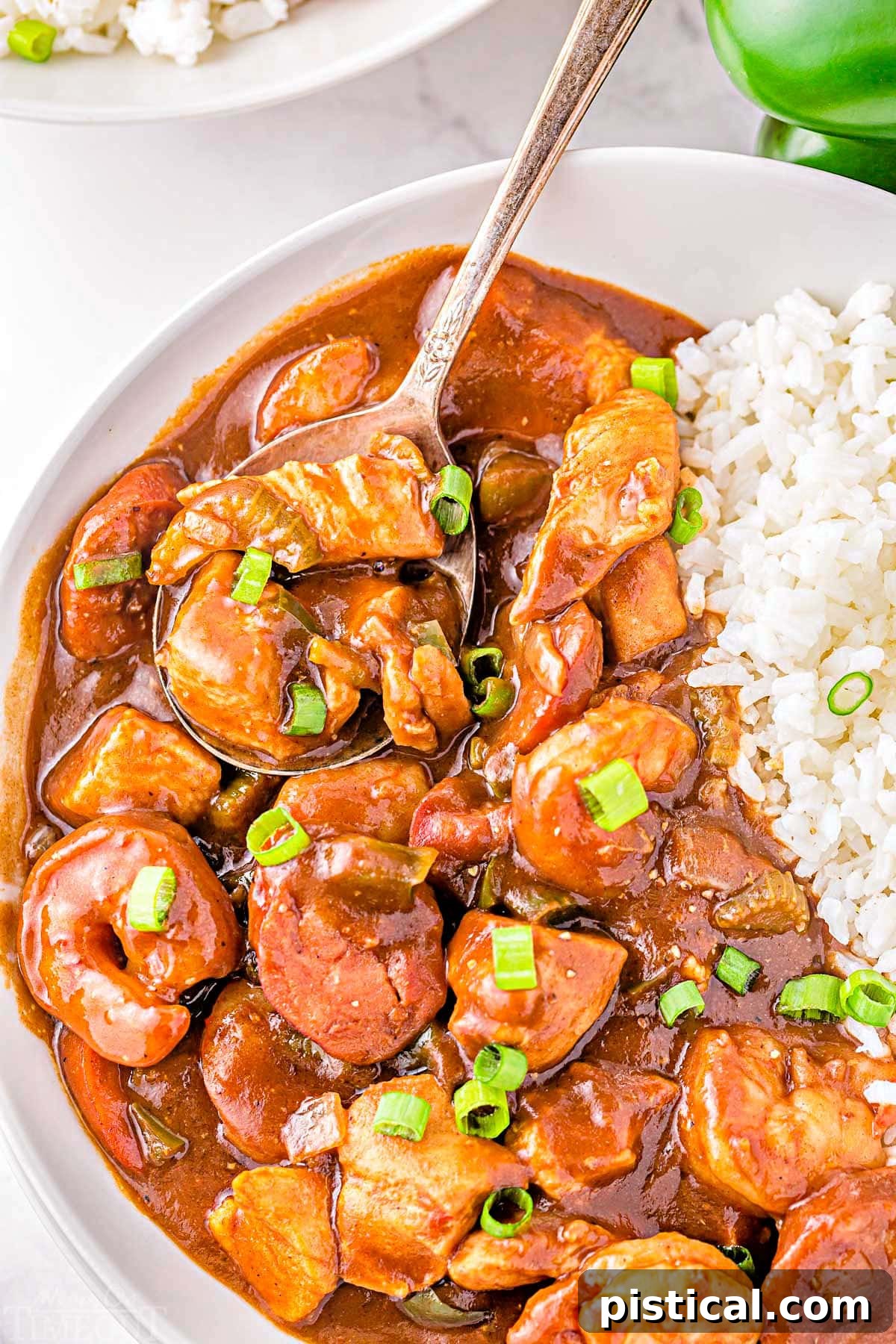
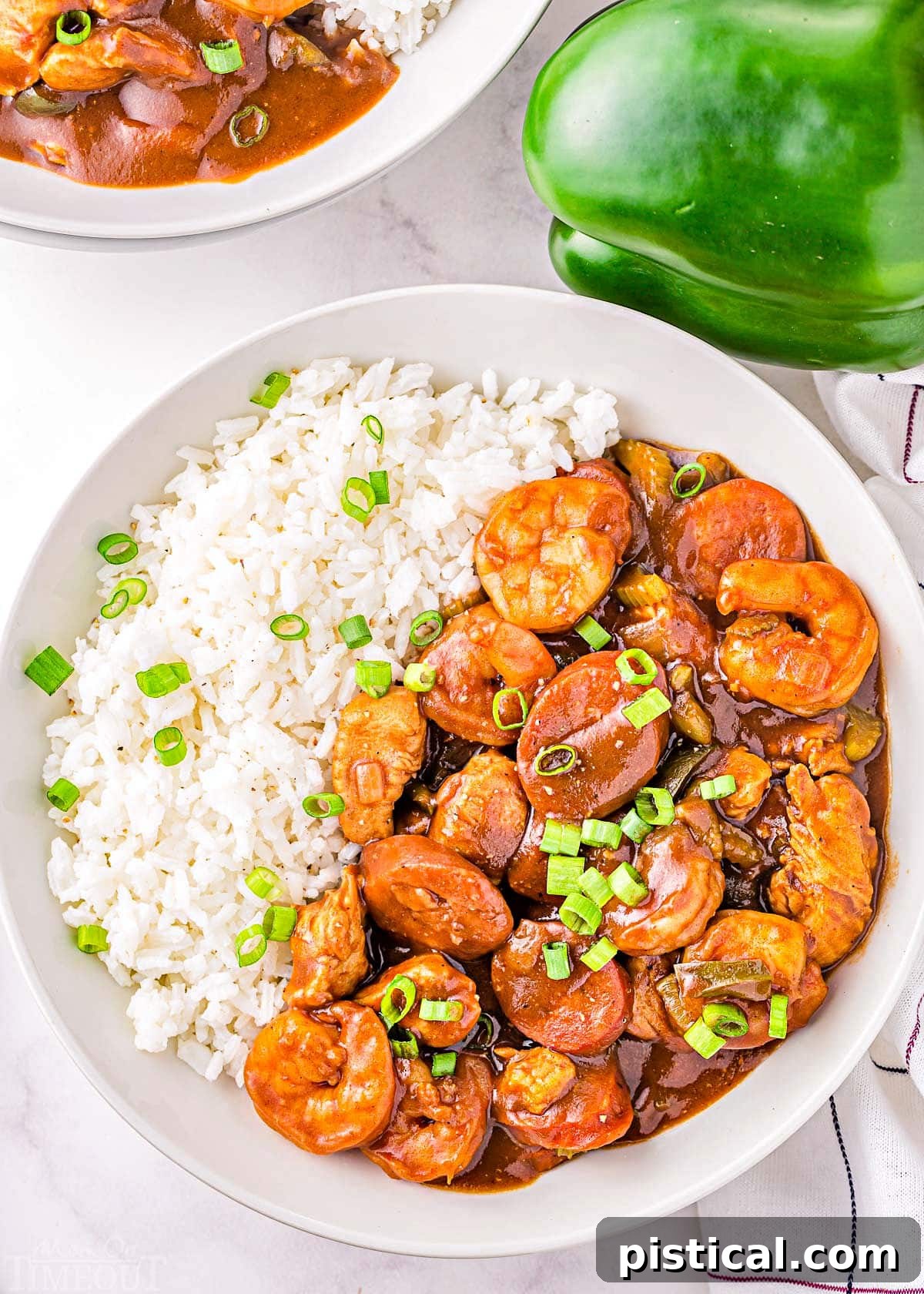
Delve into the heart of Southern culinary tradition with this incredibly flavorful and comforting Gumbo recipe. More than just a meal, Gumbo is a celebration of rich heritage, bold flavors, and soulful cooking, promising satisfaction with every single bite. This classic dish harmoniously blends succulent chicken, savory Andouille sausage, plump shrimp, and an aromatic medley of spices, all simmered to perfection in a deeply flavored roux-based stew. Prepare to embark on a culinary journey to the vibrant South with this amazing Gumbo recipe!
Enhance your Gumbo experience by serving it alongside some cherished Southern accompaniments. Our Homemade Cornbread offers a perfect sweet and savory contrast, or try our acclaimed Biscuit Recipe for a fluffy, buttery side that’s simply irresistible.
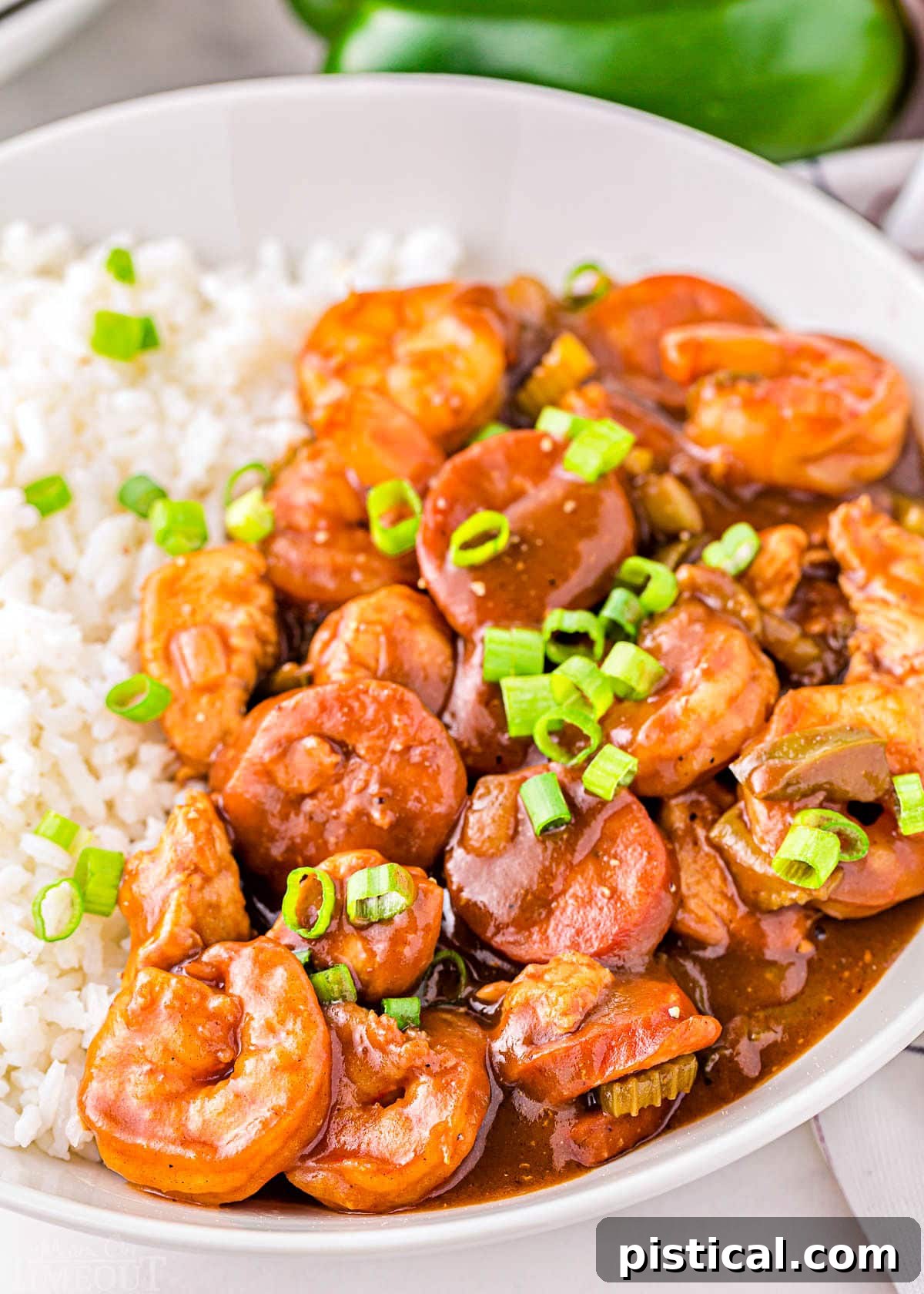
Crafting the Perfect Gumbo: A Deep Dive into Southern Flavor
Achieving the best Gumbo recipe isn’t about complex techniques; it’s about honoring tradition, selecting quality ingredients, embracing patience, and using the right equipment. A heavy-bottomed Dutch oven or pot is indispensable for developing the foundational flavors, especially when creating the crucial roux. The magic of this iconic Southern stew truly begins with a meticulous roux and the aromatic “Holy Trinity” of vegetables, which together build a flavor profile that is both complex and profoundly comforting. Whether you’re making a chicken and sausage gumbo or a rich seafood gumbo, these principles remain paramount for a truly authentic taste experience.
Understanding the Holy Trinity in Cajun and Creole Cooking
Many authentic and delectable Cajun and Creole recipes, including this easy chicken and sausage gumbo, share a common starting point: a base of finely diced onions, bell peppers, and celery. This ubiquitous combination is so fundamental to the region’s cuisine that it’s affectionately known as the “Holy Trinity.” It’s far more than just a mix of vegetables; it’s the aromatic soul of the dish, creating an unparalleled depth of flavor. For the best results, ensure your celery, yellow onion, and green bell pepper are uniformly diced and ready to be sautéed. This trio forms a robust aromatic foundation that is difficult to replicate, so avoid substitutions if you want to capture that genuine Southern taste. The slow cooking of these vegetables in the rendered fats helps to release their natural sugars and deepen their savory notes, preparing the palate for the rich layers of flavor to come in your homemade gumbo.
More Beloved Southern Classics to Savor
Beyond the savory depths of gumbo, the South offers a treasure trove of culinary delights that regularly grace our family table. Here are some favorites:
- Creamy Baked Mac and Cheese
- Classic Homemade Cornbread
- Hearty Sausage Gravy
- Fluffy Southern Biscuits
- Crispy Chicken Fried Steak with Gravy
- Decadent Maple Pecan Pie
- Rich Banana Pudding
- Moist Hummingbird Bundt Cake
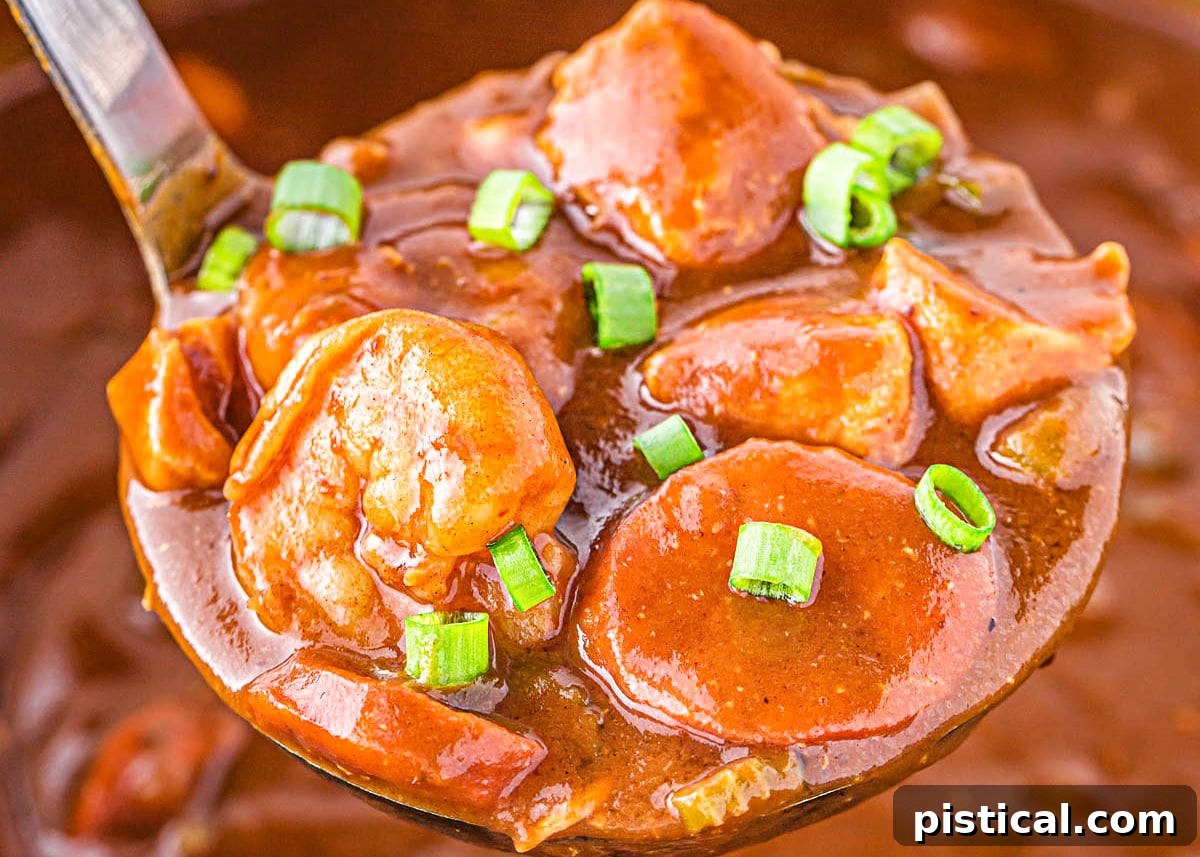
Essential Ingredients for an Authentic Gumbo
Our gumbo recipe is a hearty medley featuring tender chicken, smoky Andouille sausage, and succulent shrimp, all swimming in a deeply spiced broth with plenty of fresh vegetables. Crafting a truly exceptional gumbo starts with understanding the role each ingredient plays in creating its complex flavor profile. *As always, a convenient printable recipe card with exact measurements can be found at the end of this post.* Here’s a closer look at the key components you’ll need:
- Vegetable Oil: The foundation for cooking the chicken and initiating the roux. While vegetable oil is standard, feel free to use other neutral cooking oils like grapeseed or canola. Olive oil can also work, though its flavor might subtly alter the overall taste of your gumbo.
- Chicken Thighs: Boneless and skinless chicken thighs are highly recommended for their rich flavor and tender texture, which stands up well to long simmering. Using them also significantly reduces your prep time. Chicken breasts can be used as a leaner alternative, though they may benefit from slightly shorter cooking times to prevent dryness.
- Butter: Essential for developing the roux, butter adds a luxurious richness. Using unsalted butter gives you more control over the dish’s final salt content; you can adjust and season to taste at the very end.
- All-Purpose Flour: This is the other half of the magic behind the roux, which is crucial for thickening the gumbo and imparting its signature nutty flavor and deep color. It’s what transforms a simple broth into a robust, satisfying stew.
- Celery: As the first pillar of the Holy Trinity, finely diced celery provides a crucial aromatic base and subtle peppery notes. Don’t underestimate its importance!
- Onion: The second component of the Holy Trinity. Yellow onion is traditional, but red, white, or sweet onions can be suitable replacements, each offering a slightly different nuance to the flavor base.
- Bell Pepper: Green bell pepper is the traditional choice for the Holy Trinity, contributing a slightly bitter, earthy flavor that is characteristic of classic gumbo. For a sweeter profile and a pop of color, consider using orange, yellow, or red bell peppers.
- Cajun Seasoning: A blend of spices that provides the signature kick and authentic taste of Louisiana. Any good quality store-bought brand will work, or for a truly customized flavor, try making your own homemade Cajun seasoning.
- Garlic Salt: A convenient way to add both garlic flavor and seasoning. If you don’t have garlic salt on hand, a simple substitute is half garlic powder and half table salt.
- Chicken Broth: The primary liquid base for the gumbo. Opt for low or no-sodium chicken broth to maintain control over the overall saltiness of your dish. For variations, especially in a seafood gumbo recipe, you could experiment with beef or even vegetable broth.
- Andouille Sausage: A quintessential ingredient in many gumbo recipes, Andouille sausage provides a distinctive smoky, spicy, and savory depth. Its firm texture holds up well during simmering. While chorizo sausage can be substituted in a pinch, be aware that it may crumble more easily and offer a slightly different flavor profile.
- Shrimp: Large shrimp, peeled and deveined, are ideal for this recipe. You can leave the tails on for presentation or nip them off for easier eating. The size of the shrimp is flexible; simply adjust cooking times accordingly.
- Green Onions (Scallions): Sliced green onions are a fresh, vibrant garnish that adds a welcome burst of color and a mild oniony zest just before serving, brightening the rich stew.
Pro Tip for Shrimp: While large shrimp are specified, feel free to use any size you have available. The key is to avoid overcooking or undercooking. You’ll know your shrimp are perfectly done when they curl into a “C” shape and turn opaque throughout, typically taking only a few minutes.
Step-by-Step Guide: How to Master This Gumbo Recipe
While the process of making gumbo might seem intricate, it’s actually quite approachable. The most critical step, which demands patience and attention, is the creation of the roux – it truly is the heart of the dish and makes an immense difference in the final flavor. Let’s walk through the steps to create this incredible chicken and sausage gumbo:
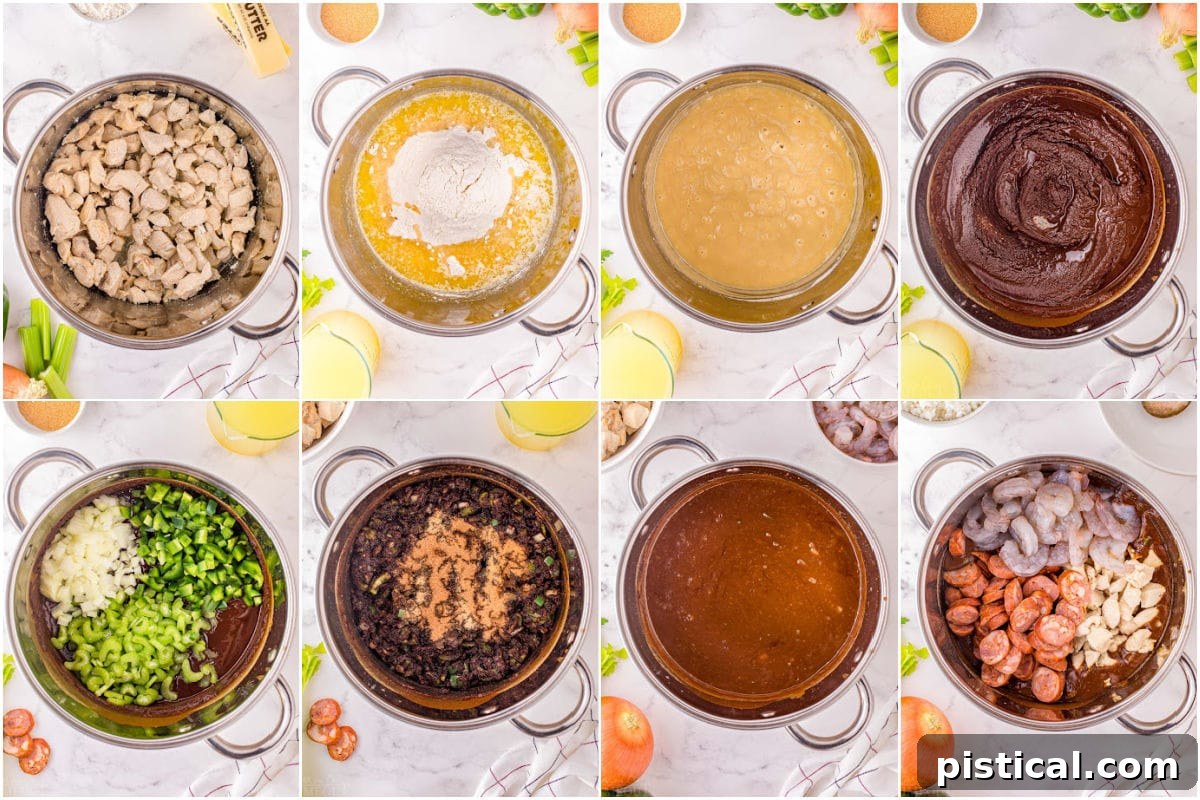
- Prepare the Chicken: Begin by heating the vegetable oil in a large, heavy-bottomed Dutch oven or pot over medium-high heat. Add your diced boneless, skinless chicken thighs (or breasts) and cook until they are no longer pink, ensuring they are cooked through but not over-browned. Remove the cooked chicken from the pot and set it aside, reserving any juices. These will be added back later to enrich the gumbo’s flavor.
- Initiate the Roux: In the same pot, reduce the heat to medium-low. Add the salted butter and allow it to melt completely. Once melted, gradually whisk in the all-purpose flour. This combination of fat and flour is the beginning of your roux.
- Cook the Roux to Perfection: This is where patience is key. Continue to cook the roux over low to medium-low heat, stirring frequently and consistently. The goal is to achieve a rich, dark chocolate brown color, which can take anywhere from 30 minutes to a full hour. This slow cooking develops a deep, nutty flavor that is essential for authentic gumbo. Do not rush this step, as burning the roux will result in a bitter taste and necessitate starting over.
- Sauté the Holy Trinity: Once your roux has reached the desired dark brown hue, stir in the finely diced celery, yellow onions, and green bell pepper. Cook these aromatic vegetables, stirring regularly, until they begin to soften and become nearly tender, typically about 5 minutes. They will absorb the rich flavors of the roux.
- Season and Continue Cooking: Add the Cajun seasoning and garlic salt to the vegetables and roux, stirring well to combine. Continue cooking for another few minutes, allowing the spices to bloom and meld with the vegetables.
- Gradually Add Broth: Begin whisking in the low-sodium chicken broth, one cup at a time. After each addition, stir continuously until the mixture is smooth and begins to thicken before adding the next cup. This gradual incorporation ensures a lump-free, consistently thick base for your gumbo. Continue this process until all the broth is fully incorporated and the sauce is smooth and creamy.
- Simmer and Combine Flavors: Bring the gumbo to a gentle simmer, uncovered, and allow it to cook for at least 10-15 minutes, or until it has thickened to your desired consistency. Return the previously cooked chicken (along with any accumulated juices) and the sliced Andouille sausage to the pot. Stir well and continue to simmer until everything is thoroughly heated through and the flavors have fully melded.
- Add the Shrimp: This is the final cooking step. Add the peeled and deveined shrimp to the simmering gumbo. Cook for only about 3-5 minutes, or until the shrimp curl and turn opaque. Be careful not to overcook them, as they can become tough.
- Serve and Enjoy: Ladle the hot gumbo generously over a bed of fluffy white rice. Garnish with a sprinkle of freshly sliced green onions (scallions) for a burst of freshness and color. Serve immediately and savor the rich, complex flavors of this homemade Southern masterpiece!
Mastering the Roux: The patience required for making the roux cannot be overstated. It can indeed take up to 30 minutes, or even longer, to reach the perfect dark chocolate brown color. Cooking it “low and slow” with frequent stirring is crucial to prevent burning, which would impart a bitter taste. This dedicated effort in developing the roux is what imbues the gumbo with its unique depth and incredible, nutty flavor. It’s a labor of love that is truly worth every minute!
The Art and Science of Making a Perfect Roux for Gumbo
At the very heart of any authentic Cajun or Creole gumbo recipe lies the roux. But what exactly is a roux? Simply put, a roux is a mixture of fat (in this case, butter and oil) and flour cooked together. This seemingly simple combination is a powerhouse of flavor and acts as the primary thickening agent for many traditional Southern sauces and stews.
Let’s get a little culinary-nerdy: as the all-purpose flour and fat are cooked, a remarkable chemical transformation occurs. The sugars in the flour undergo a Maillard reaction with the proteins in the butter, creating new flavor compounds and a beautiful brown coloration. This browning process develops deep, nutty, and savory notes that are absolutely essential to the rich, distinctive taste of gumbo. When a liquid (like chicken broth) is subsequently added, the starches in the flour swell and absorb the liquid, resulting in a smooth, velvety, and thickened sauce or gravy. This perfectly browned roux forms the indispensable base of this shrimp gumbo and chicken and sausage gumbo.
Rouxs can vary in color from pale white (used in béchamel sauce) to blond, and even dark brown. For this particular gumbo recipe, we are aiming for a dark brown roux, often described as the color of milk chocolate or even darker, similar to dark roasted coffee. The darker the roux, the deeper and nuttier the flavor it contributes, though it loses some of its thickening power. This is a deliberate trade-off for the unparalleled depth of flavor it provides to a genuine gumbo.
Customizing Your Gumbo: Substitutions & Variations
The beauty of authentic Gumbo recipes lies in their regional and familial variations. While our recipe provides a fantastic traditional base, feel free to personalize it to your taste or available ingredients. Here are some popular ways you can adapt this delicious Southern dish:
- Sausage Swap: While Andouille sausage is traditional and highly recommended for its smoky flavor and firm texture, you can use chorizo sausage for a different spicy kick (though it may crumble more easily during cooking). Italian sausage (hot or mild) can also be a viable substitute, offering a distinct herbaceous flavor.
- Chicken Choices: Boneless, skinless chicken thighs offer the most flavor and moisture, but chicken breasts can certainly be used for a leaner option. Just be mindful not to overcook them to prevent dryness.
- Onion Alternatives: Yellow onion provides a classic base, but red, white, or even sweet onions can be used, each imparting a slightly different aromatic nuance to the “Holy Trinity.”
- Bell Pepper Spectrum: Green bell pepper is traditional for its earthy notes. However, incorporating red, orange, or yellow peppers will add a sweeter flavor profile and a more vibrant color to your gumbo.
- Broth Variety: Chicken broth forms a robust base, but for a richer seafood gumbo, consider using fish stock or even a flavorful vegetable broth. Beef broth can also be used, lending a deeper, heartier character to a chicken and sausage gumbo.
- Shrimp Selection: Peeled and deveined large shrimp simplify preparation. However, feel free to use any size shrimp you prefer. Remember that smaller shrimp will cook much faster, so add them towards the very end to prevent overcooking and rubbery texture. You can also explore adding other seafood like crab meat, oysters, or firm white fish (such as cod or snapper) for an even more complex seafood gumbo.
- Heat Level Adjustment: For those who love extra spice, a pinch of cayenne pepper or a dash of your favorite hot sauce can be stirred in at the end.
Storage and Reheating Tips for Gumbo Leftovers
Gumbo often tastes even better the next day as the flavors continue to meld! Proper storage is key to enjoying your delicious chicken and sausage gumbo or seafood gumbo for days to come:
Refrigerator: Should you find yourself with any cherished leftovers (a rare occurrence with this incredibly tasty shrimp gumbo!), transfer them promptly into an airtight container. Your gumbo will stay fresh and delicious in the refrigerator for 3 to 4 days.
Freezer: Gumbo freezes beautifully! For longer storage, allow your chilled gumbo to cool completely. Package individual or family-sized portions in freezer-safe zipper-top plastic bags or rigid containers, ensuring as much air as possible is removed to prevent freezer burn. It can be frozen for up to 6 months. To reheat, simply thaw overnight in the refrigerator, then gently warm in a saucepan on the stovetop over medium-low heat until piping hot, stirring occasionally. Add a splash of broth if needed to restore consistency.
This robust Gumbo recipe yields enough for 6 to 8 generous servings, satisfying hearty appetites. It’s also incredibly easy to double or triple the recipe if you’re feeding a crowd or wish to have extra for freezing!
Frequently Asked Questions About Gumbo
Andouille sausage is traditionally considered the gold standard for gumbo due to its smoky flavor and firm, chewy texture that holds up well during simmering. However, if you’re in a pinch, you can certainly use other smoked sausages like chorizo (which might be a bit more crumbly) or even a well-seasoned Italian sausage for a different, yet still delicious, flavor profile.
Absolutely! While gumbo has a reputation for being complex, this recipe is designed to be straightforward. There’s some essential chopping involved for the “Holy Trinity,” but the most crucial part that requires your patience is developing the dark brown roux. Once you’ve mastered that flavorful foundation, the rest of the cooking process is quite simple and comes together beautifully. It’s definitely an achievable and rewarding dish for home cooks!
Yes, absolutely! If you have allergies to shrimp or simply prefer a seafood-free version, feel free to omit the shrimp entirely. The dish will still be incredibly delicious and hearty as a pure chicken and sausage gumbo. The shrimp primarily adds an extra layer of flavor and a lovely visual appeal, but it’s not strictly necessary for a fantastic gumbo experience.
Shrimp is the most common seafood used in gumbo, and it’s fantastic. However, to elevate your seafood gumbo recipe, you can also incorporate other fresh seafood elements. Consider adding tender crab meat (lump or claw), shucked oysters (stirred in at the very end), or even chunks of firm white fish like cod, snapper, or catfish. Just remember to add delicate seafood towards the end of the cooking process to prevent it from overcooking.
Yes, you certainly can! This gumbo recipe is easily scalable. Just ensure you have a sufficiently large Dutch oven or a very spacious pot to comfortably accommodate all the ingredients without overcrowding. When doubling, be mindful that the roux might take a little longer to achieve the desired color, and overall cooking times might slightly increase. Always taste and adjust seasonings as you go.
Expert Tips and Tricks for Gumbo Success
Creating a truly memorable gumbo is a rewarding culinary endeavor that requires a bit of attention to detail and a love for deep, developed flavors. Follow these expert tips from Trish at Mom On Timeout to ensure your homemade gumbo is nothing short of spectacular:
- The Art of the Roux: We can’t stress this enough – the roux is the soul of your gumbo! It truly needs to cook for a significant amount of time, anywhere from 30 minutes to an hour, or even slightly longer, to reach that coveted dark chocolate brown color. This slow browning process is essential for developing the deep, nutty, and savory flavors that define authentic gumbo. Use a non-stick saucepan and a sturdy wooden or silicone spoon for continuous stirring. Start on medium-low heat, letting it slowly develop, then increase to medium heat, stirring even more frequently as it browns faster. Patience here will be greatly rewarded with an incredible depth of flavor.
- Perfectly Cooked Chicken: The chicken is the first ingredient you’ll cook, and it’s easy to overdo it. The key is to sear it just until all traces of pink disappear. Overcooked chicken can become dry and tough when it’s added back to simmer in the gumbo. Don’t worry if it’s not absolutely cooked through at this stage; it will finish cooking gently as the gumbo simmers.
- Mind the Shrimp: Just like chicken, shrimp can quickly go from tender to rubbery if overcooked. Add them only in the final 3-5 minutes of cooking. Watch for them to curl into a “C” shape and turn opaque. If they’re not quite finished when you turn off the heat, the residual warmth of the gumbo will gently complete the cooking process.
- Garlic Salt Substitution: If you find yourself without garlic salt, simply combine equal parts garlic powder and table salt. This easy substitute ensures you still get that essential savory garlic kick in your gumbo.
- Taste and Adjust: Always taste your gumbo as it simmers and just before serving. Flavors can deepen, and salt levels might change. Adjust seasonings as needed, adding more Cajun seasoning, salt, or even a dash of hot sauce if desired.
- Embrace the Slow Simmer: After adding the broth, let your gumbo simmer gently for at least 15-20 minutes, or even longer. This slow simmer allows all the complex flavors to meld and deepen, transforming individual ingredients into a harmonious, rich stew.
Explore More Delicious Shrimp Recipes
If you’ve enjoyed the succulent shrimp in this gumbo, you’ll love these other fantastic shrimp dishes that are quick, easy, and bursting with flavor:
- Quick Sheet Pan Shrimp Fajitas
- Sweet and Savory Honey Walnut Shrimp
- Crispy Air Fryer Garlic Butter Shrimp
- Effortless Slow Cooker Shrimp Boil
- Classic Shrimp Po’ Boy Sandwich
- Convenient Shrimp Foil Packets
- Fun Layered Popcorn Shrimp Taco Salad
The Ultimate Gumbo Recipe for Home Cooks

Print
Pin
Gumbo Recipe
Ingredients
- 3 tablespoons vegetable oil
- 1 to 1½ pounds boneless skinless chicken thighs cut into 1-inch pieces (or chicken breasts)
- ¾ cup salted butter
- ¾ cups all-purpose flour
- 3 celery stalks diced
- 1 yellow onion diced
- 1 green bell pepper de-seeded and diced
- 1 ½ tablespoons Cajun seasoning
- 2 teaspoons garlic salt
- 5 cups low sodium chicken broth
- 12 ounces andouille sausage sliced
- 1 pound raw large shrimp peeled, deveined, tail off (~ 16-20 shrimp)
- 2 green onions thinly sliced, optional garnish
Instructions
-
Heat the vegetable oil in a large heavy saucepan or Dutch oven over medium-high heat.3 tablespoons vegetable oil
-
Once the oil is hot, add the chicken pieces and cook until they are no longer pink, typically about 5 to 7 minutes. Remove the cooked chicken from the pan and set aside on a plate; it will be added back into the gumbo later.1 to 1½ pounds boneless skinless chicken thighs
-
Reduce the heat to medium-low. Add the salted butter to the saucepan and allow it to melt completely. Whisk in the all-purpose flour with the melted butter to create a smooth, consistent roux.¾ cup salted butter, ¾ cups all-purpose flour
-
Continue to cook the roux over medium or medium-low heat, stirring frequently and consistently, for 30 minutes to one hour. The goal is a dark chocolate brown color. This crucial step is vital for the classic Gumbo taste and rich color; the exact cooking time may vary based on heat and cookware.
-
Once the roux has achieved its dark chocolate brown color, stir in the diced celery, yellow onion, and green bell pepper.3 celery stalks, 1 yellow onion, 1 green bell pepper
-
Season the vegetables with the Cajun seasoning and garlic salt. Cook, stirring, until the vegetables are nearly fork tender, which typically takes about 5 minutes.1 ½ tablespoons Cajun seasoning, 2 teaspoons garlic salt
-
Gradually whisk in the low sodium chicken broth, adding one cup at a time. Stir constantly, allowing the sauce to thicken slightly before adding the next cup. Continue this until all the broth is incorporated and the sauce has a smooth, creamy consistency.5 cups low sodium chicken broth
-
Bring the gumbo mixture to a gentle simmer, uncovered. Allow it to simmer for 5 to 10 minutes to further thicken the sauce and allow the flavors to deepen and meld.
-
Add the cooked chicken (along with any juices) and the sliced andouille sausage to the simmering gumbo. Stir well and heat through until everything is piping hot.12 ounces andouille sausage
-
Finally, add the raw shrimp to the gumbo. Cook for approximately 3-5 minutes, or until the shrimp curl and turn opaque. Be careful not to overcook them to maintain their tender texture.1 pound raw large shrimp
-
Serve your homemade gumbo warm, traditionally over a generous serving of fluffy white rice (optional). Garnish with a sprinkle of thinly sliced green onions for a fresh finish. Enjoy this soulful Southern dish!2 green onions
Notes
Storage Information:
Refrigerator: If you have leftovers (this shrimp gumbo is so good there may not be any!), pop them into an airtight container and keep them in the fridge for 3 to 4 days.
Freezer: Package portions of chilled gumbo in freezer-safe zipper-top plastic bags or containers. Freeze it for up to 6 months. Reheat your gumbo in a saucepan on the stovetop after thawing it in the fridge overnight.
Find all my best tips as well as answers to your questions in the post above.