

Irresistible Cranberry Orange Scones: Your New Favorite Holiday & Brunch Treat
There’s a special magic that fills the air during the holiday season – from twinkling lights and festive decorations to the heartwarming aroma of fresh baking. And when cranberries make their annual debut in stores, it’s a sure sign that it’s time to indulge in some delightful culinary creations. Among my absolute favorites are these incredible Cranberry Orange Scones, a recipe perfected to bring joy to any breakfast or brunch table.

Cranberries, with their vibrant color and tantalizing tartness, pair exquisitely with the bright, citrusy notes of fresh orange zest. This combination infuses every bite of these easy-to-make scones with an irresistible freshness that is simply unparalleled. If you’re a fan of the humble cranberry, you’ll know just how versatile and delicious it can be. Beyond these fantastic scones, I highly recommend trying my Best Ever Cranberry Sauce for your holiday feast or these savory Turkey Cranberry Pinwheels for a delightful appetizer. My collection of cranberry recipes is always growing, and these scones are a true standout.
Why You’ll Love These Cranberry Orange Scones
What makes a scone truly exceptional? It’s that delicate balance of a tender interior and a slightly crisp exterior, bursting with flavor. Many scone recipes can unfortunately lead to dry, crumbly results. However, these Cranberry Orange Scones are a revelation, built upon the success of my beloved Lemon Blueberry Scones. The inclusion of heavy cream and an egg ensures a wonderfully moist, rich texture that is miles away from anything dry or bland.
The marriage of cranberry and orange isn’t just a classic for the holidays; it’s a flavor powerhouse that brightens any morning. The tartness of the cranberries provides a beautiful contrast to the sweet, aromatic orange zest, creating a sophisticated yet comforting profile. This easy scone recipe makes it simple to achieve bakery-quality results right in your own kitchen, perfect for elevating a simple breakfast or adding a touch of elegance to a special brunch gathering.
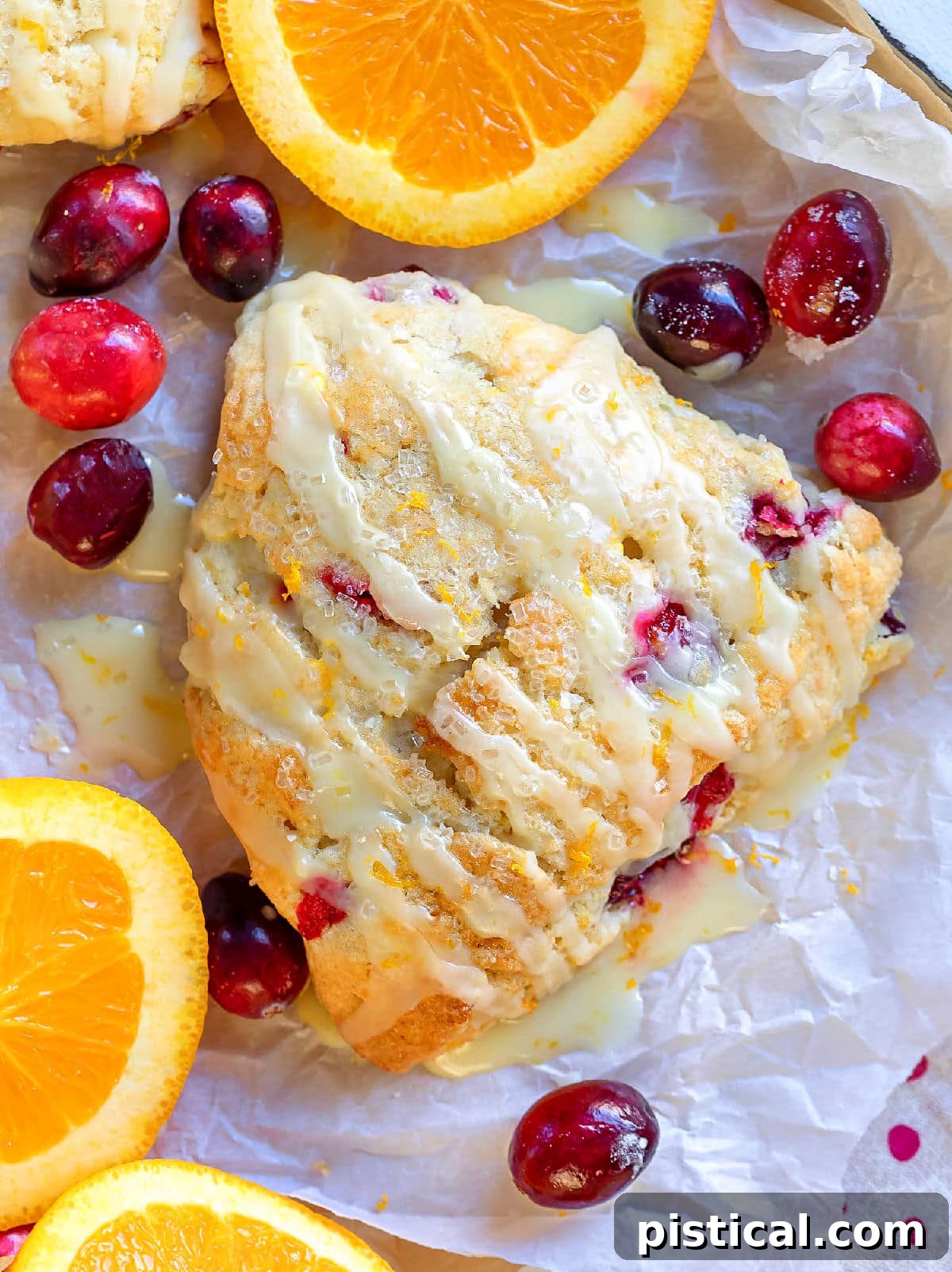
The Secret to Perfectly Moist Scones
Scones, when crafted correctly, are an absolute delight. They offer a versatile pastry option for breakfast, brunch, or even a fancy afternoon tea. The key to their perfection lies in a few simple yet crucial techniques. Unlike some dry, dense versions, these cranberry orange scones are remarkably tender and light, thanks to the careful balance of ingredients and minimal handling.
There are several ways to shape your scone dough, each yielding a slightly different aesthetic and texture:
- Circular Cut: For a classic, uniform look, use a biscuit cutter. This method produces beautifully round scones that rise evenly.
- Rustic Drop Scones: If you’re short on time or prefer a more natural, free-form look, simply scoop portions of the dough onto your baking sheet. These “drop scones” are wonderfully rustic and just as delicious.
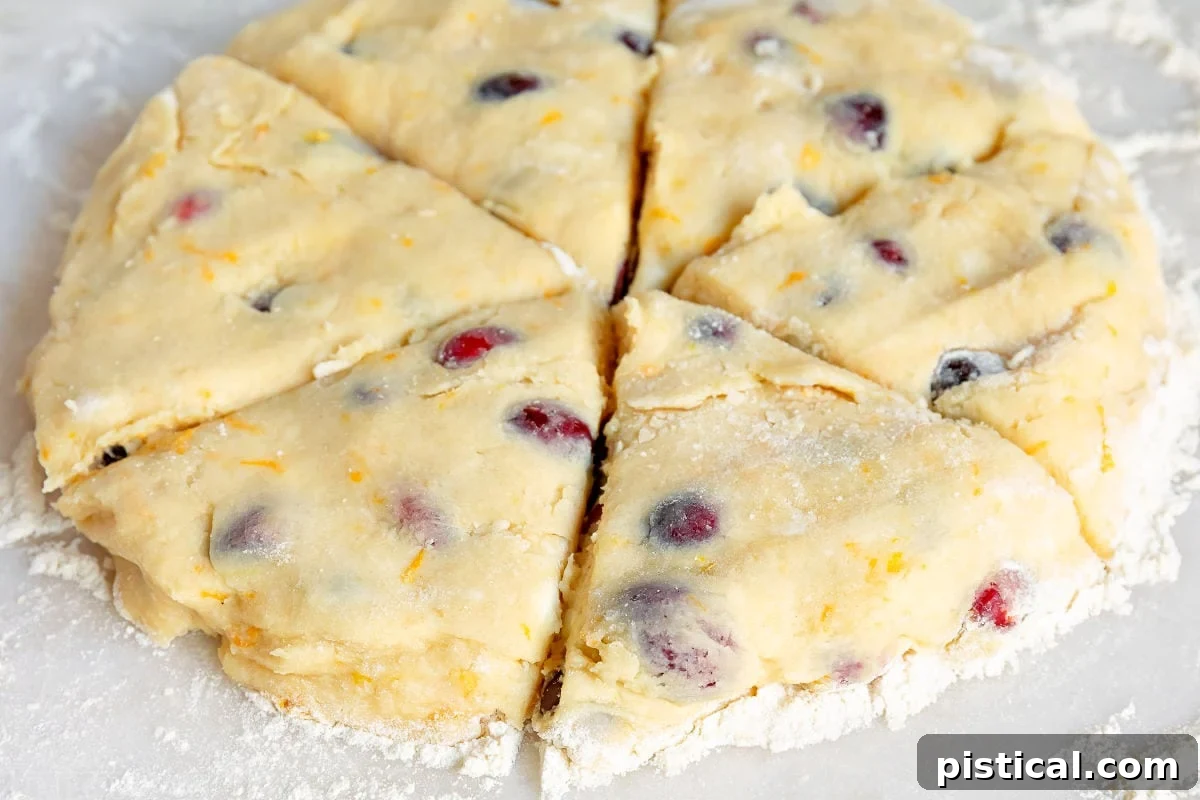
- Elegant Wedges: My preferred method for these particular scones is to shape the dough into a disc and then use a bench scraper or large knife to cut it into neat wedges. This method is efficient, creates appealing triangular shapes, and offers a generous portion size.
The secret to the fantastically moist and tender crumb of my Cranberry Orange Scones lies in the precise combination of heavy cream and a large egg. These ingredients add richness and help create a scone that is soft on the inside. Furthermore, the baking powder is essential for providing a beautiful lift, ensuring these scones are light and airy, rather than dense or heavy. This recipe is designed to defy all expectations of dry, bland scones, offering a truly superior texture every time.
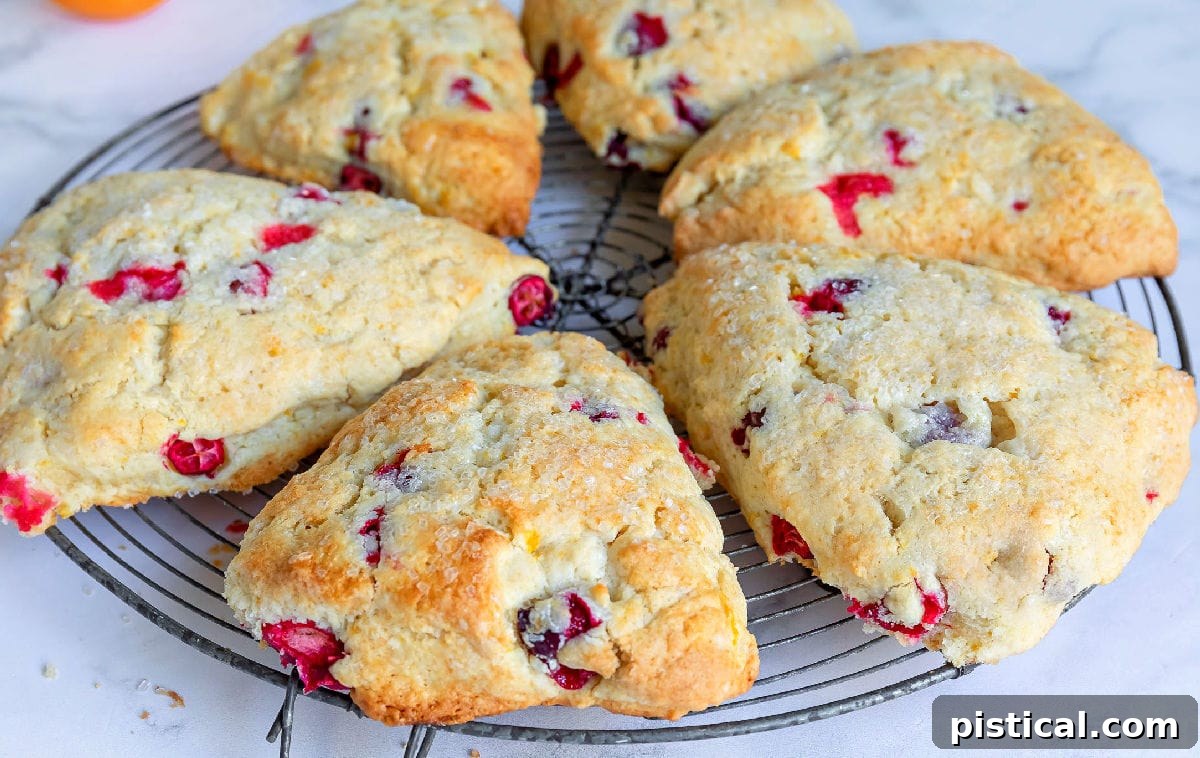
Scones vs. Biscuits: Understanding the Delicious Distinction
The terms “scone” and “biscuit” are often used interchangeably, leading to confusion, especially across different culinary traditions. While both are quick breads that rely on cold fat cut into flour and a leavening agent, their characteristics and typical serving styles differ significantly. When I think of scones, I’m often transported to an English tea party, despite their origins in Scotland. Biscuits, on the other hand, evoke images of hearty Saturday morning breakfasts in the American South.
Here’s a breakdown of the key differences I’ve observed:
- Preparation & Ingredients: Scones, like this Cranberry Orange Scone recipe, typically use heavy cream as their primary liquid, resulting in a richer, more tender dough. Biscuit recipes often call for milk or buttermilk, which contributes to a slightly tangier flavor and a lighter, fluffier texture. The fat content and type of liquid heavily influence the final product.
- Sweetness & Add-ins: Scones are generally sweeter than biscuits, often incorporating sugar directly into the dough and sometimes finished with a glaze or a sprinkle of sanding sugar for added sweetness and visual appeal. Biscuits are usually savory, designed to be served with gravies, butter, or jam, though sweet biscuits do exist. Scones are also much more likely to feature fruits, nuts, or citrus zest as mix-ins.
- Texture: While both aim for flakiness, scones often have a denser, yet still tender, crumb compared to the typically lighter, more airy layers of a Southern biscuit. The higher fat content in cream-based scones contributes to this rich tenderness.
- Serving Temperature: Biscuits are almost always served piping hot, straight from the oven, especially when paired with savory toppings like sausage gravy (and if you love biscuits, you MUST try this heavenly biscuit recipe!). Scones, while delightful warm, are also commonly served at room temperature, making them perfect for buffets or afternoon tea.
Understanding these distinctions helps appreciate the unique charm of each pastry. These Cranberry Orange Scones embrace the traditional scone characteristics, offering a sweet, fruit-filled treat that’s perfect for any time of day.
Essential Ingredients for Your Cranberry Orange Scones
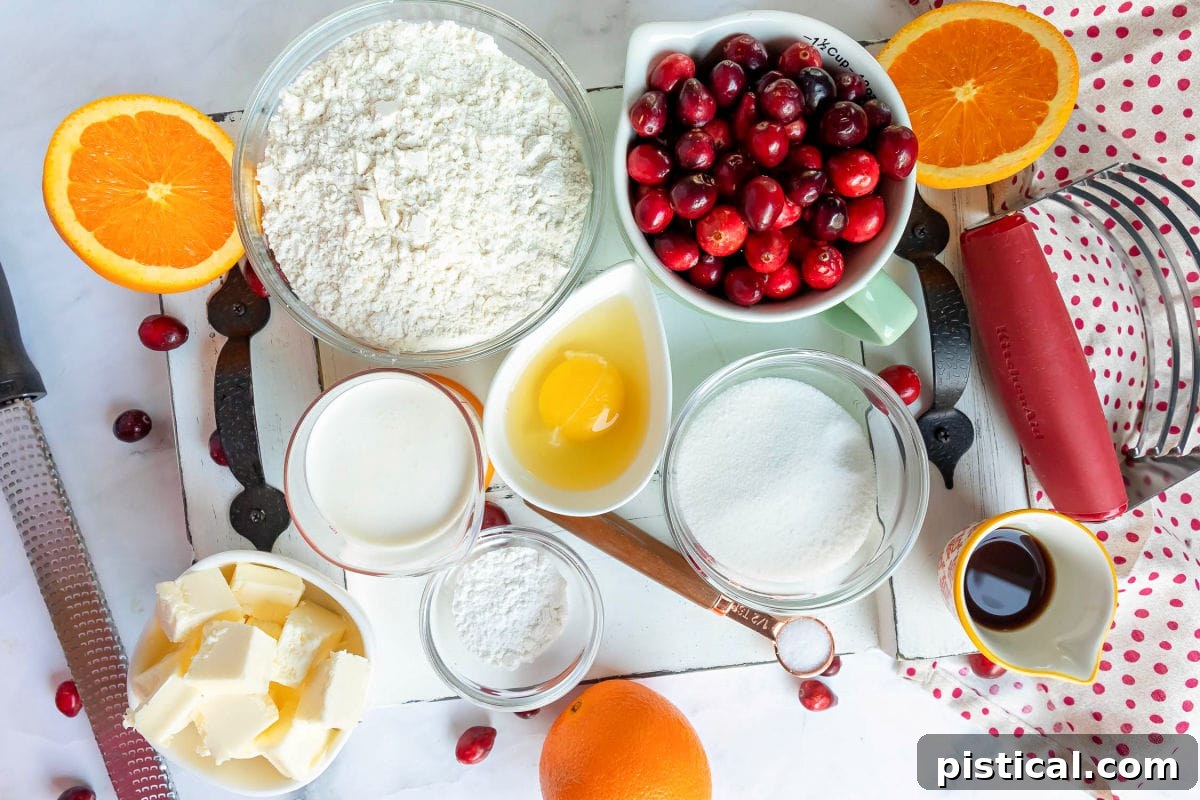
One of the beauties of this easy scone recipe is that it utilizes common pantry staples, with the star, cranberries, being readily available during their season. Each ingredient plays a vital role in achieving the perfect balance of flavor and texture:
- All-Purpose Flour: The structural backbone of our scones.
- Granulated Sugar: Provides sweetness, aids in browning, and contributes to the scone’s tender crumb.
- Baking Powder: The primary leavening agent, responsible for the scones’ beautiful rise and light texture.
- Salt: Essential for balancing and enhancing all the other flavors.
- Unsalted Butter (very cold, cubed): Crucial for flaky scones. When cold butter is cut into the flour, it creates pockets that expand in the oven, forming those coveted flaky layers.
- Cranberries (fresh or frozen): The tart jewels that burst with flavor, providing a delightful contrast to the sweet dough. Frozen cranberries work just as well and can be used directly from the freezer.
- Orange Zest: The aromatic heart of the scone, infusing it with bright, fresh citrus notes that complement the cranberries perfectly.
- Heavy Cream (very cold): The secret to the scone’s moistness and rich flavor. Keep it very cold to prevent the butter from melting.
- Large Egg: Adds richness, helps bind the dough, and contributes to a beautiful golden crust.
- Vanilla Extract: A touch of vanilla adds warmth and depth to the overall flavor profile.
- Sanding Sugar (optional): Sprinkled on top before baking, it adds a beautiful sparkle and a delightful crunch, enhancing both flavor and presentation.
Step-by-Step Guide: Crafting Your Perfect Cranberry Orange Scones
Making homemade scones might seem intimidating, but this recipe breaks it down into simple, manageable steps, ensuring a delicious outcome even for novice bakers. The key is working quickly and gently to maintain the cold temperature of your butter and avoid overmixing.
- Preheat Oven and Prepare Baking Sheet: Begin by preheating your oven to 400°F (200°C). Prepare a large baking sheet by lining it with parchment paper or a silicone baking mat. This prevents sticking and makes cleanup a breeze. Set it aside.
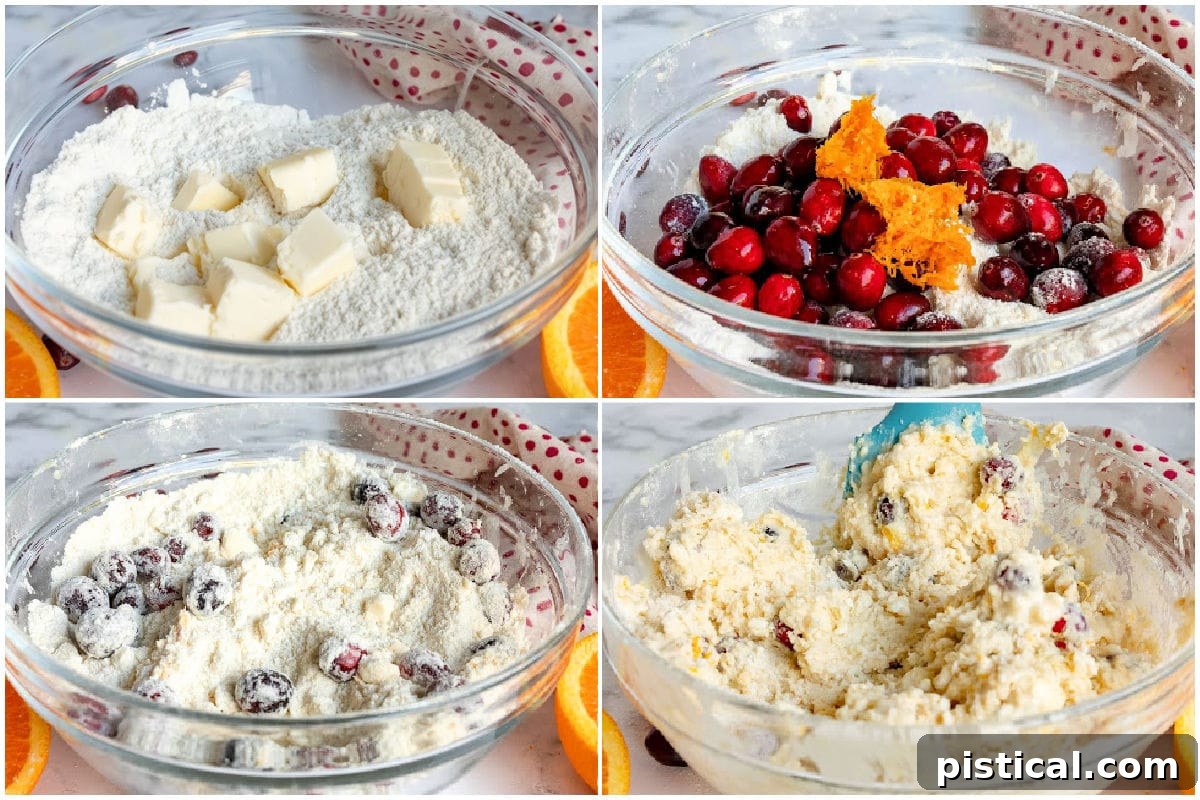
- Combine Dry Ingredients: In a large mixing bowl, whisk together the all-purpose flour, granulated sugar, baking powder, and salt. Ensure these dry ingredients are thoroughly combined to allow for even leavening.
- Cut in Cold Butter: Using a pastry cutter, fork, or even your fingertips (working very quickly to keep butter cold), cut the very cold, cubed butter into the flour mixture. Continue until the mixture resembles coarse crumbs with some pea-sized pieces of butter still visible. These small butter pockets are essential for creating flaky layers as they melt and release steam during baking.
- Add Fruits and Zest: Gently stir in the fresh or frozen cranberries and the vibrant orange zest. Mix just enough so the cranberries are coated with the flour mixture, which helps prevent them from sinking to the bottom of the scones.
- Mix Wet Ingredients: In a separate, smaller bowl, whisk together the very cold heavy cream, large egg, and vanilla extract until smooth. Using cold wet ingredients further helps maintain the butter’s chill.
- Combine Wet and Dry: Pour the cream mixture into the flour mixture. Using a fork, stir until the ingredients are *just* combined and a shaggy dough begins to form. Be careful not to overmix, as excessive handling can develop gluten, leading to tough scones. A slightly crumbly dough is perfectly fine at this stage.
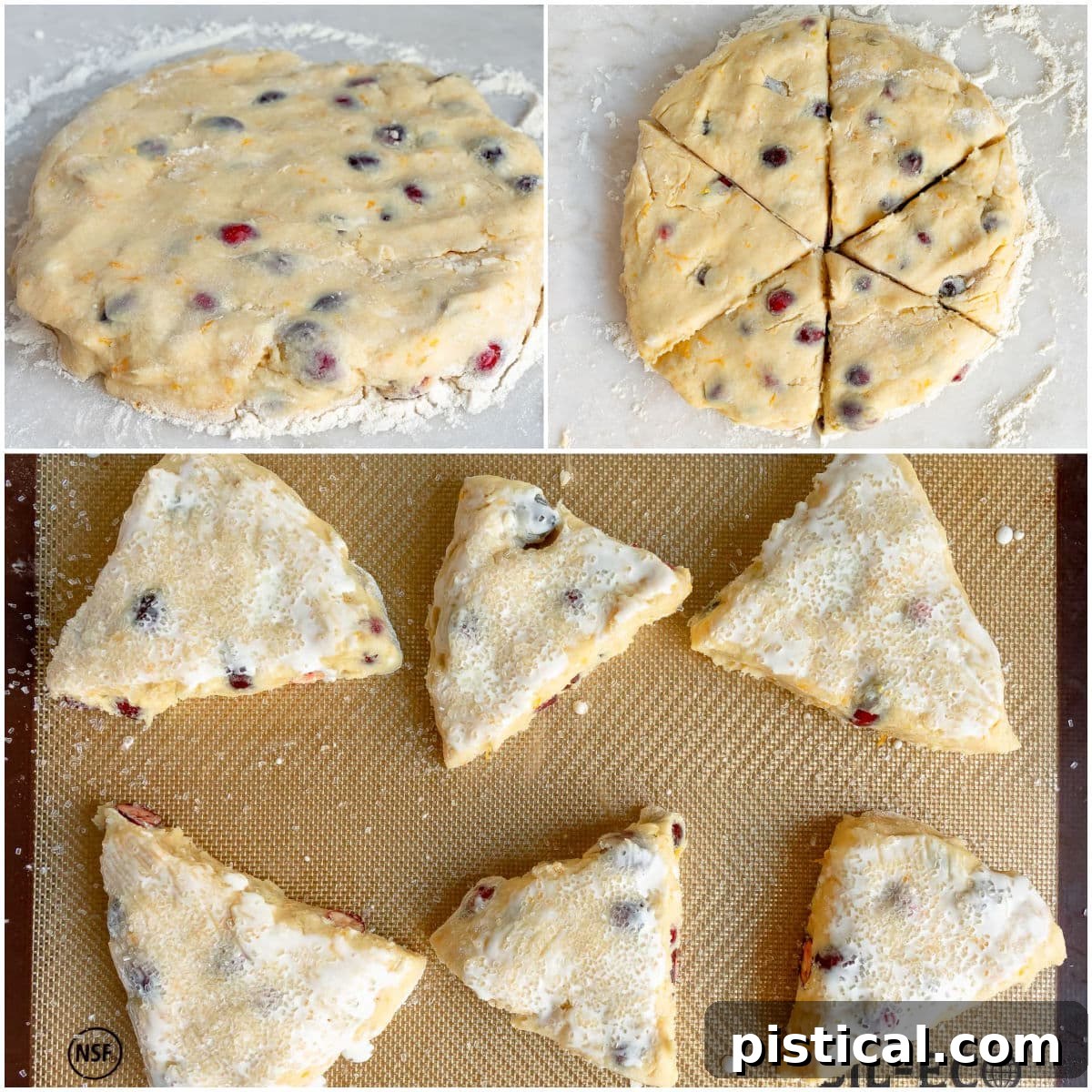
- Shape the Dough: Turn the dough out onto a lightly floured surface. Gently pat it into a disc approximately 6 inches (15 cm) in diameter and about 1 inch (2.5 cm) thick. Avoid kneading the dough; gentle handling is key to tenderness.
- Cut into Wedges: With a large, sharp knife or a bench scraper, cut the dough disc into 6 equal wedges. Carefully transfer these wedges to your prepared baking sheet, leaving some space between each scone for even baking.
- Prepare for Baking: For a beautiful golden finish, lightly brush the tops of the scones with the additional tablespoon of very cold heavy cream. If you desire extra sparkle and a delicate crunch, sprinkle generously with sanding sugar.
- Bake: Place the baking sheet in your preheated oven. Bake for 16 to 19 minutes, or until the scones are golden brown on top and cooked through. To ensure even baking, rotate the baking sheet halfway through the baking time.
- Serve and Store: Allow the scones to cool on the baking sheet for a few minutes before transferring them to a wire rack to cool completely. Serve warm or at room temperature. While best enjoyed the day they are baked, leftovers can be stored in an airtight container for up to 2-3 days at room temperature or in the refrigerator.
The Irresistible Orange Glaze: A Sweet Finish
While these Cranberry Orange Scones are perfectly delicious on their own, the optional orange glaze takes them to an entirely new level. The inherent tartness of cranberries sometimes calls for an extra touch of sweetness, and this simple glaze provides just that. Beyond taste, it lends a professional, elegant appearance, making these scones truly shine—especially for holiday gatherings or special brunches. Plus, it’s incredibly easy to whip up!
Ingredients for the Orange Glaze:
- Powdered Sugar: The fine texture of powdered sugar creates a smooth, quick-setting glaze.
- Orange Juice (freshly squeezed recommended): Adds liquid for consistency and a burst of fresh citrus flavor.
- Orange Zest: Intensifies the orange essence, adding depth and aroma to the glaze.
Making the Glaze:
- Whisk Until Smooth: In a small bowl, combine the powdered sugar, orange zest, and 2 tablespoons of orange juice. Whisk vigorously until the mixture is completely smooth and free of any lumps.
- Adjust Consistency: The perfect glaze should be thick enough to cling to the scone but thin enough to drizzle easily. If your glaze is too thin, gradually add more powdered sugar, one tablespoon at a time, until it reaches the desired thickness. If it’s too thick, add more orange juice, one teaspoon at a time, until it drizzles beautifully.
- Drizzle and Serve: Once your scones have cooled, generously drizzle the glorious orange glaze over the tops. Allow it to set slightly before serving, or enjoy immediately for a warm, gooey treat!

Essential Baking Tools for Scone Mastery
You likely already own most of the tools needed for this recipe, but having the right equipment can make the scone-making process even smoother and more enjoyable. Here’s a quick rundown of the essentials:
- Large Baking Sheet: A sturdy half-sheet pan provides ample space for your scones to bake evenly without crowding.
- Parchment Paper or Silicone Baking Mat: These are invaluable for preventing sticking, ensuring your delicate scones transfer easily, and simplifying cleanup.
- Pastry Cutter: This tool makes quick and efficient work of cutting cold butter into the flour mixture, a crucial step for flaky scones. If you don’t have one, two knives or even your fingertips (working quickly) can do the trick.
- Pastry Brush: Ideal for gently brushing the tops of the scones with heavy cream before baking, giving them a beautiful golden sheen.
- Sanding Sugar: While optional, a sprinkle of sanding sugar adds a lovely sparkle and a pleasant crunch to the scone’s exterior, elevating its visual appeal and texture.
- Bench Scraper or Large Knife: Perfect for cleanly cutting the scone dough disc into uniform wedges without distorting its shape.
- Mixing Bowls and Whisk: Standard kitchen equipment for combining your dry and wet ingredients.
Frequently Asked Questions About Cranberry Orange Scones
- Can these scones be frozen?
- Absolutely! Scones freeze beautifully, making them perfect for meal prep. Once baked and completely cooled, transfer them to a freezer-safe ziploc bag or airtight container. They can be frozen for up to 2-3 months. To reheat, simply microwave for about 20-30 seconds on medium heat, or thaw at room temperature and warm gently in a preheated oven (around 300°F/150°C) for 5-10 minutes until warmed through.
- Can scones be made in advance?
- Yes! You can prepare the scone dough the night before. After shaping and cutting the wedges, arrange them on a parchment-lined baking sheet and freeze for about 30 minutes until firm. Then, transfer the firm dough wedges to an airtight container or freezer bag and store in the refrigerator overnight or in the freezer for longer. When ready to bake, place frozen scones directly on a prepared baking sheet and add a few extra minutes to the baking time.
- How do I store scones?
- Baked scones are best enjoyed on the day they’re made. However, leftovers can be stored at room temperature, loosely covered, for 1-2 days, or in an airtight container in the refrigerator for up to a week. Warming them slightly before serving will help restore their tenderness.
- What makes a scone light and fluffy, not dense?
- Several factors contribute to light and fluffy scones:
- Cold Ingredients: Keeping the butter and cream very cold prevents the fat from melting too soon, which is crucial for steam creation and flaky layers.
- Minimal Handling: Overmixing develops gluten, leading to a tough texture. Mix the dough just until combined.
- Proper Leavening: Baking powder reacts with moisture and heat to create air bubbles, giving the scones their rise. Ensure your baking powder is fresh.
- High Oven Temperature: A hot oven helps the scones rise quickly and create a crisp exterior while keeping the interior tender.
- Can I use dried cranberries instead of fresh or frozen?
- Yes, you can! If using dried cranberries, I recommend soaking them in hot water or orange juice for about 10-15 minutes first, then draining thoroughly. This rehydrates them slightly, making them plumper and less chewy, closer to the texture of fresh cranberries.

More Delicious Cranberry Recipes to Explore
Cranberries truly embody the spirit of the holidays and offer a bright, tart contrast to many sweet and savory dishes. If you’ve fallen in love with these Cranberry Orange Scones, you’re sure to enjoy these other fantastic cranberry creations that are perfect for any occasion:
- The BEST Cranberry Sauce: A timeless classic that complements any holiday meal.
- Cranberry Pecan Mini Goat Cheese Balls: Elegant and flavorful appetizers perfect for entertaining.
- Easy Cranberry Fluff: A light, airy, and wonderfully festive dessert or side dish.
- Cranberry Orange Shortbread Cookies: Delicate, buttery cookies with the delightful cranberry-orange pairing.
- Cranberry Pecan Pumpkin Bread: A moist, comforting quick bread perfect for autumn and winter.
The Complete Cranberry Orange Scones Recipe

Recipe Details
Yields: 6 scones
Prep time: 10 minutes
Cook time: 16-19 minutes
Total time: 26-29 minutes
Ingredients:
- 2 cups all-purpose flour
- ⅓ cup granulated sugar
- 2 teaspoons baking powder
- ½ teaspoon table salt
- 6 tablespoons unsalted butter, very cold and cubed
- 1 cup fresh or frozen cranberries
- 3 tablespoons orange zest
- ¾ cup very cold heavy cream
- 1 large egg
- 2 teaspoons vanilla extract
- 1 tablespoon very cold heavy cream (for brushing tops)
- 2 tablespoons sanding sugar (optional, for sparkle)
For the Orange Glaze:
- ¾ cup powdered sugar
- 2 teaspoons orange zest
- 2 to 4 tablespoons fresh orange juice
Instructions:
- Prepare Oven and Baking Sheet: Preheat your oven to 400°F (200°C). Line a large baking sheet with parchment paper or a silicone baking mat. Set aside.
- Combine Dry Ingredients: In a spacious mixing bowl, whisk together the all-purpose flour, granulated sugar, baking powder, and salt. Ensure they are well combined.
- Incorporate Butter: Using a pastry cutter, fork, or your fingertips, cut the very cold, cubed unsalted butter into the flour mixture. Work quickly to prevent the butter from warming too much. Continue until the mixture resembles coarse crumbs with a few pea-sized pieces of butter remaining. These small pockets of butter are key to flaky scones.
- Add Flavor Enhancers: Gently fold in the fresh or frozen cranberries and the orange zest. Stir just enough to ensure the cranberries are coated with the flour mixture, which helps prevent them from sinking to the bottom during baking.
- Prepare Wet Ingredients: In a separate smaller bowl, whisk together the very cold heavy cream, large egg, and vanilla extract until smooth.
- Combine Wet and Dry: Pour the wet mixture into the dry ingredients. Using a fork, gently stir until the ingredients are *just* combined and a shaggy dough forms. Be careful not to overmix, as this can lead to tough scones.
- Shape the Dough: Turn the dough out onto a lightly floured surface. Gently pat it into a disc approximately 6 inches (15 cm) in diameter and about 1 inch (2.5 cm) thick. Avoid kneading the dough excessively.
- Cut into Wedges: Using a large, sharp knife or a bench scraper, cut the dough disc into 6 equal wedges. Carefully transfer these wedges to your prepared baking sheet, leaving some space between them.
- Prepare for Baking: Lightly brush the tops of the scones with the additional tablespoon of very cold heavy cream. If desired, sprinkle generously with sanding sugar for a beautiful sparkle and a delightful crunch.
- Bake: Place the baking sheet in the preheated oven and bake for 16 to 19 minutes, or until the scones are golden brown on top and cooked through. For even baking, rotate the baking sheet halfway through the baking time.
- Serve and Store: Allow the scones to cool slightly on the baking sheet before transferring them to a wire rack. Serve warm or at room temperature. For optimal freshness, these scones are best enjoyed the day they are baked. Store any leftovers in an airtight container for up to 2-3 days at room temperature or in the refrigerator.
Orange Glaze Instructions:
- Whisk Ingredients: In a small bowl, combine the powdered sugar, orange zest, and 2 tablespoons of fresh orange juice. Whisk vigorously until the mixture is completely smooth and free of lumps.
- Adjust Consistency: Assess the glaze’s thickness. If it’s too thin, add more powdered sugar, one tablespoon at a time, until the desired consistency is reached. If it’s too thick, add more orange juice, one teaspoon at a time, until it drizzles easily but holds its shape on the scone.
- Drizzle: Once the scones have cooled sufficiently, generously drizzle the orange glaze over the tops.
Notes:
- For the best flaky texture, ensure all butter and cream are extremely cold.
- Overmixing the dough can develop gluten, resulting in tough scones. Mix just until combined.
- If using dried cranberries, consider soaking them in hot water or orange juice for 10-15 minutes, then draining, before adding to the dough.
Nutrition Information (per scone, without glaze):
Calories: 419kcal | Carbohydrates: 46g | Protein: 6g | Fat: 23g | Saturated Fat: 14g | Cholesterol: 98mg | Sodium: 319mg | Potassium: 264mg | Fiber: 2g | Sugar: 11g | Vitamin A: 845IU | Vitamin C: 6.4mg | Calcium: 109mg | Iron: 2.3mg