
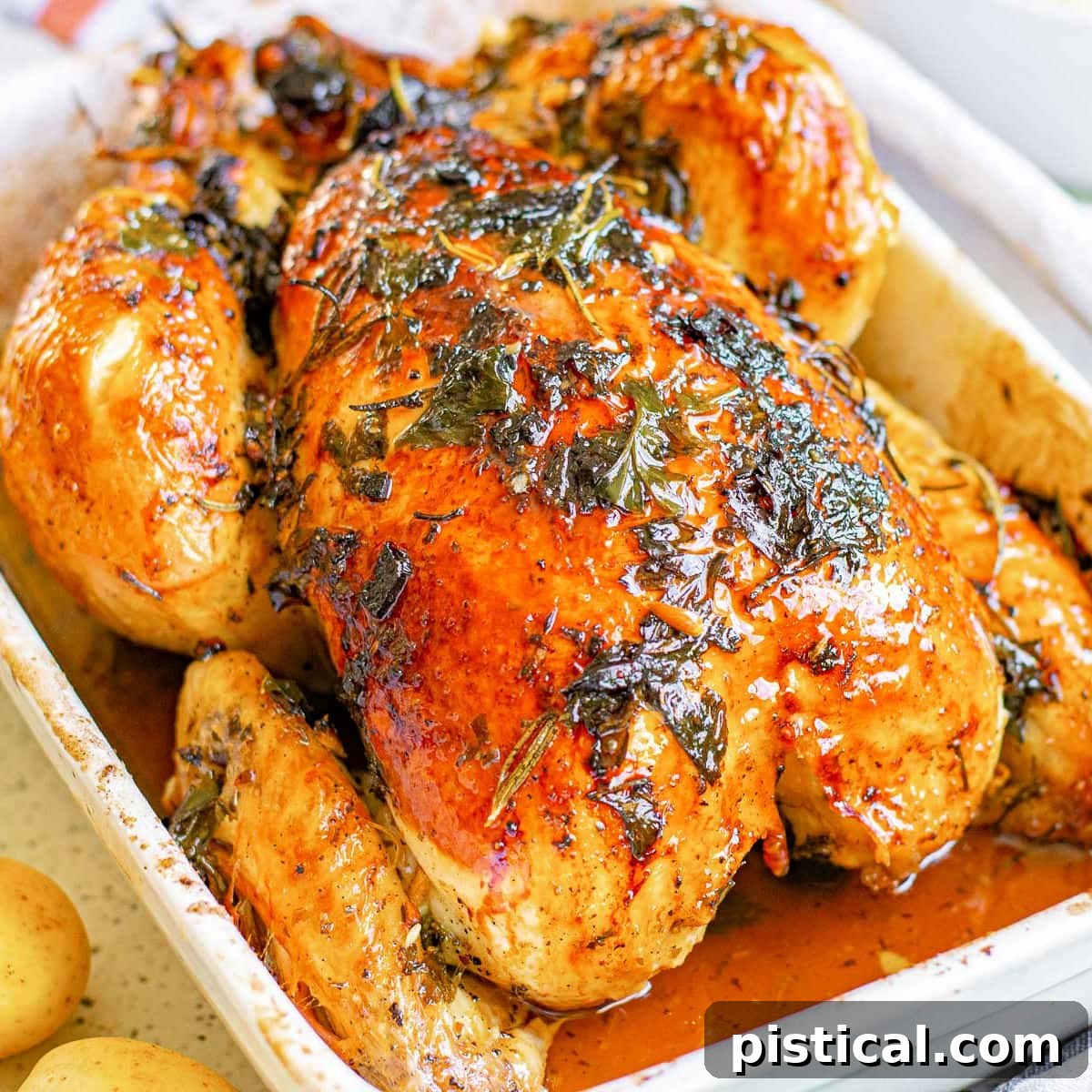
Welcome to the ultimate guide for creating an incredible Roast Chicken that will tantalize your taste buds and impress your family and friends. This isn’t just any roast chicken; it’s a masterpiece of flavor, featuring a harmonious blend of garlic, butter, and aromatic herbs. Imagine sinking your teeth into succulent, juicy meat encased in gloriously crispy, golden-brown skin. What’s more, this show-stopping dish is surprisingly easy to prepare, making it a perfect candidate for both bustling weeknights and special Sunday gatherings. Every home cook deserves this delightfully straightforward roast chicken recipe in their culinary arsenal!
There’s an undeniable magic to a beautifully roasted chicken, filling your home with an irresistible aroma that promises comfort and satisfaction. Whether you’re planning a cozy Sunday dinner, hosting a lively dinner party, or simply seeking a hearty and wholesome meal to nourish your family, this recipe delivers on every front. Serve it alongside creamy mashed potatoes or decadent cheesy potatoes for a truly comforting experience that warms you from the inside out.
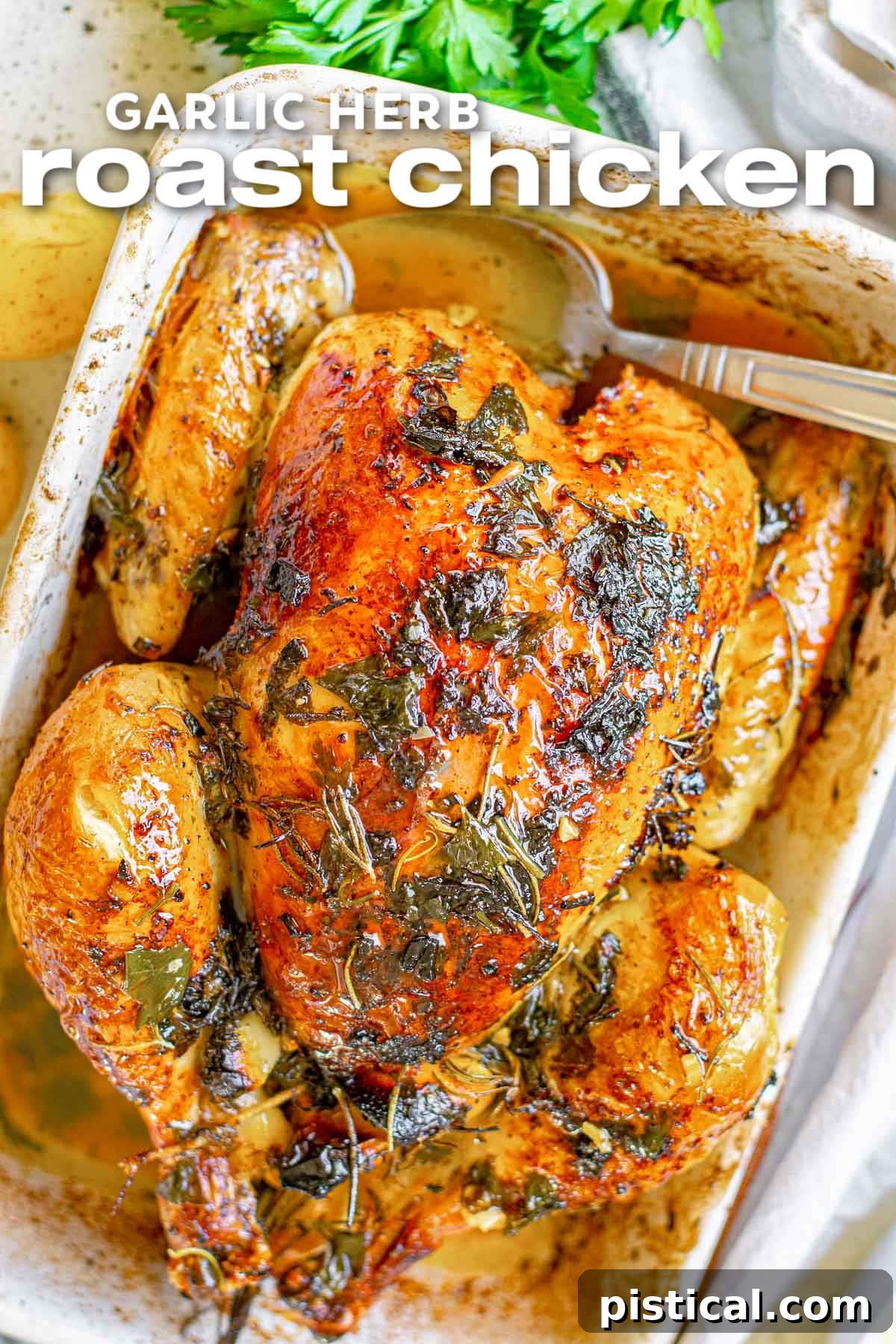
Why This Is Your New Go-To Roast Chicken Recipe
For many of us, roast chicken evokes cherished memories of home and family. Growing up, my Nana had a rotation of beloved Sunday meals, and her roast chicken was always a highlight. It was the kind of comforting food that wrapped around your soul, especially when paired with creamy mashed potatoes and her incredible homemade dinner rolls. These were meals designed for gathering, for sharing, and for creating lasting bonds.
Today, that tradition continues in my own kitchen. I find myself roasting a whole chicken several times a month, not just for the nostalgia, but for its sheer practicality and deliciousness. This recipe is wonderfully simple, requiring minimal active preparation time before the oven takes over. It’s incredibly quick for a whole bird, remarkably affordable, and perhaps best of all, the leftovers are versatile treasures, easily transformed into an array of new and exciting meals throughout the week.
This particular version of oven roasted chicken is loaded with fragrant herbs and fresh garlic, ensuring a robust, savory flavor that will undoubtedly bring joy to your tastebuds. It truly stands out as the best roast chicken recipe you’ll ever make.
Mastering the Art of Oven Roasting a Whole Chicken
Learning how to perfectly roast a whole chicken is a fundamental skill every cook should possess. It’s a recipe that effortlessly adapts to various occasions – from elegant Sunday dinners and inviting dinner parties with friends to straightforward, hearty weeknight meals. The beauty of this dish lies in its simplicity: it demands just minutes of hands-on preparation, allowing your oven to do the heavy lifting while you comfortably prepare complementary side dishes.
Serving an oven-roasted whole chicken instantly elevates any meal. Its magnificent crispy, golden skin and exquisitely juicy, flavorful meat create an impressive presentation that suggests hours of complex cooking. Yet, the secret is how truly easy it is to achieve such delectable results. With this method, you can confidently present a magnificent main course without breaking a sweat, letting your guests marvel at your culinary prowess.
Understanding Roasting Times and Temperatures for Perfection
Achieving a perfectly cooked roast chicken hinges on the right temperature and timing. I advocate for roasting at a higher temperature, specifically 425°F (220°C). At this heat, a general rule of thumb is approximately 20 minutes of roasting time for every pound of chicken. For instance, a 4-pound chicken would typically require around 80 minutes (1 hour and 20 minutes) to cook through.
However, larger chickens exceeding 5 pounds might require a slight adjustment to prevent the skin from over-browning before the interior is fully cooked. For these bigger birds, consider reducing the oven temperature to about 375°F (190°C) after the first hour of roasting. Additionally, tenting the chicken loosely with aluminum foil can help shield the skin, allowing the meat to finish cooking without burning. This garlic herb roast chicken recipe is remarkably adaptable, ensuring fantastic results with virtually any size chicken, as long as you monitor its internal temperature. Always use a reliable meat thermometer to confirm the thickest part of the thigh (without touching bone) reaches 165°F (74°C) for food safety.
Delicious Pairings: What to Serve with Roast Chicken
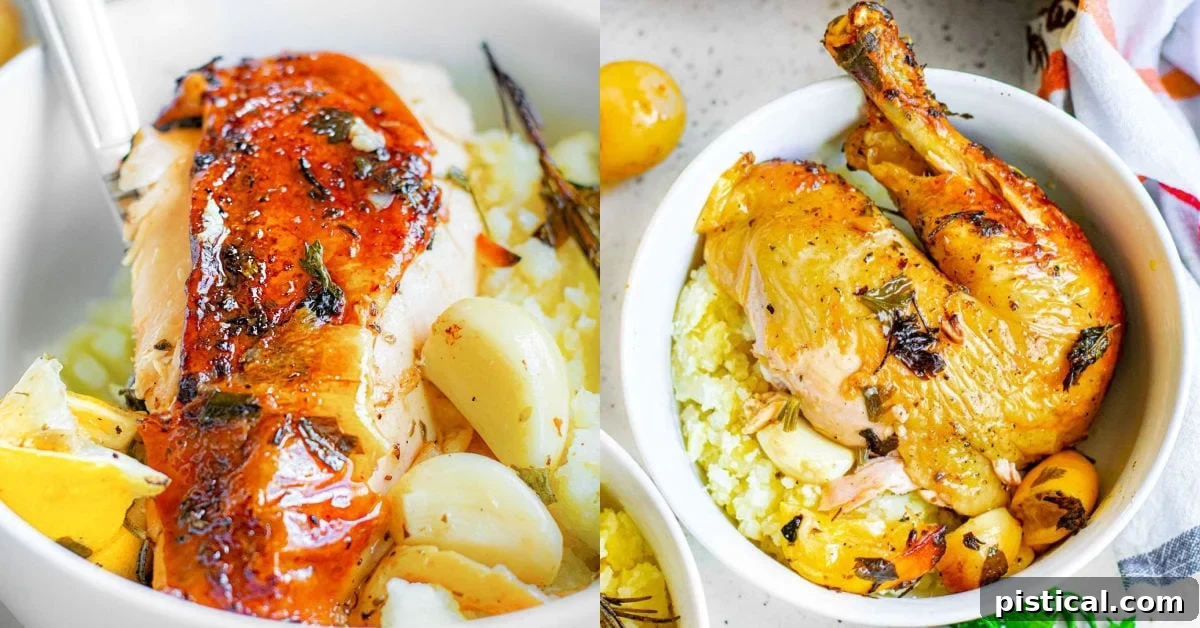
One of the many joys of this roast chicken recipe is its incredible versatility; it pairs beautifully with almost any side dish you can imagine. For a classic, comforting meal, we frequently enjoy it with some form of potato, a fresh salad, and warm, freshly baked rolls or crusty bread. To elevate your meal even further, don’t let those flavorful pan drippings go to waste! They are the perfect base for a rich, savory gravy. You can easily adapt my turkey gravy recipe by simply substituting the chicken drippings, creating an unforgettable sauce. Delish!
Here are some of our absolute favorite accompaniments that perfectly complement the savory richness of this roasted chicken:
- Creamy Mashed Potatoes: The ultimate comfort food pairing.
- Twice Baked Potato Casserole: A decadent and satisfying potato dish.
- Cheesy Potatoes (Funeral Potatoes): Irresistibly cheesy and a crowd-pleaser.
- Refreshing Berry Salad: A light, sweet, and tangy contrast.
- Broccoli Salad with Bacon: A flavorful and crunchy side.
- Simple Pea Salad: A quick and vibrant vegetable addition.
- Soft Dinner Rolls: Perfect for soaking up those delicious pan juices.
- Homemade Crescent Rolls: Buttery, flaky, and a delightful touch.
- Hearty Homemade Cornbread: A wonderful Southern-inspired pairing.
Essential Ingredients for a Flavorful Roast Chicken
The secret to this simple roast chicken recipe lies in its thoughtfully selected ingredients, a handful of staples that, when combined, produce an explosion of big, bold flavor. While the full printable recipe with complete instructions is typically found in a dedicated recipe card, let’s explore what you’ll need to create this culinary delight and why each component is key:
- Whole Chicken: I typically recommend a chicken weighing about 4 to 5 pounds. This size cooks relatively evenly and yields a good amount of meat. For best results, allow the chicken to sit at room temperature for about 30 minutes before roasting; this helps it cook more uniformly.
- Sea Salt and Fresh Ground Black Pepper: These are the foundational seasonings. Don’t be shy with them! A generous application of salt and pepper forms the first essential layer of flavor, enhancing the taste of the chicken itself.
- Lemons: You’ll utilize lemons in two ways. First, the fresh juice will be incorporated into the herb butter mixture, adding a bright, acidic lift that cuts through the richness and tenderizes the meat. Second, the quartered lemon halves are placed into the chicken’s cavity, infusing the bird with a subtle, aromatic citrus essence from the inside out.
- Olive Oil: A drizzle of olive oil not only contributes to the beautiful browning and crisping of the chicken skin but also adds a subtle fruitiness to the overall flavor profile.
- Garlic Cloves: This recipe calls for a substantial amount of garlic, and for good reason! I prefer to mince the garlic very finely to ensure its potent flavor is evenly distributed throughout the butter mixture without creating large, overpowering chunks.
- Fresh Parsley: Chopped fresh parsley brings a vibrant, herbaceous note to the butter mixture. If you have any extra sprigs, tucking them into the chicken’s cavity will further enhance the aroma as it roasts.
- Fresh Rosemary: The distinct, woody aroma of fresh rosemary is a classic pairing with chicken. It adds a sophisticated depth of flavor to the herb butter, creating a wonderfully fragrant crust.
- Dried Oregano: While fresh herbs are always preferred, dried oregano is a convenient and flavorful addition to the butter mixture. If you opt for fresh oregano and can find it, remember to double the amount specified for dried, as fresh herbs are less concentrated.
- Unsalted Butter: Softened to room temperature, unsalted butter is crucial for creating a spreadable, flavorful coating. Using unsalted allows you to control the overall saltiness of the dish, ensuring it’s seasoned to your preference. The butter contributes to both flavor and an incredibly crispy, golden skin.
- Additional Fresh Rosemary Sprigs (for cavity): Beyond the chopped rosemary for the butter, a few whole sprigs placed inside the cavity will release their intoxicating aroma as the chicken cooks, subtly perfuming the meat.
- Whole Head of Garlic (for cavity): A whole head of garlic, mostly peeled and sliced horizontally to expose the cloves, adds a mellow, roasted garlic flavor to the interior of the chicken. It becomes wonderfully soft and sweet, perfect for spreading.
- Onions: Sliced into half-inch rounds, onions form a flavorful bed for the chicken in the roasting pan. This not only infuses the chicken with additional savory notes but also elevates the bird slightly, promoting more even cooking and air circulation around the bottom.
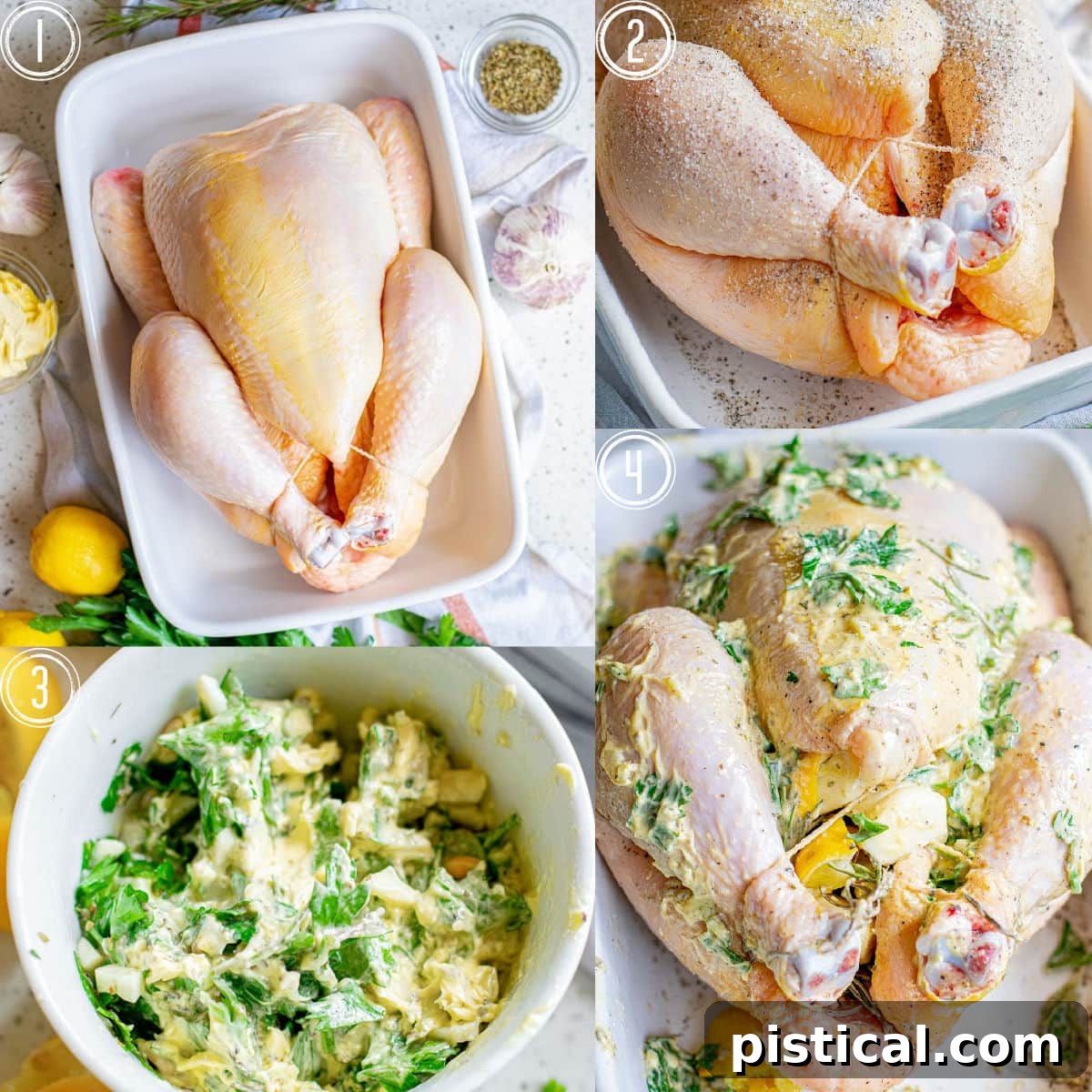
Step-by-Step Guide: How to Roast a Chicken
Follow these detailed steps to achieve a perfectly roasted, flavorful chicken every time:
- Prepare the Chicken: Begin by removing the neck and any giblets from the chicken’s cavity. Inspect the chicken and remove any stray feathers. Rinse the chicken thoroughly under cold water, then pat it completely dry with paper towels – this is crucial for crispy skin. Carefully loosen the skin over the breast meat by gently sliding your fingers between the skin and the flesh, being careful not to tear it. This pocket will be used for the herb butter.
- Preheat Oven and Prep Pan: Preheat your oven to a high temperature of 425°F (220°C). Line a large baking sheet with parchment paper to catch any potential drips or splatters, then place a sturdy baking dish or roasting pan (large enough to comfortably hold the chicken) on top. Lightly spray the baking dish with nonstick cooking spray. Arrange the thick-sliced onion rounds on the bottom of the dish; these will serve as a flavorful rack for the chicken. Place the prepared chicken on top of the onion slices.
- Season Liberally: Season the exterior of the chicken generously with sea salt and fresh ground black pepper. Ensure all surfaces are well-coated for maximum flavor.
- Create the Herb Butter: In a medium bowl, combine the fresh lemon juice, olive oil, finely minced garlic, chopped fresh parsley, chopped fresh rosemary, dried oregano, and the softened unsalted butter. Mix these ingredients thoroughly until a cohesive, fragrant paste forms.
- Apply Herb Butter: Using your hands, generously rub the herb butter mixture all over the entire exterior of the chicken. Make sure to coat the top of the skin completely. Crucially, also work a good amount of the butter mixture underneath the loosened skin over the breast meat. Finally, rub any remaining butter mixture inside the chicken’s cavity.
- Stuff and Truss: Stuff the chicken’s cavity with the whole head of sliced garlic, the fresh rosemary sprigs, and the quartered lemons. Using kitchen string or butcher’s twine, tie the chicken legs together to help it cook evenly and hold its shape. Tuck the wing tips underneath the body of the chicken to prevent them from burning. Place the chicken breast-side up in the prepared baking dish.
- Roast: Transfer the baking dish to the preheated oven. Roast for approximately 1 hour and 15 minutes. Baste the chicken with the pan juices after 30 minutes, and then again every 20 minutes or so thereafter. Continue roasting until the juices run clear when a knife or skewer is inserted between the leg and the body. For absolute certainty, use a meat thermometer to ensure the thickest part of the thigh reaches an internal temperature of 165°F (74°C). If the chicken skin appears to be getting too dark at any point, loosely tent it with aluminum foil and continue roasting.
- Broil for Extra Crispness (Optional but Recommended): Once the chicken is fully cooked, baste it one last time. For an exceptionally golden and crispy skin, briefly broil the chicken for about 2 to 3 minutes. Keep a very close eye on it during this step, as broilers can quickly burn.
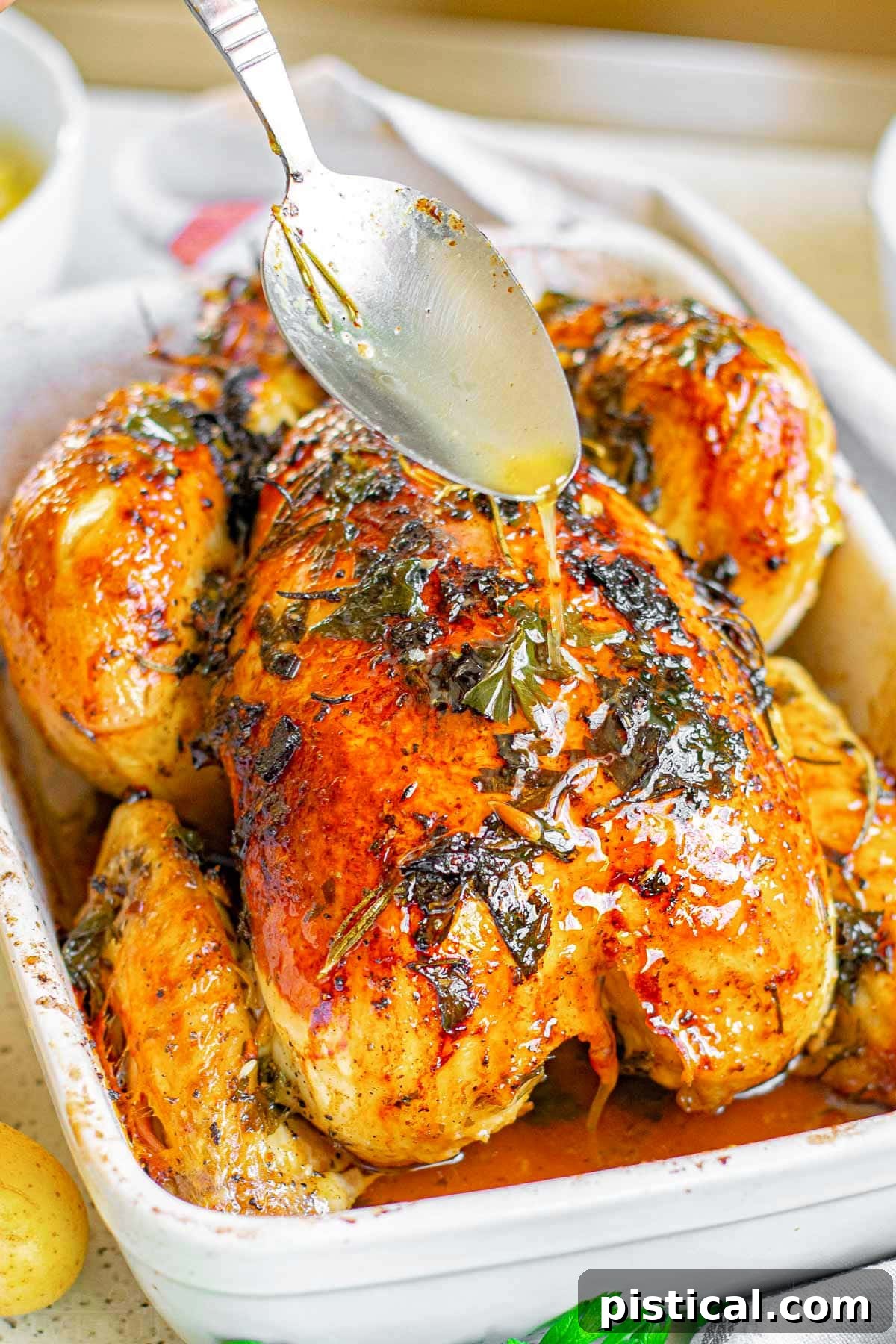
- Rest and Serve: Remove the chicken from the oven, loosely cover it with aluminum foil, and allow it to rest for at least 15 minutes before carving. This critical resting period allows the juices to redistribute throughout the meat, ensuring every bite is incredibly tender and flavorful. Drizzle generously with the delicious pan juices when serving.
Frequently Asked Questions About Roasting Chicken
Here are answers to some common questions about roasting a whole chicken, ensuring you have all the information you need for a successful and delicious meal:
- How do I store roast chicken leftovers?
Refrigerator: Allow the oven-roasted chicken to cool completely to room temperature within two hours. Once cooled, carve the meat off the bones and store it in an airtight container in your refrigerator for up to 3-4 days. This makes it easy to grab for sandwiches, salads, or other quick meals.
Freezer: For longer storage, cooked and cooled chicken can be stored in an airtight freezer-safe container or wrapped tightly in freezer bags. It will keep well for up to 3-4 months. When you’re ready to use it, simply remove it from the freezer and defrost it overnight in the refrigerator, or use the defrost setting on your microwave. Ensure it’s fully defrosted before reheating or incorporating into new recipes.
- Can I make this whole roasted chicken in an air fryer?
Good news! While this recipe is optimized for oven roasting, you can absolutely adapt a whole roast chicken for the air fryer, especially if you have a larger capacity model. For air frying, preheat your air fryer to 350°F (175°C) and cook for about 30 minutes per side, or until the chicken is golden brown and cooked through. Always use a meat thermometer to confirm the internal temperature reaches 165°F (74°C) in the thickest part of the thigh.
- What is the best way to carve a roast chicken?
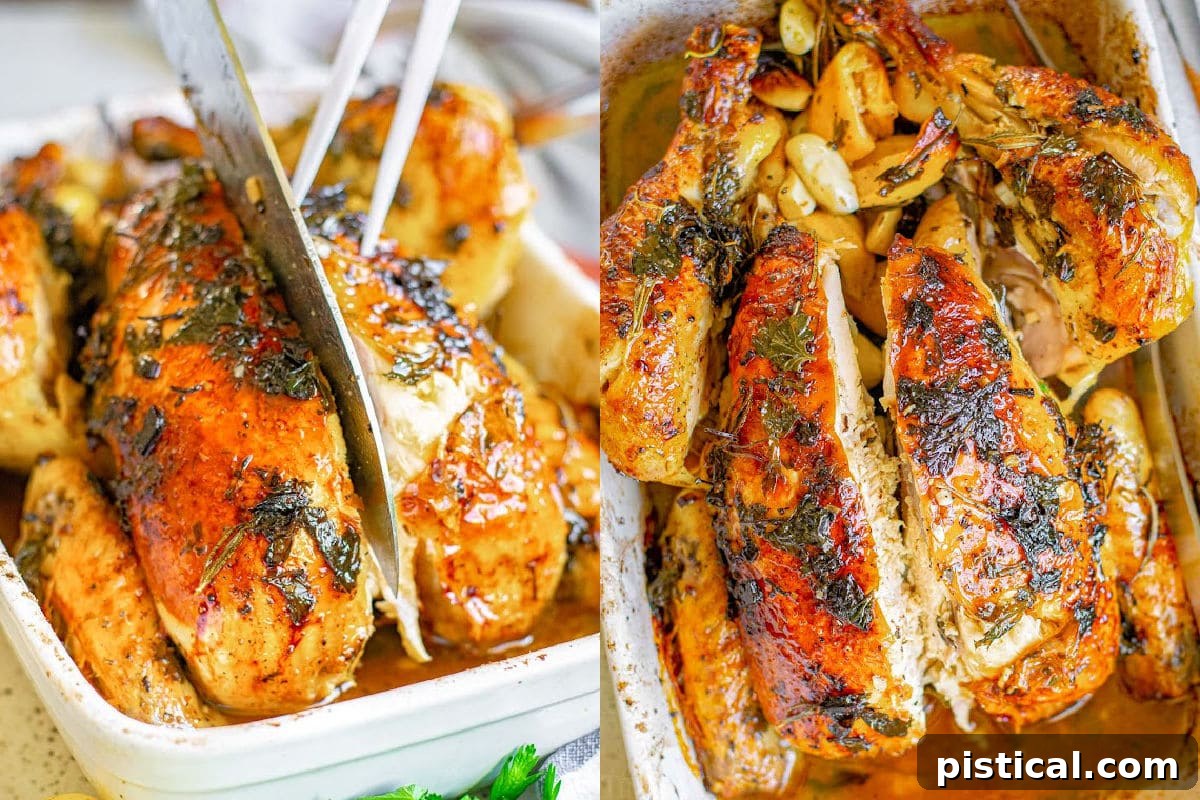
After allowing the chicken to rest for 10 to 15 minutes (this is crucial for juiciness!), place it on a sturdy cutting board. Hold it steadily with a carving fork. First, carefully cut through the skin and meat between the leg and the body. Then, cut through the hip joint to completely remove the entire leg and thigh section. Repeat on the other side. To remove the breast meat, make a long cut horizontally near the base of the breastbone, then slice downwards along the breastbone, carving the meat into desired slices. Separate the drumsticks from the thighs if desired.
- How do I choose the right size of chicken for my needs?
The size of the chicken you choose depends on the number of people you’re serving and whether you want leftovers. As a general guide, a medium-sized 3-pound chicken will typically feed 3 to 4 people. A larger 4-pound chicken is usually sufficient for 4 to 6 servings. If you’re feeding a larger crowd or planning for ample leftovers, opt for a 5 to 6-pound bird.
- Should I brine the chicken?
While this recipe doesn’t explicitly call for brining, it’s an excellent technique for ensuring an exceptionally juicy and flavorful chicken, especially if you have the time. A simple saltwater brine (or even a buttermilk brine) can infuse moisture and seasoning deep into the meat. If you choose to brine, ensure you pat the chicken very dry before roasting to still achieve crispy skin.
- Is trussing the chicken necessary?
Trussing (tying the legs and wings) helps the chicken cook more evenly by keeping the extremities tucked in, preventing them from overcooking and drying out before the breast meat is done. It also helps the chicken maintain a compact, appealing shape. While not strictly essential, it is highly recommended for optimal results and presentation.
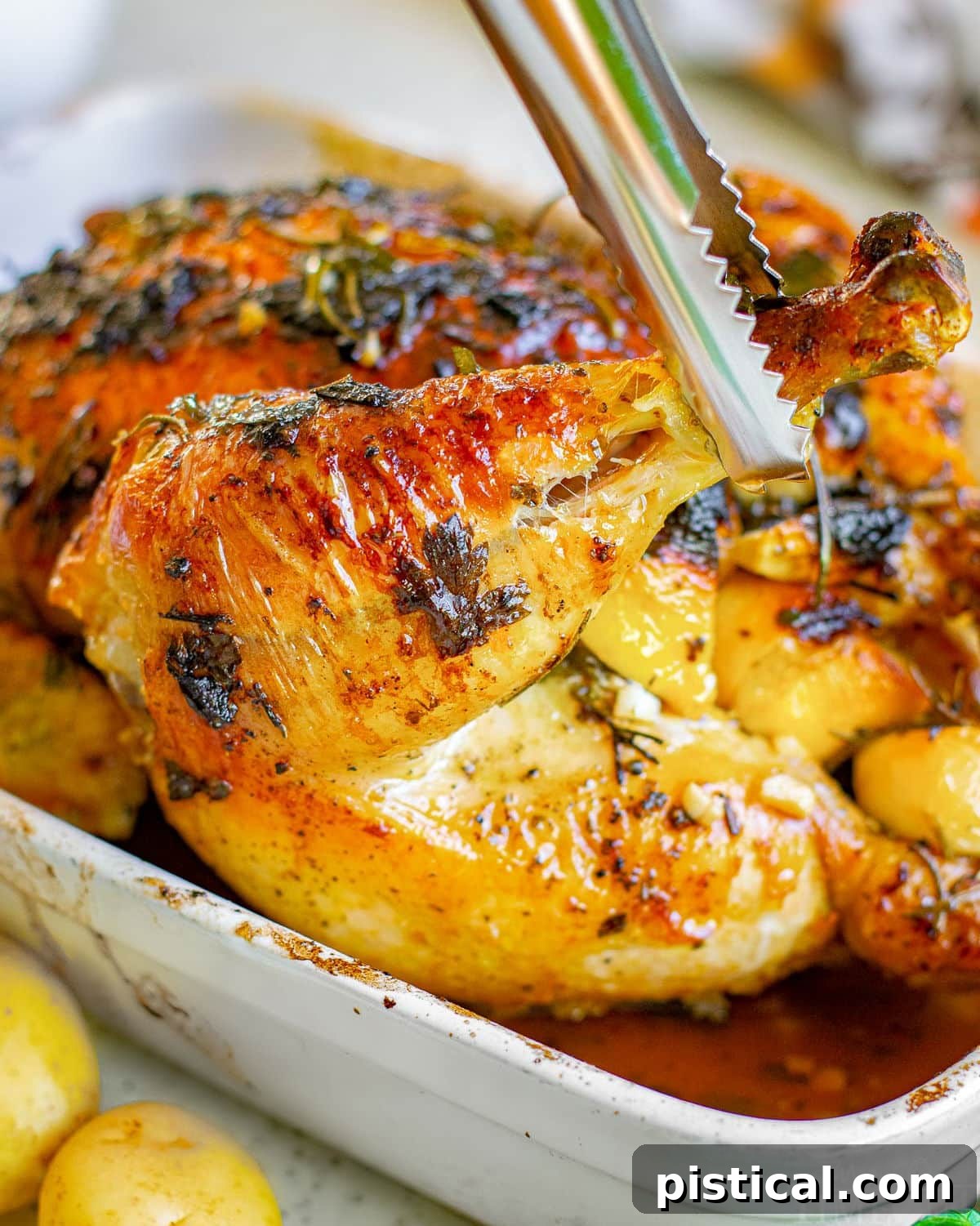
Expert Tips for the Ultimate Roast Chicken
To ensure your roast chicken is nothing short of perfection, keep these expert tips and variations in mind:
- Room Temperature Start: For the most even cooking, always allow your whole chicken to sit at room temperature for about 30 minutes before placing it in the oven. This helps relax the meat and ensures it cooks uniformly from edge to center.
- Calculate Roasting Time: A general guideline is to roast for approximately 20 minutes per pound of chicken. However, always use an internal meat thermometer to confirm doneness, aiming for 165°F (74°C) in the thickest part of the thigh, away from the bone.
- Amplify Flavor with Herbs: Don’t hesitate to be generous with additional fresh herbs like thyme, sage, or even more rosemary and parsley. This whole roasted chicken recipe only improves with extra aromatic flavor. Consider stuffing extra herb sprigs and lemon slices into the cavity for an even more profound infusion.
- Season Under the Skin: For maximum impact, use your fingers to gently rub seasoning (especially the herb butter mixture) not only over the exterior but also carefully under the skin and directly onto the breast meat. This direct contact ensures the meat itself is seasoned, not just the skin.
- The Importance of Resting: Once removed from the oven, always allow the chicken to rest, loosely tented with foil, for at least 10 to 15 minutes before carving. This crucial step permits the juices to redistribute throughout the meat, resulting in a more tender, succulent, and flavorful finished product.
- Butter for Golden, Crispy Skin: Brushing the chicken skin with a little extra softened butter just before roasting, in addition to the herb butter, will contribute to an even deeper golden-brown color and an irresistibly crispy skin.
- Add Root Vegetables to the Pan: For an easy all-in-one meal, toss chopped root vegetables like carrots, potatoes, parsnips, and sweet potatoes with a little olive oil, salt, and pepper in the roasting pan around the chicken. They’ll absorb the delicious chicken drippings and cook alongside the bird, creating flavorful side dishes.
More Inspiring Chicken Recipes To Enjoy
If you’re looking for more ways to enjoy chicken, explore these fantastic recipes from our collection:
- Crispy Chicken Sandwich: A popular fast-food favorite, perfected at home.
- Homemade Chicken Nuggets: Healthier and tastier than store-bought.
- Hearty Chicken Enchilada Soup: A comforting and flavorful bowl.
- Goat Cheese Stuffed Chicken Breast: An elegant and delicious dinner option.
- Classic Chicken Piccata: Zesty, buttery, and utterly satisfying.
- The BEST Chicken Salad: Perfect for sandwiches or a light lunch.
- Instant Pot Chicken Noodle Soup: Quick, easy, and incredibly soothing.
- The Best Chicken Marinade: Elevate any chicken dish with this flavorful blend.
The Full Recipe: Garlic Herb Roast Chicken

Print Recipe | Pin Recipe
Rated 5 out of 5 stars by 6 votes.
Garlic Herb Roast Chicken
This amazing Roast Chicken is perfectly seasoned with garlic, butter and herbs for maximum flavor. Crispy, golden skin, juicy, flavorful meat and easy enough for weeknights! Everyone needs this deliciously simple roast chicken recipe in their repertoire! It’s a recipe that works equally well for Sunday dinners, dinner parties with friends or a hearty weeknight meal. // Mom On Timeout
Course: Dinner, Entree, Main Course, Main Dish
Cuisine: American
Keywords: oven roasted chicken, oven roasted whole chicken, roast chicken, roast chicken recipe, whole roasted chicken
Prep Time: 15 minutes
Cook Time: 1 hour 15 minutes
Servings: 6
Calories: 508 kcal
Author: Trish – Mom On Timeout
Ingredients
- 4 to 5 pound whole chicken (at room temperature)
- Sea salt and black pepper (to taste)
- 2 lemons (juiced and quartered)
- 3 tablespoons olive oil
- 4 garlic cloves (minced)
- 3 tablespoons fresh parsley (chopped)
- 1 tablespoon fresh rosemary (chopped)
- 2 tablespoons dried oregano
- 6 tablespoons unsalted butter (softened)
- 3 sprigs fresh rosemary (for cavity)
- 1 head garlic (mostly peeled and sliced horizontally for cavity)
- 2 onions (sliced about half an inch thick crosswise)
Instructions
- Remove neck and giblets from the cavity. Remove any feathers that might still be on the chicken. Rinse and pat dry chicken with paper towels. Loosen the skin on the top of the chicken by slowly and carefully pressing your fingers under the skin of the breast while pressing down on the breast meat.
- Preheat the oven to 425°F (220°C). Line a baking sheet with parchment paper and place a baking dish or roasting dish large enough for the chicken on top of the baking sheet (this is for any splattering or spills). Spray baking dish with nonstick cooking spray. Place onion slices on bottom of the baking dish for the chicken to sit on and place chicken on top.
- Season the chicken liberally with salt and pepper.
- In a medium bowl, combine the juice from the lemons, olive oil, minced garlic, parsley, chopped rosemary, oregano, and softened butter. Rub butter mixture over the entire exterior of the chicken, making sure to coat the top of the skin as well as rub under the skin that you loosened. Finally, rub the remaining butter mixture inside the cavity.
- Stuff the cavity with garlic, rosemary sprigs, and quartered lemons. Tie the legs together with kitchen string or twine, tuck wing tips under the body of the chicken and place the chicken breast side up in the prepared baking dish.
- Place the baking dish in the oven. Roast for 1 hour 15 minutes. Baste at 30 minutes and then again every 20 minutes or so. Continue roasting until juices run clear when a knife or skewer is inserted between the leg and the body. Use a meat thermometer to make sure chicken has reached an internal temperature of 165°F (74°C). If at anytime, the chicken seems to be getting too dark, tent with foil and continue roasting.
- Baste again at the end, then broil for about 2 to 3 minutes or until golden brown and extra crispy. (Optional but encouraged.)
- Remove from the oven, cover with foil and let stand for about 15 minutes before carving. Drizzle with pan juice when serving.
Notes
If your chicken is more than 4 1/2 pounds, reduce the temperature to 325°F (160°C) after the first hour. Cover chicken loosely with foil and continue roasting, basting every 15 minutes until the chicken is cooked through. Look for clear juices when piercing the thigh OR use a meat thermometer to make sure chicken has reached an internal temperature of 165°F (74°C).
Nutrition
Calories: 508kcal | Carbohydrates: 9g | Protein: 28g | Fat: 40g | Saturated Fat: 14g | Polyunsaturated Fat: 6g | Monounsaturated Fat: 17g | Trans Fat: 1g | Cholesterol: 139mg | Sodium: 107mg | Potassium: 424mg | Fiber: 3g | Sugar: 3g | Vitamin A: 770IU | Vitamin C: 28mg | Calcium: 71mg | Iron: 2mg