
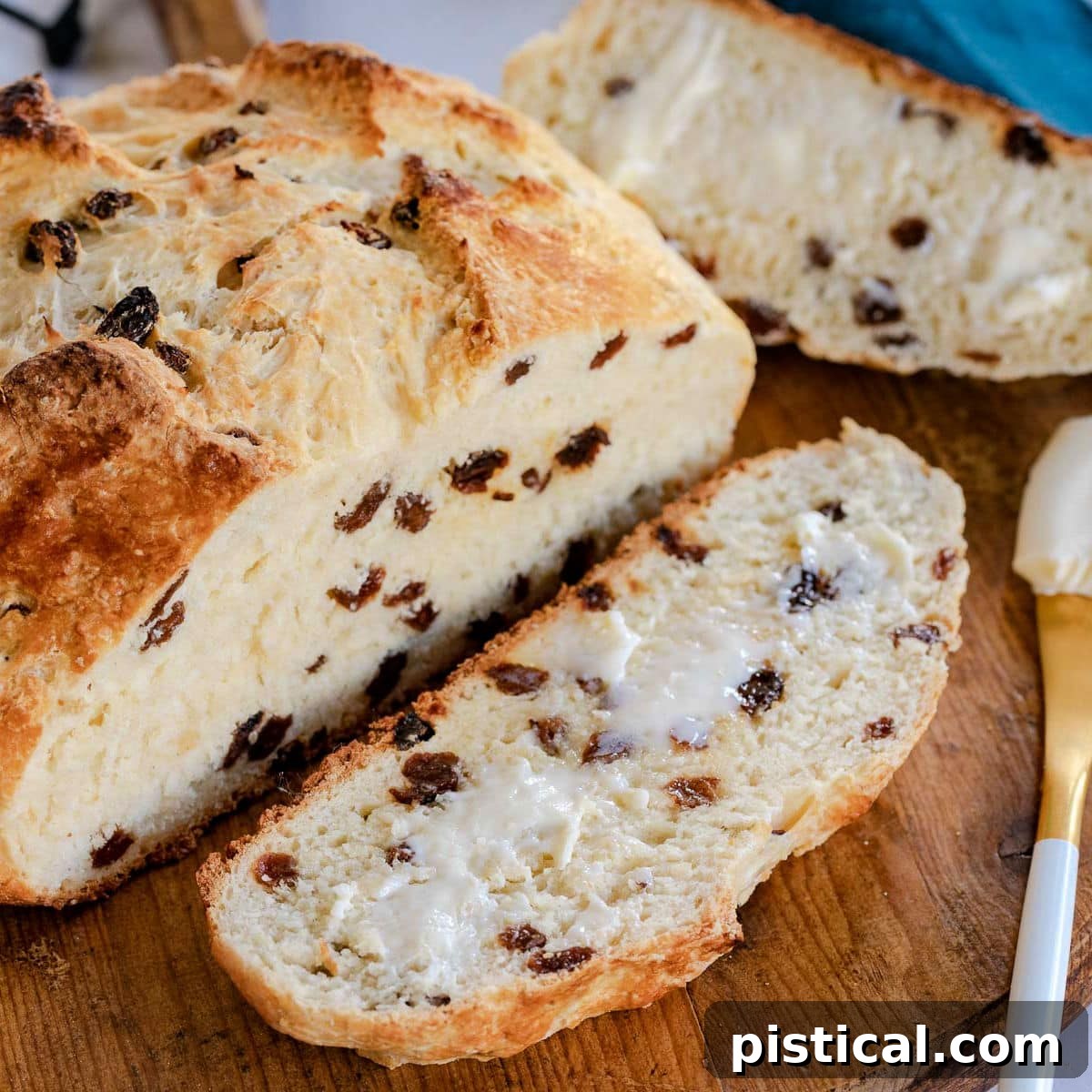
Discover the ultimate recipe for a truly unforgettable Irish Soda Bread – a delightful quick bread renowned for its tender crumb, subtly sweet flavor, and satisfyingly rustic crust. This family-favorite recipe promises simplicity and speed, allowing you to enjoy a warm, homemade loaf in under an hour from start to finish. Perfect on its own, exquisite with a pat of butter, or elevated with your favorite spread, this soda bread is a versatile staple for any occasion.
Are you a fan of baking your own bread at home? Be sure to explore our other beloved recipes, including the incredibly moist Banana Bread, the perfectly crumbly Homemade Cornbread, and the aromatic Cinnamon Swirl Bread!
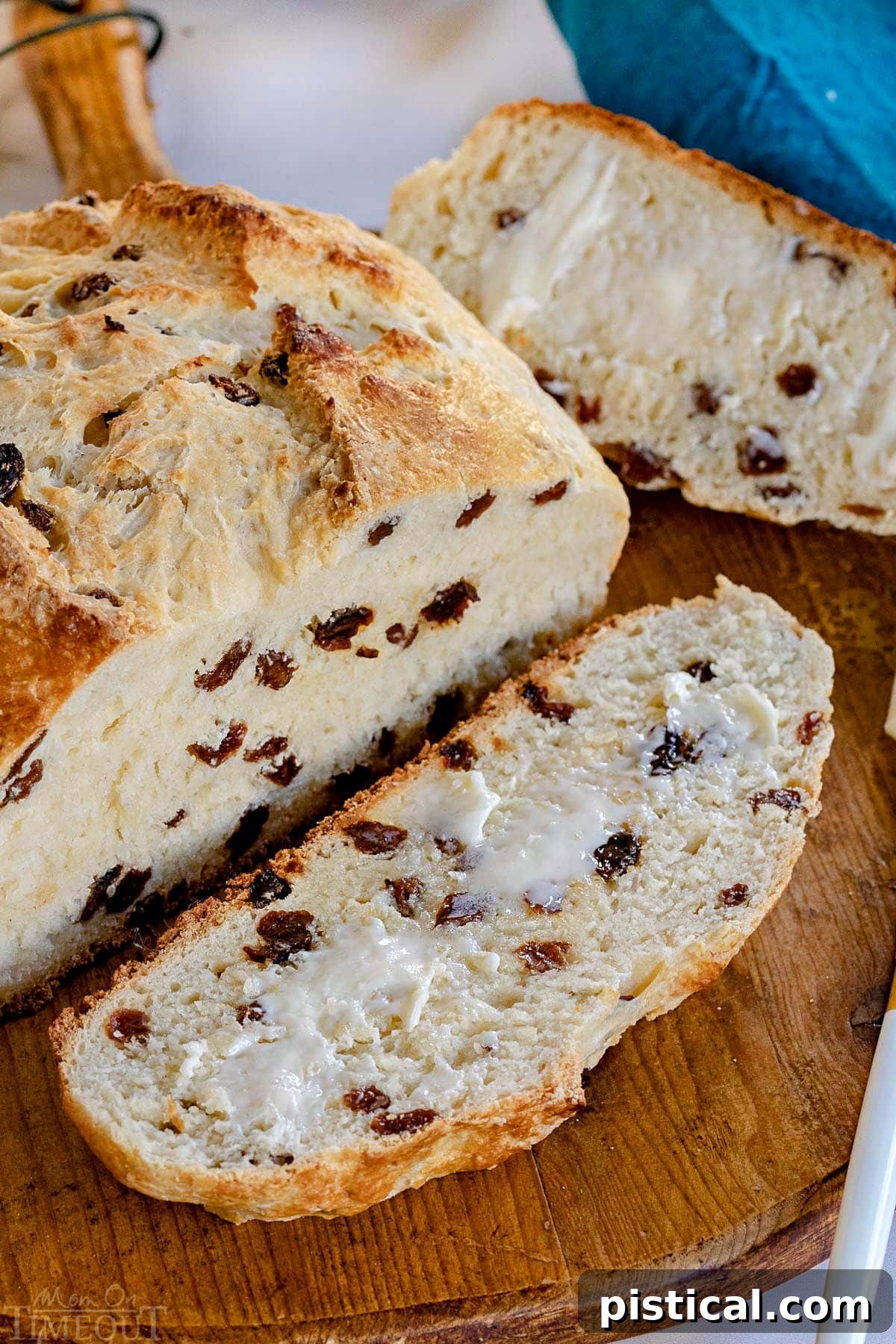
Easy and Authentic Irish Soda Bread Recipe
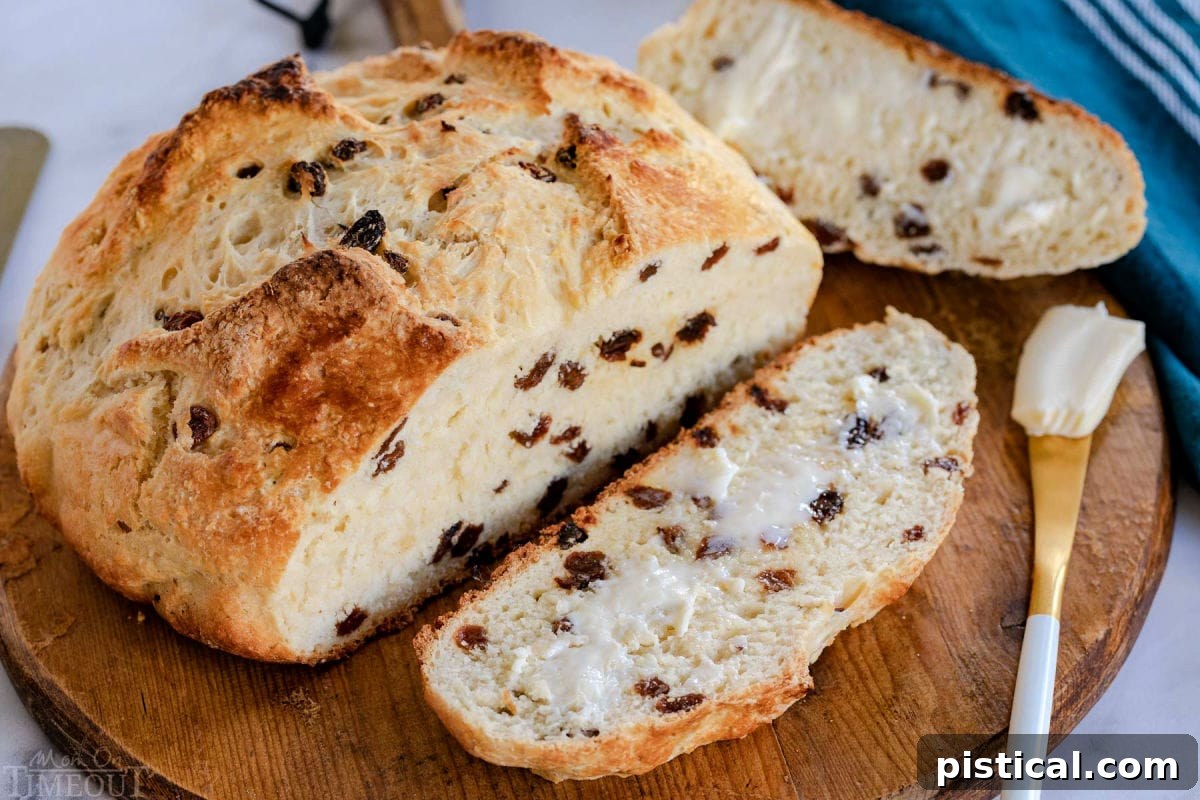
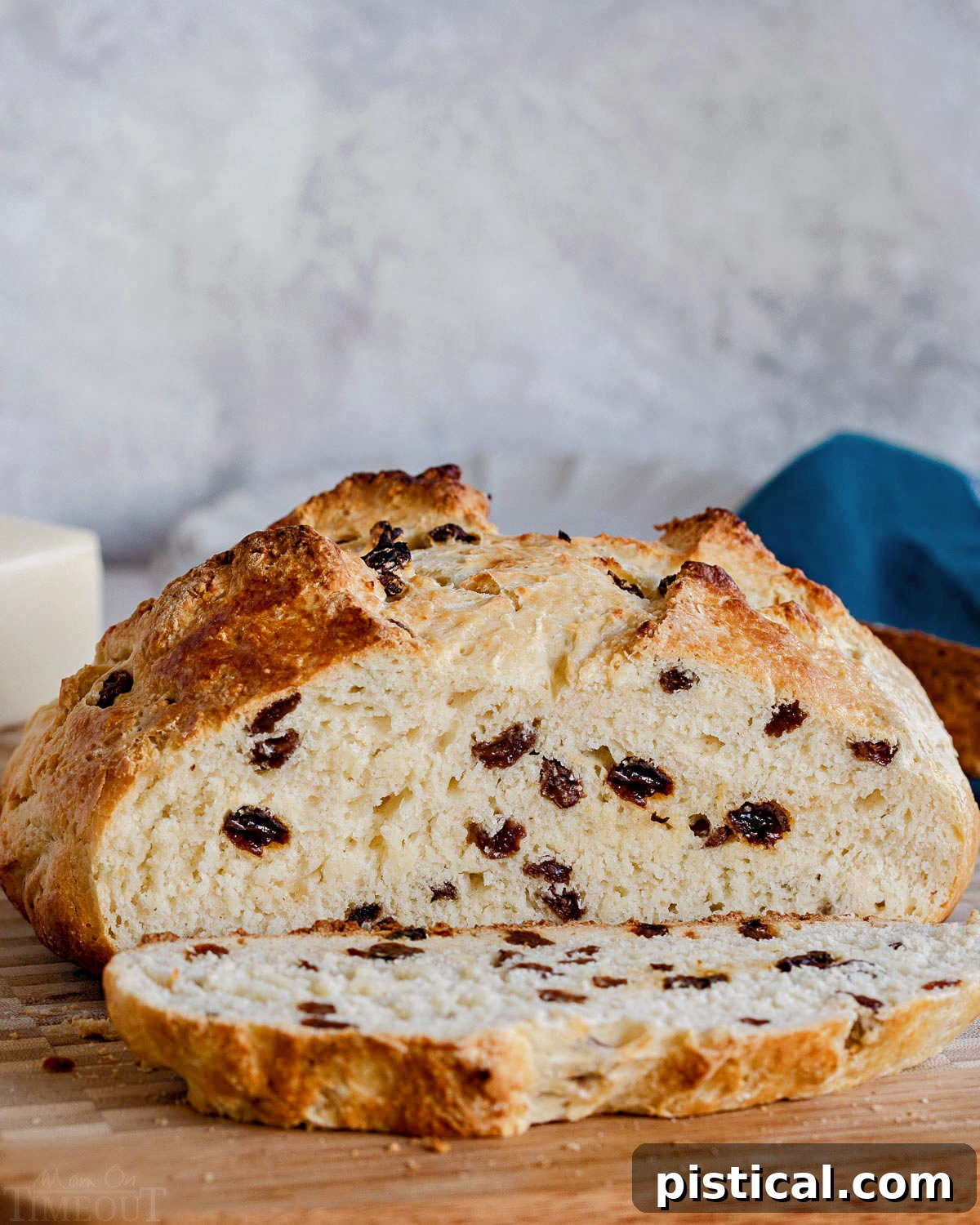
This Irish Soda Bread recipe has become an indispensable go-to in my kitchen, cherished by everyone in my family. Its charm lies in its remarkable simplicity, quick preparation time, and undeniably delicious taste. From the moment you gather your pantry-staple ingredients to the moment a fragrant, golden-brown loaf graces your table, less than an hour will pass. The bread boasts a wonderfully soft interior, balanced by a hint of sweetness, often enhanced by plump raisins and a touch of sugar. While it makes an exceptional base for French Toast, we most frequently savor it simply with a generous smear of butter, or occasionally, a dollop of our favorite fruit jam or jelly. It’s truly the epitome of comfort food.
Beyond its delicious flavor, this bread is incredibly versatile, fitting seamlessly into any meal of the day. Serve it warm for breakfast alongside eggs and bacon, enjoy it as a hearty accompaniment to a midday soup, or even as a simple yet satisfying dinner roll. If you prefer your bread without fruit, the raisins can be effortlessly omitted, yielding a plain loaf that’s equally delightful. Its robust texture and satisfying structure make it a fantastic choice for sandwiches, holding up beautifully to various fillings. We especially adore the rustic, homely appearance of this bread – it’s a testament to its homemade goodness and evokes a feeling of warmth and comfort with every bite.
What Exactly Is Irish Soda Bread? Understanding This Timeless Quick Bread
Irish Soda Bread, often simply referred to as Soda Bread, derives its distinctive name from the primary leavening agent it employs: baking soda. Unlike traditional yeast breads that require extensive proofing and rising times, soda bread utilizes a chemical reaction between baking soda and an acidic ingredient – in this case, buttermilk – to create its lift. This ingenious combination produces a wonderfully airy and tender crumb without the need for yeast, making it a true “quick bread” that’s ready in a fraction of the time.
While widely associated with Irish culinary traditions, the history of soda bread is fascinatingly complex. It might be a common misconception that the Irish invented this particular bread recipe. In fact, variations of soda bread were known and baked by Native American populations long before it became a staple in Ireland. They often used native ingredients like ground corn and wood ash (a source of alkali) with sour milk to create a similar leavening effect. It was later, in the 19th century, that soda bread gained immense popularity across Ireland, especially during times of economic hardship when yeast was expensive and difficult to come by. Its ease of preparation, reliance on readily available ingredients, and quick baking time made it an ideal food for families. Over time, its widespread adoption in Irish households cemented its place in their culture, leading to the enduring name we use today: Irish Soda Bread. This rich history only adds to the charm of this simple yet profound bread, connecting us to centuries of resourceful baking traditions.
Essential Ingredients for Your Perfect Irish Soda Bread
Crafting this delightful Irish Soda Bread requires just a handful of straightforward ingredients, most of which you likely already have in your pantry. The magic truly lies in the combination and precise ratios. While you’ll find the complete, printable recipe with exact measurements and detailed instructions in the recipe card towards the end of this post, let’s break down each key component and its role in creating this beloved loaf:
- All-Purpose Flour: This forms the foundational structure of our bread. Using all-purpose flour ensures a tender, yet sturdy, crumb that holds its shape beautifully. For best results, spoon and level your flour to avoid over-measuring and a dense loaf.
- Granulated Sugar: We add just a modest amount of granulated sugar. Its purpose is not to make the bread overtly sweet, but rather to provide a delicate hint of sweetness that balances the flavors and contributes to a lovely golden crust.
- Salt: A crucial ingredient for flavor balance. Salt enhances the overall taste of the bread, preventing it from tasting bland and bringing out the subtle sweetness of the other ingredients.
- Baking Soda and Baking Powder: These are the dynamic duo of leavening agents in this no-yeast bread. Baking soda reacts with the acidity of the buttermilk, producing carbon dioxide gas that gives the bread its signature rise. Baking powder offers an extra boost, ensuring a consistently light and fluffy texture. The combination works synergistically to create that perfect lofty crumb.
- Unsalted Butter: You’ll want to use unsalted butter at room temperature, cut into small cubes. Incorporating butter into the dry ingredients adds richness, moisture, and a tender mouthfeel to the finished bread. Room temperature butter blends more easily and creates a better texture.
- Raisins or Currants: While I often opt for plump raisins due to their common availability and delightful sweetness, traditional Irish Soda Bread frequently features currants. Golden raisins are also a fantastic alternative if you’re looking for a slightly different flavor profile. These dried fruits add bursts of sweetness and a pleasant chewiness throughout the loaf. Feel free to adjust the quantity or omit them entirely if preferred.
- Buttermilk: The singular wet ingredient in this recipe, and arguably the most vital. Buttermilk is essential for activating the baking soda, creating the necessary gas for the bread to rise. Its acidity also contributes to the tender texture and distinctive subtle tang of Irish Soda Bread. Ensure your buttermilk is well-shaken before adding.
Mastering the Art: Step-by-Step Guide to Making Irish Soda Bread
Creating this delicious Irish Soda Bread is a straightforward process, perfect for bakers of all skill levels. Follow these simple steps to achieve a perfectly baked, golden loaf every time:
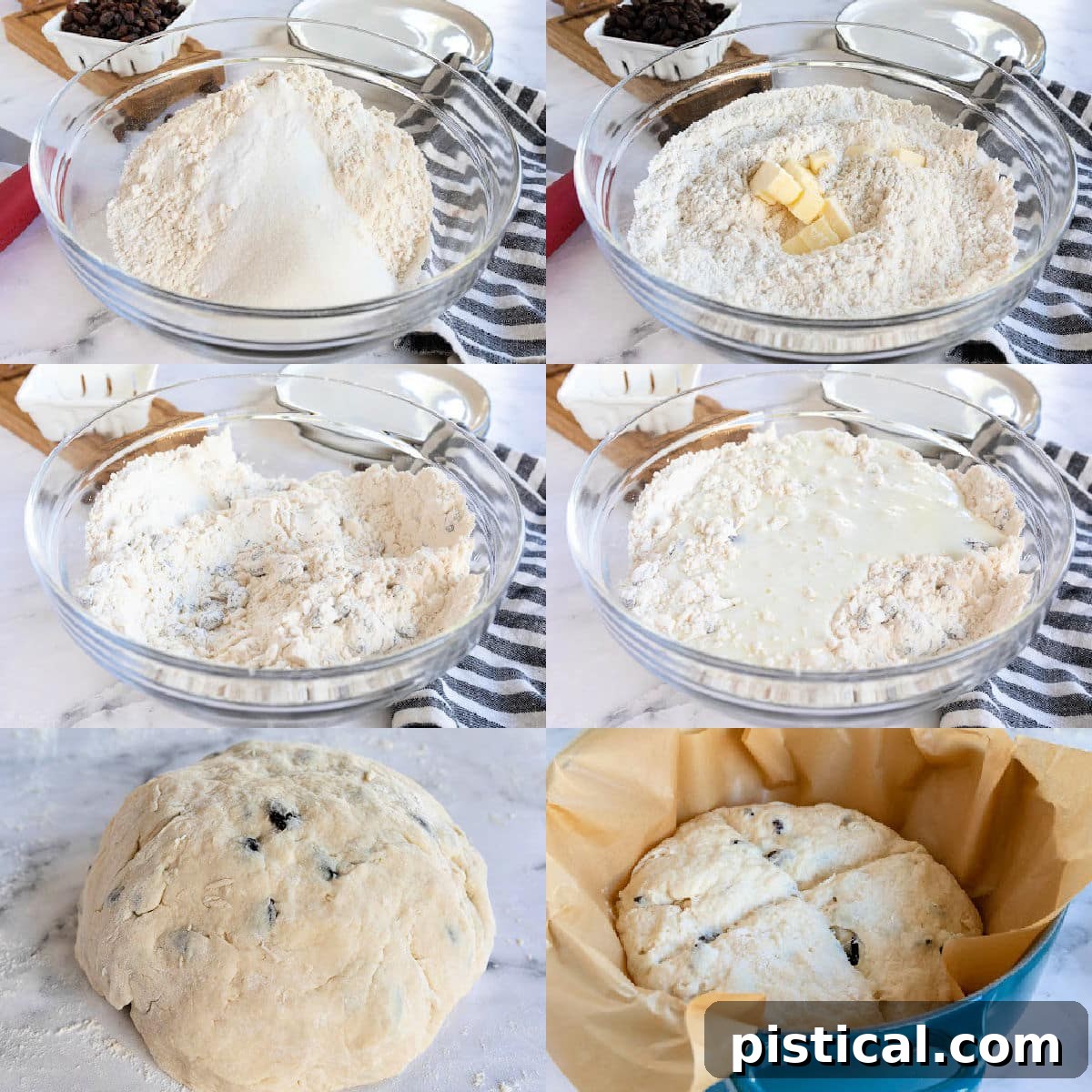
- Prepare Your Oven and Pan: Begin by preheating your oven to 375°F (190°C). Prepare your baking vessel of choice: a Dutch oven lined with parchment paper, or a baking sheet or cast iron skillet lightly greased or lined with a silicone mat. A Dutch oven or cast iron skillet will help create a wonderfully crispy crust.
- Combine Dry Ingredients: In a large mixing bowl, thoroughly whisk together the all-purpose flour, granulated sugar, salt, baking powder, and baking soda. Whisking ensures these leavening agents and flavorings are evenly distributed throughout the flour mixture.
- Incorporate the Butter: Add the cubed, room-temperature unsalted butter to the dry ingredients. Using a pastry cutter, two forks, or even your fingertips, work the butter into the flour mixture until it resembles coarse crumbs and the butter pieces are no larger than the size of a pea. This technique helps create pockets of steam during baking, contributing to a tender crumb.
- Add the Raisins: Stir in the raisins (or currants) until they are evenly distributed throughout the flour and butter mixture. This ensures every slice gets a burst of sweet fruit.
- Introduce the Buttermilk: Pour the buttermilk into the dry ingredients. Mix gently with a wooden spoon or your hands until the flour mixture is *just* incorporated. The dough will be quite sticky and shaggy – resist the urge to overmix! Overmixing can lead to a tough bread.
- Light Kneading and Shaping: Turn the sticky dough out onto a generously floured work surface. Sprinkle a little extra flour on top of the dough and gently knead it 10 to 12 times. The goal here is just to bring the dough together and form it into a round loaf shape, not to develop gluten like yeast breads. Overworking will result in a dry, dense bread.
- Transfer to Baking Vessel: Carefully transfer the formed round loaf to your prepared Dutch oven, baking sheet, or cast iron skillet.
- Score the Loaf: Using a sharp knife, cut a deep “X” into the top of the loaf, about 3/4 inch deep. This traditional scoring allows the heat to penetrate the center of the bread more effectively, helps the bread rise evenly, and gives it its iconic rustic appearance. For an even deeper golden color and a slight sheen, you can brush the top of the loaf with a little extra buttermilk at this stage.
- Bake to Perfection: Place the bread in the preheated oven and bake for approximately 45 to 55 minutes. The bread is done when it’s beautifully golden brown on top and sounds hollow when tapped on the bottom. The internal temperature should register around 200-210°F (93-99°C).
- Cool and Enjoy: Once baked, remove the bread from the oven and transfer it to a wire rack to cool completely to room temperature before slicing. This allows the internal structure to set properly. Then, slice and enjoy plain, with butter, jam, or honey!
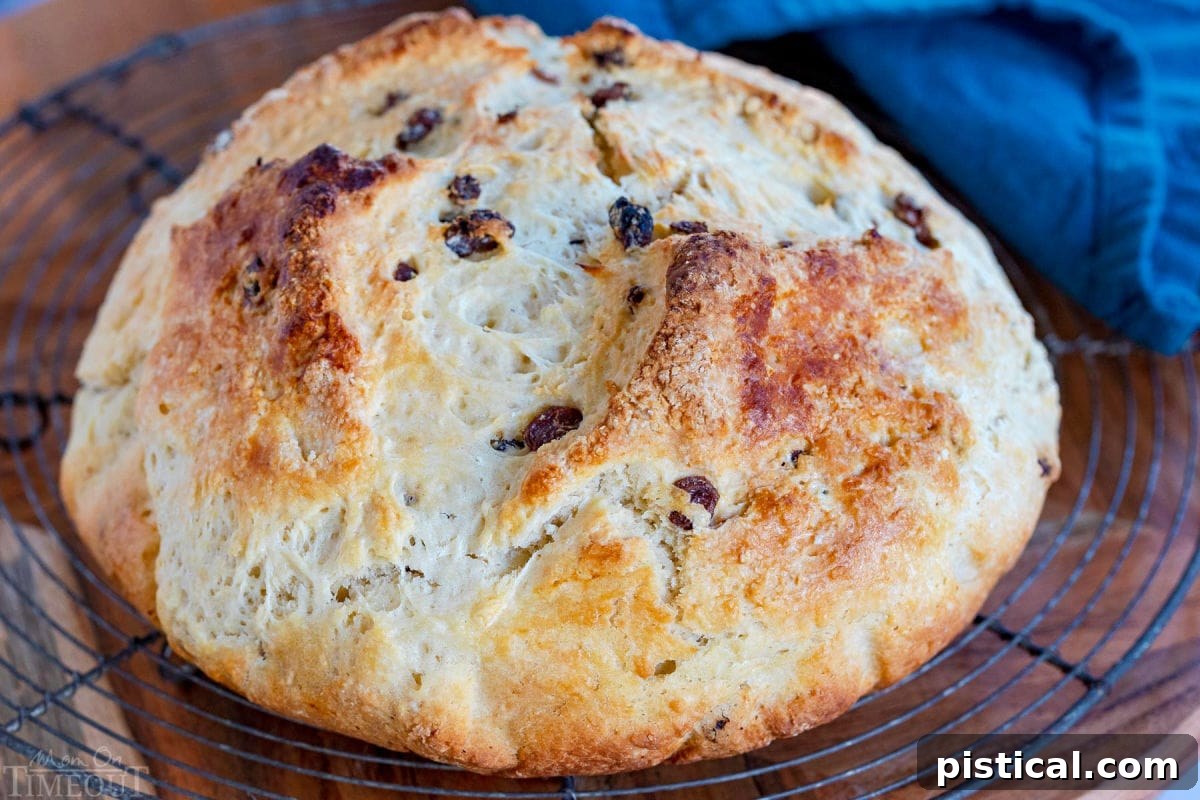
Pro Tip for a Golden Crust: For an even deeper golden hue and a beautiful, subtle sheen on your crust, brush the top of the dough with a little extra buttermilk just before baking. This small step makes a noticeable difference!
Storage and Freezing Information for Irish Soda Bread
To ensure your delicious Irish Soda Bread remains fresh and enjoyable for as long as possible, proper storage is key. Here’s how to store your homemade loaf:
Room Temperature Storage: After your bread has completely cooled to room temperature, store any leftover bread in an airtight container or a heavy-duty plastic bag. This will prevent it from drying out. Stored this way, it will maintain its freshness and delightful texture for up to 4 days. While it’s best enjoyed fresh, it remains perfectly delicious for a few days.
Freezer Storage: If you’ve baked an extra loaf or want to enjoy fresh soda bread at a later date, freezing is an excellent option. Allow the bread to cool completely to room temperature first. Then, tightly wrap the entire loaf (or individual slices) in plastic wrap, followed by a layer of aluminum foil. This double-layer protection helps prevent freezer burn. Place the well-wrapped bread into a freezer-safe, re-sealable bag, removing as much air as possible. It can be stored in the freezer for up to 2 months. To defrost, simply transfer the frozen bread to the refrigerator overnight. Once thawed, bring it to room temperature before serving. You can also gently reheat slices in the microwave for a few seconds or toast them in a toaster oven for a warm, slightly crispy refresh.
Creative Ways to Enjoy Your Homemade Irish Soda Bread
There truly is no wrong way to savor this easy Irish Soda Bread! Its simple, comforting flavor makes it incredibly versatile, and while it’s delicious on its own, a few additions can elevate the experience even further. Here are some of our favorite ways to enjoy it:
- Classic with Butter: The most quintessential way to enjoy it! A generous pat of softened butter melting into a warm slice of soda bread is pure bliss. The butter enhances the bread’s natural sweetness and tender texture.
- Sweet Spreads: Take it to the next level with a dollop of your favorite jam or jelly. Strawberry, raspberry, or apricot preserves are fantastic choices. For a natural sweetness, drizzle a bit of local honey over a warm slice. Nut butters like peanut butter or almond butter also make a satisfying snack.
- Savory Pairings: Don’t limit soda bread to sweet toppings! It pairs wonderfully with savory accompaniments. Serve it alongside a hearty bowl of Irish stew, a comforting chili, or a rich beef and vegetable soup. Its robust texture makes it perfect for dipping.
- Breakfast Delight: Beyond French Toast, enjoy it toasted with eggs and bacon, or as a base for an open-faced breakfast sandwich with avocado and a fried egg.
- Cheese Board Companion: Its subtle flavor makes it a great addition to a cheese board. Pair it with sharp cheddar, creamy brie, or a tangy goat cheese for a delightful combination of textures and tastes.
- Sandwiches & Toasties: Its dense yet tender crumb makes it ideal for sandwiches. Try it with sliced ham and a touch of mustard for a simple, satisfying lunch, or make a grilled cheese for a rustic twist.
- Dessert Twist: Believe it or not, a slice of slightly sweetened soda bread with a dollop of whipped cream and fresh berries can make for a delightful, light dessert.
Expert Tips and Tricks for Baking Perfect Irish Soda Bread
Achieving the perfect Irish Soda Bread is simple, but a few insider tips can elevate your baking from good to extraordinary. Here are some of Trish’s tried-and-true recommendations for a consistently delicious loaf:
- Add a Touch of Cinnamon: If you adore the warm, comforting flavor of cinnamon, especially in baked goods like our homemade Cinnamon Swirl Bread, consider adding a teaspoon (or even more, to taste) of ground cinnamon to this recipe. This creates a wonderfully fragrant and quick cinnamon raisin Irish Soda Bread, perfect for breakfast or an afternoon treat.
- Batch Baking for Sharing: This recipe is incredibly forgiving and scales beautifully. It’s a fantastic idea to double or triple the recipe when you’re preparing for a gathering, holiday, or simply want to share the deliciousness with friends and family. Homemade bread makes a thoughtful gift!
- Experiment with Baking Surfaces: The type of pan you use can subtly alter the crust texture. You can bake this bread on a simple baking sheet (lined with parchment paper or a silicone baking mat for easy release), or for a distinctly thicker, crispier crust, opt for a cast iron skillet or a Dutch oven. The even heat distribution of cast iron creates a truly satisfying crunch.
- Raisins vs. Currants – Your Choice: While I typically use raisins in my Irish Soda Bread recipe due to their easy availability in my pantry, traditional Irish Soda Bread recipes more commonly feature currants. Both dried fruits lend a lovely sweetness and texture. Feel free to use whichever you prefer or have on hand. Golden raisins are also a delightful variation!
- Fruit-Free Option: Although traditional recipes often include currants or raisins, these fruits can absolutely be omitted if you prefer a plain soda bread. The bread is hearty and delicious on its own, making it a wonderful accompaniment to savory dishes.
- Brush for Golden Shine: For a deeper, more appetizing golden color and a beautiful, subtle sheen on your bread’s crust, brush the top of the dough with a little extra buttermilk just before it goes into the oven. This simple step adds an extra layer of professional finish.
- Embrace the Rustic Charm: Remember, Irish Soda Bread is inherently a rustic, quick bread. Don’t expect it to have the perfectly smooth, uniform texture of a yeast-risen loaf. The somewhat shaggy, textured look is not a flaw – it’s part of this bread’s authentic charm and contributes to its homemade appeal.
- Avoid Overworking the Dough: This is perhaps the most crucial tip. Unlike yeast breads that require extensive kneading, soda bread dough should be handled minimally. Overworking the dough develops gluten excessively, leading to a tough, dry loaf. Mix until just combined and knead only a few times (10-12) to form a ball.
More Delightful Bread Recipes to Enjoy
If you’ve loved baking this easy Irish Soda Bread, you’re in for a treat! Explore our collection of other fantastic bread recipes that are perfect for any occasion, from breakfast to dinner, or simply as a comforting snack:
- Classic Banana Bread
- Authentic Homemade Cornbread
- Moist Pumpkin Bread
- Easy Beer Bread
- Nutrient-Rich Carrot Apple Zucchini Bread
- Irresistible Cinnamon Swirl Apple Bread
- Simply Divine Cinnamon Bread
- Glazed Light Lemon Bread
Irish Soda Bread Recipe Card
Irish Soda Bread

This easy and delicious Irish Soda Bread is soft and tender with a touch of sweetness – definitely a family favorite! Quick and easy to make, this Irish Soda Bread recipe takes under an hour from start to finish and is amazing on its own or with a touch of butter.
Print Recipe | Pin Recipe
Course: Bread
Cuisine: American, Irish, Native American
Keyword: Irish Soda Bread, Irish Soda Bread recipe, recipe for Irish soda bread
Prep Time: 5 minutes
Cook Time: 45-55 minutes
Servings: 8 slices
Calories: 369 kcal
Author: Trish – Mom On Timeout
Ingredients
- 4 cups all-purpose flour, spooned and leveled
- 3 tablespoons granulated sugar
- 1 teaspoon salt
- 1 ½ teaspoons baking powder
- ½ teaspoon baking soda
- 3 tablespoons salted butter, room temperature, cut into small cubes
- 1 cup raisins or currants
- 1 ¾ cups buttermilk, full fat or low fat, shaken
Instructions
- Preheat oven to 375°F (190°C). Line a Dutch oven with parchment paper or spray with nonstick spray. You can also use a baking sheet or cast iron skillet.
- In a large bowl, whisk together the flour, sugar, salt, baking powder, and baking soda.
- Use a pastry cutter, two forks, or your hands to work the butter into the dry ingredients until the butter pieces are no larger than pea-sized.
- Stir in the raisins until evenly incorporated.
- Add the buttermilk and mix just until the flour mixture is almost incorporated. The dough will be sticky.
- Generously flour a work surface and turn the dough out onto the surface. Sprinkle on a little additional flour and knead the dough 10 or 12 times, forming it into a round loaf shape. Do not overwork the dough!
- Transfer the loaf to the prepared Dutch oven, baking sheet, or cast iron skillet.
- Use a sharp knife to cut an “X” into the top of the loaf about 3/4 inch deep. Brush the top of the loaf with more buttermilk if desired for a deeper golden crust.
- Bake for 45 to 55 minutes, or until the bread is golden brown on top and sounds hollow when tapped on the bottom.
- Allow bread to cool to room temperature before slicing. Enjoy plain or with butter, jam, or honey.
Notes
This is a rustic quick bread recipe, and you can expect the dough to have a more shaggy look to it – that’s perfectly okay and part of its charm!
Storage Information: Leftover bread can be stored at room temperature in an airtight container for up to 4 days. To freeze, allow bread to cool completely, then tightly wrap in plastic wrap and foil before placing in a freezer-safe bag for up to 2 months. Defrost overnight in the fridge and bring to room temperature before serving.
Nutrition Information (per serving)
Calories: 369 kcal | Carbohydrates: 69g | Protein: 9g | Fat: 7g | Saturated Fat: 4g | Polyunsaturated Fat: 1g | Monounsaturated Fat: 2g | Trans Fat: 1g | Cholesterol: 17mg | Sodium: 455mg | Potassium: 364mg | Fiber: 3g | Sugar: 7g | Vitamin A: 218IU | Vitamin C: 1mg | Calcium: 109mg | Iron: 3mg