
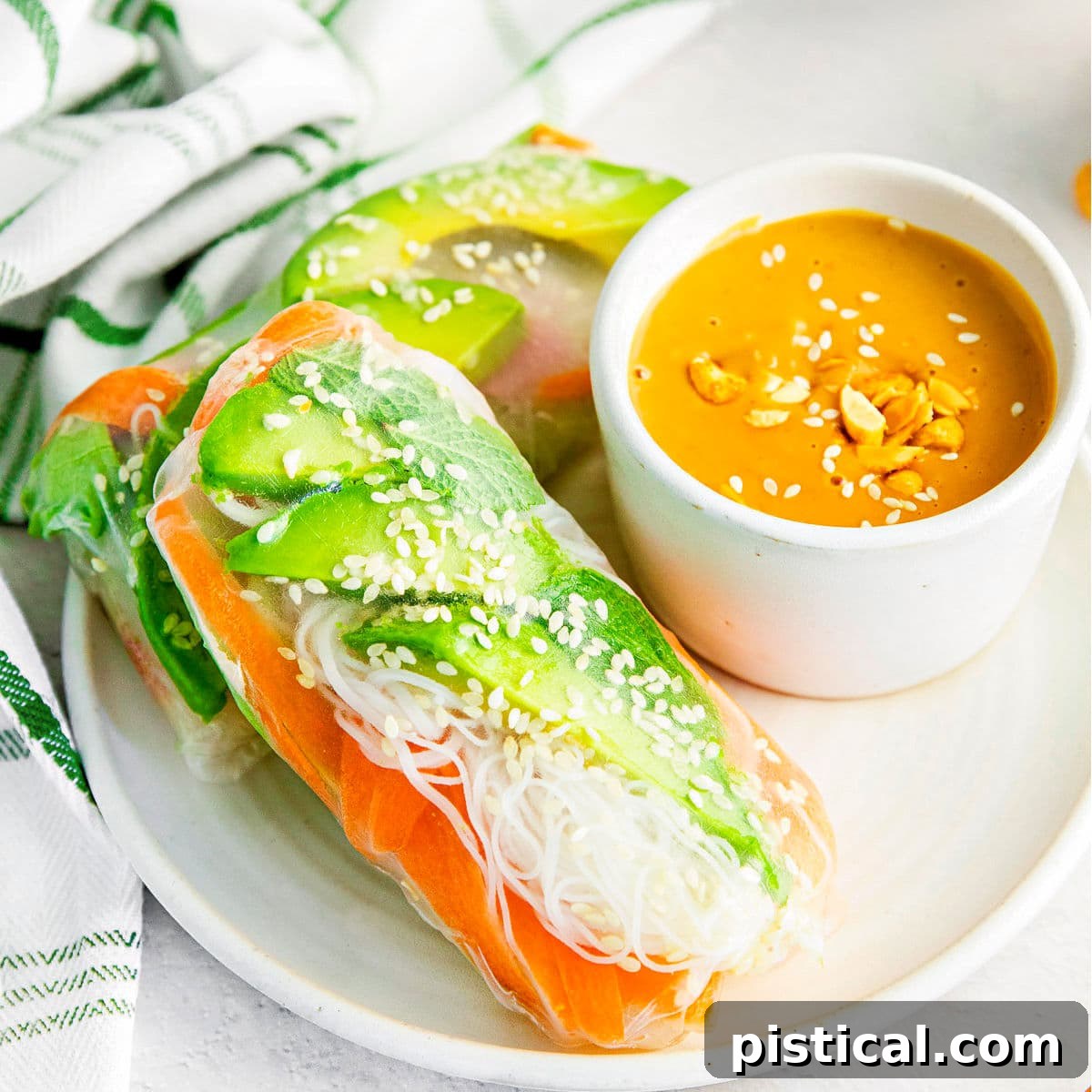
Welcome to the ultimate guide for crafting the most refreshing and vibrant Fresh Spring Rolls! These delightful “summer rolls,” brimming with crisp vegetables and often a savory protein, are the quintessential light appetizer or snack, especially when warmer weather calls for something cool and invigorating. Paired with an irresistible, creamy peanut dipping sauce, these easy-to-make rolls are destined to become a fan favorite at your next gathering. Whether you’re planning a casual summer picnic, an elegant garden party, a bridal shower, or simply seeking a healthy and flavorful meal, these fresh spring rolls offer a perfect blend of taste and visual appeal that will have everyone reaching for more.
Beyond their stunning presentation, these fresh spring rolls are incredibly versatile. They can serve as a light and satisfying starter before a heartier main course, such as a flavorful Chicken Stir Fry, or alongside a show-stopping dish like Honey Walnut Shrimp. Their inherent lightness means they complement a wide array of Asian-inspired meals without overwhelming the palate, making them a superb choice for any menu.
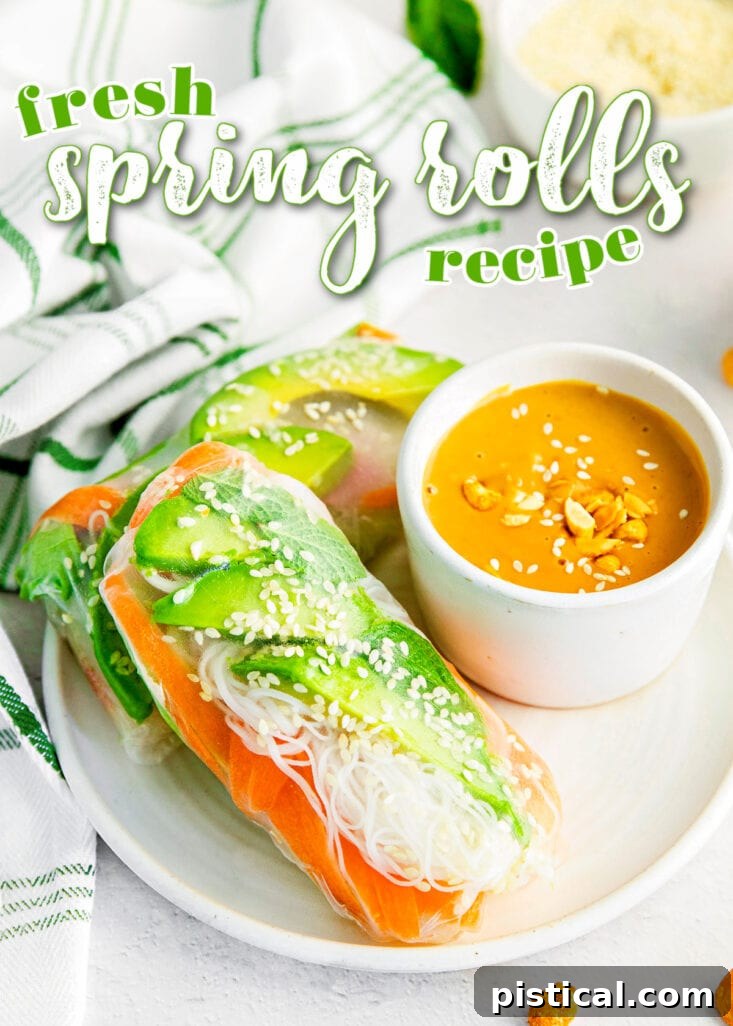
Discover the Magic of Homemade Fresh Spring Rolls
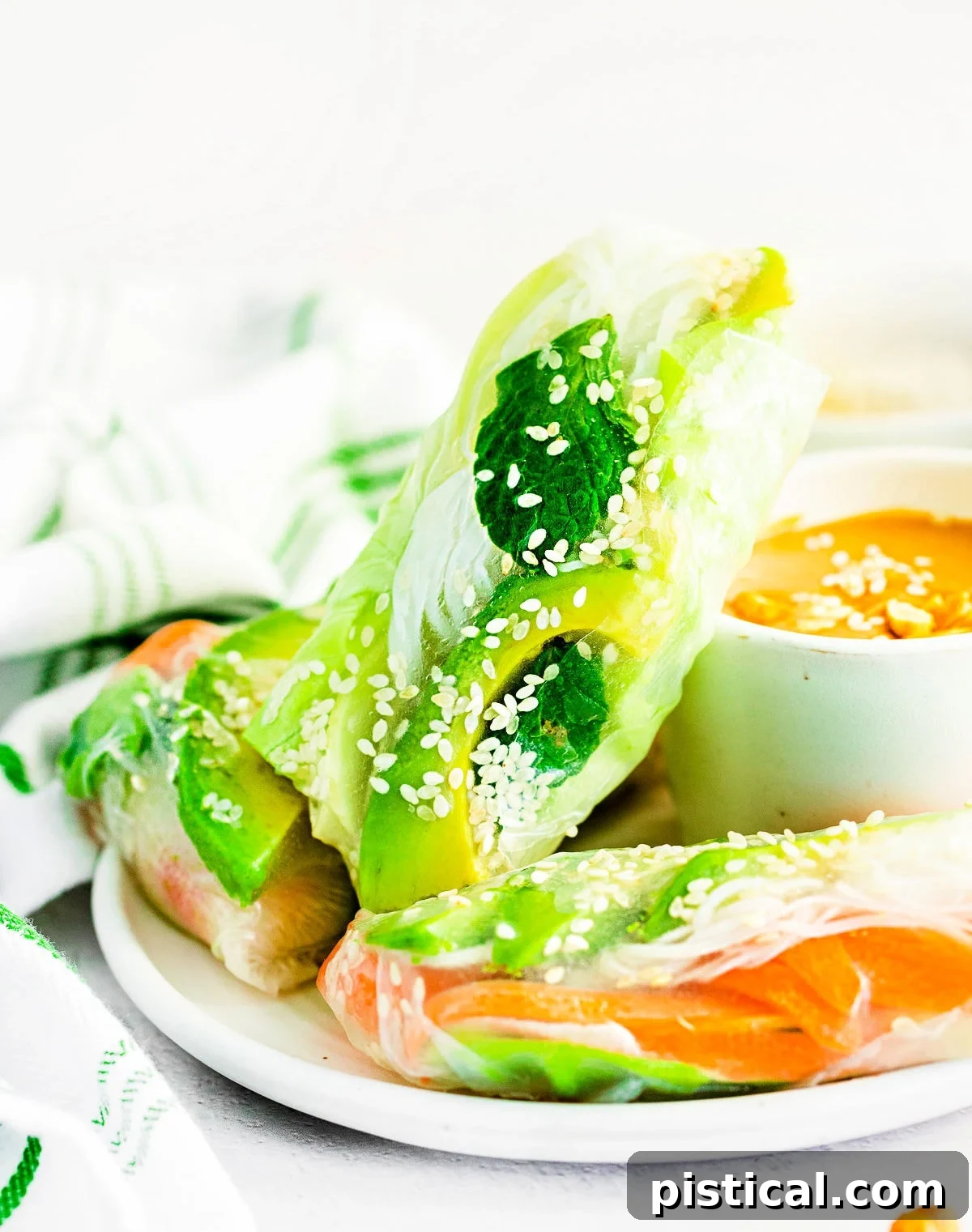
Fresh spring rolls are a true culinary marvel, often described as little handheld rainbows due to their vibrant array of ingredients. Imagine shredded purple cabbage, thinly sliced bright orange carrots, refreshing cucumber sticks, and creamy avocado, all neatly wrapped in delicate, translucent rice paper. Each bite offers a symphony of textures—the crispness of fresh vegetables, the softness of rice noodles, and the satisfying chew of the wrapper—all brought together by a rich, dreamy peanut sauce. For those seeking a delicious and healthy vegetarian option, these rolls are an absolute dream, packed with plant-based goodness and bursting with natural flavor.
One of the greatest advantages of this fresh spring roll recipe is its endless customizability. Feel free to experiment with your favorite vegetables or add new ones to the mix. This allows you to cater to different tastes and dietary preferences effortlessly. If you’re looking to boost the protein content, consider incorporating cooked shrimp, marinated tofu, or even thinly sliced chicken or lean pork. Unlike their deep-fried counterparts, these summer rolls are served fresh and uncooked, making them an ideal, guilt-free choice, especially appealing after a long, hot summer day. They are a celebration of fresh produce, offering a nutritious and delightful experience that’s both light and incredibly satisfying for any occasion.
What Exactly Are Spring Rolls? A Deep Dive into This Refreshing Dish
My initial introduction to fresh spring rolls was at an inspiring culinary event. A talented chef demonstrated the delicate art of soaking rice paper wrappers and expertly rolling them with a plethora of fillings. This hands-on experience offered me the freedom to create my own masterpiece, leading to a memorable “surf and turf” roll filled with succulent shrimp and tender ribeye strips – a truly sensational and unforgettable combination. However, the inherent beauty of these rolls lies in their immense versatility and ability to highlight fresh ingredients.
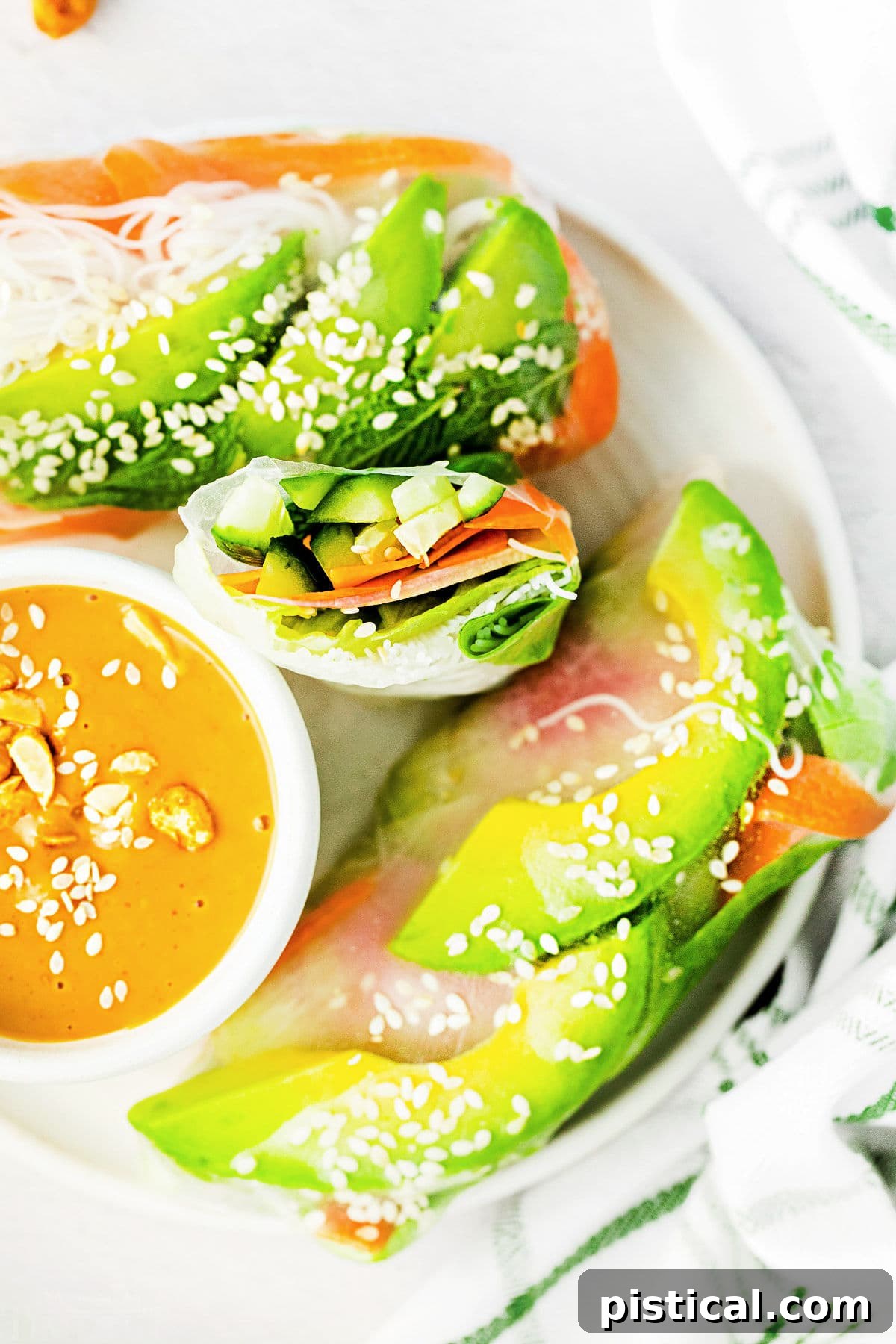
Today, I’m thrilled to share a more classic, vegetable-focused fresh spring roll recipe that perfectly embodies the vibrant spirit of spring and summer. These delightful rolls are typically crafted using thin, round rice paper wrappers. These unique wrappers possess a fascinating quality: they appear opaque and brittle when dry, but elegantly transform into a soft, translucent film once rehydrated in warm water. This beautiful translucency allows the colorful fillings to peek through, adding to their visual allure and making them as appealing to the eye as they are to the palate.
Known by various enticing names such as summer rolls, fresh spring rolls, or even garden spring rolls, these versatile appetizers can be enjoyed in diverse ways depending on regional preferences. While some traditional versions might be lightly baked or briefly fried, my absolute favorite method, and arguably the most popular for fresh renditions, is to serve them completely uncooked. This approach truly highlights the crispness, natural sweetness, and invigorating flavors of the fresh ingredients within, making them incredibly refreshing and ideally suited for warm weather. The common thread among all these delicious variations is their reliance on an abundance of wholesome, fresh vegetables, offering a healthful, light, and utterly delicious culinary experience that’s hard to resist.
Spring Rolls vs. Egg Rolls: Decoding the Delicious Differences
While fresh spring rolls and egg rolls may share a superficial resemblance in their cylindrical shape, their culinary identities are remarkably distinct. The fundamental differences lie primarily in their preparation methods, wrappers, and typical fillings. Understanding these distinctions will help you appreciate the unique qualities of each.
Egg rolls are characteristically defined by their robust, thicker wheat-flour wrappers, which are almost always deep-fried until they achieve a crispy, bubbly, golden-brown exterior. This cooking method imparts a rich, savory, and comforting flavor profile. Their fillings typically consist of a hearty mixture of shredded vegetables, such as cabbage and carrots, combined with ground meat, most commonly pork or chicken. Egg rolls are often served hot, offering a satisfying crunch and a substantial bite.
In stark contrast, fresh spring rolls (or summer rolls) are distinguished by their delicate, thin rice paper wrappers. These wrappers are briefly softened in warm water, becoming pliable and beautifully translucent, allowing the vibrant fillings to be seen. Crucially, fresh spring rolls are typically served uncooked, emphasizing the crispness and natural flavors of their raw ingredients. Their fillings usually feature a medley of fresh, thinly sliced vegetables like cucumber, carrots, lettuce, and herbs, often accompanied by rice noodles and sometimes cooked shrimp or tofu. This uncooked preparation makes them exceptionally light, cool, and incredibly refreshing, offering a healthy and bright alternative to their fried counterparts.
Crafting Your Perfect Spring Rolls: Essential Ingredients for Flavor and Freshness
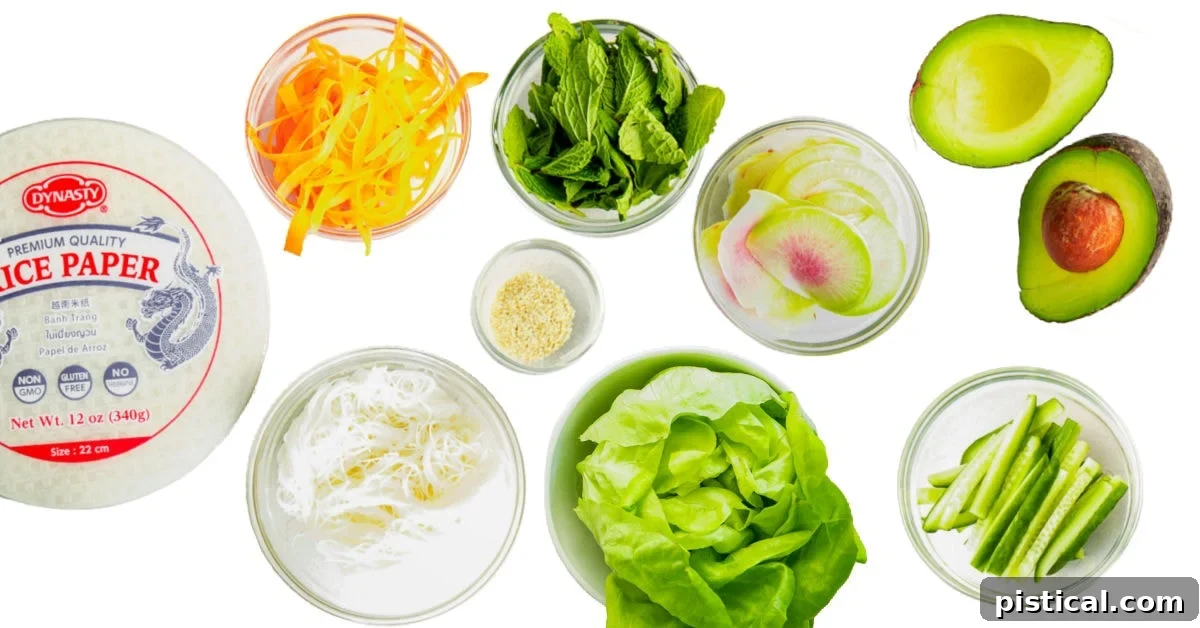
Preparing the ingredients for your fresh spring rolls is a delightful and straightforward process. With a little pre-planning and mindful chopping, the assembly becomes an enjoyable breeze. This activity is perfect for involving family members or friends, transforming meal prep into a fun, interactive kitchen experience. Here’s a comprehensive look at what you’ll need to create these vibrant culinary gems, ensuring each roll is packed with flavor and refreshing textures:
For the Fresh Spring Rolls:
- Rice Paper Sheets: These transparent, delicate wrappers are the foundational star of our rolls. Look for them in the Asian foods aisle of your local grocery store or at a dedicated Asian market. Their unique texture and translucency are key to authentic spring rolls.
- Butter Lettuce: Provides a tender, subtle, and slightly sweet base layer within the roll. Remember to carefully remove the tougher central ribs and use only the soft, pliable leaves for the best texture and ease of rolling.
- Rice Noodles: These add a wonderful soft, chewy texture that complements the crisp vegetables. Cook them according to package instructions until they are perfectly al dente, then rinse with cold water to prevent sticking.
- Cucumber: Offers a delightful crispness and a burst of refreshing moisture. Its cool, clean flavor perfectly complements the other vibrant ingredients. Cut them into thin, uniform matchsticks for easy incorporation and an appealing look.
- Carrots: Introduce a touch of natural sweetness and a vibrant pop of orange color. Thinly shave them using a mandoline or a vegetable peeler, or meticulously cut them into fine matchsticks. For maximum convenience and to save prep time, pre-cut carrot sticks are an excellent substitute.
- Avocado: Sliced thinly, ripe avocado brings a creamy, buttery richness that beautifully balances the crunch of the other vegetables. Ensure your slices are not too thick, as this can make the delicate rice paper wrapper prone to tearing during assembly.
- Purple Cabbage: Shredded purple cabbage not only introduces a beautiful, striking pop of color to the rolls but also provides a satisfying crunch and a slightly peppery undertone. You can finely shred it yourself or opt for readily available pre-shredded varieties for convenience.
- Thai Basil Leaves (Optional, but Highly Recommended): For an authentic, intensely aromatic touch, fresh Thai basil leaves impart a unique, slightly anise-like flavor that truly elevates these rolls, lending them a distinct Southeast Asian essence. If authentic Thai basil is unavailable, regular sweet basil can serve as a milder alternative.
- Sesame Seeds: A sprinkle of sesame seeds, either black or white, inside the roll adds a subtle nutty flavor and an extra, delightful layer of texture, enhancing the overall sensory experience.
For the Irresistible Peanut Dipping Sauce: A Flavor Powerhouse
No fresh spring roll experience is truly complete without a rich, flavorful, and perfectly balanced dipping sauce. This creamy peanut-soy blend perfectly complements the fresh ingredients, adding a layer of depth, umami, and a delightful savory-sweet balance that brings the entire dish together.
- Creamy Peanut Butter: The cornerstone of our sauce. Opt for creamy peanut butter for a luxuriously smooth and luscious texture. Avoid chunky varieties for the sauce itself, although some connoisseurs enjoy adding finely chopped peanuts to the finished sauce for an extra textural dimension.
- Soy Sauce: I highly recommend using a reduced-sodium soy sauce to maintain control over the overall saltiness of your sauce. Tamari is an excellent gluten-free alternative that offers a similar savory depth, and for a slightly sweeter, richer, and thicker flavor profile, hoisin sauce can also be used as a delicious substitute or addition.
- Rice Vinegar: This essential ingredient adds a delicate tang, a hint of natural sweetness, and a bright acidity that effectively cuts through the richness of the peanut butter, balancing the overall flavor of the sauce beautifully.
- Grated Ginger: A small amount of freshly grated ginger infuses the sauce with a warm, zesty zing and an aromatic complexity. While optional, it adds a distinct Asian flair. It can be omitted if you prefer a simpler flavor profile.
- Grated Garlic: Finely grate or mince the garlic to ensure its pungent, savory flavor is thoroughly well distributed throughout the sauce without any large, overpowering chunks.
- Optional Ingredients for Customization and Enhanced Flavor:
- Chili Garlic Sauce or Chili Paste: For those who crave a delightful kick, add a touch of chili garlic sauce or paste. Begin with a small amount and gradually adjust to achieve your preferred spice level.
- Toasted Sesame Oil: This is one of my all-time favorite secret ingredients for adding profound depth! Toasted sesame oil has a distinctively potent and nutty aroma and flavor, so begin with just half a teaspoon and add more very cautiously if desired, as a little goes a long way.
- Honey or Maple Syrup: If you prefer a noticeably sweeter sauce, a teaspoon or two of honey or maple syrup can perfectly balance the savory notes. Always taste and adjust for your desired level of sweetness.
Expert Tip for Perfect Consistency: If your peanut sauce turns out too thick after combining all ingredients, simply thin it out by adding water or even a splash of milk, one teaspoon at a time, whisking continuously, until it reaches your desired creamy, smooth, and easily dippable consistency.
Let’s Get Rolling! Assembling Your Exquisite Fresh Spring Rolls
The inherent beauty and convenience of these fresh spring rolls and their accompanying peanut sauce lie in their suitability for advance preparation. This makes them an ideal appetizer for virtually any party, gathering, or even just for meal prepping healthy lunches throughout the week. You can effortlessly assemble them in the morning or the day before, let them chill perfectly in the refrigerator, and simply transfer them to a beautiful platter when you’re ready to serve. This thoughtful approach allows you to relax and fully enjoy your guests or your stress-free meal!
Step-by-Step Guide: How to Master the Art of Making Spring Rolls
- Prepare Your Workspace: Begin by setting up a clean, flat work surface, such as a large cutting board. Fill a large, shallow bowl or dish (one wide enough to easily accommodate the rice paper sheets) with warm water. Ensure all your prepped ingredients are neatly arranged and within arm’s reach for efficient assembly.
- Soften the Rice Paper: Take one rice paper sheet and carefully dip it into the warm water. Allow it to soak for approximately 5 to 10 seconds, or until it becomes distinctly soft and pliable. The key is for it to be flexible but not overly soggy or sticky, as it will continue to soften slightly even after being removed from the water.
- Fill the Roll Thoughtfully: Gently transfer the softened rice paper to your prepared cutting board. Arrange a small, proportionate amount of each desired filling ingredient in the center, positioning them closer to the edge of the rice paper nearest to you. I find it incredibly helpful to start with a layer of butter lettuce; this acts as a natural, protective barrier between the delicate rice paper and the other ingredients. Follow with a modest portion of cooked rice noodles, then stack your chosen vibrant veggies like thinly sliced cucumber, carrots, creamy avocado, and crunchy purple cabbage, along with any optional aromatic additions such as fresh Thai basil or a sprinkle of sesame seeds. Remember the golden rule: avoid overfilling to ensure a manageable and neat roll.
- Master the Fold and Roll Technique: This step requires a gentle touch and, typically, a bit of practice to perfect. First, carefully fold the left and right sides of the rice paper inwards towards the center, ensuring they snugly cover the ends of your filling. Next, take the edge of the rice paper closest to you, lift it up and over the filling, pulling it gently but firmly away from you to create a compact start. Continue to roll tightly towards the opposite edge, much like you would roll a burrito or a tight cigar. Be exceptionally mindful not to tear the delicate rice paper, especially during the initial stages of the roll.
- Repeat and Chill for Perfection: Continue this process with the remaining rice paper sheets and your prepared fillings. Once each spring roll is neatly completed, place them on a clean plate. To prevent them from sticking to each other, ensure there’s a small space between each roll, or for optimal storage, wrap each roll individually in plastic wrap. Refrigerate the finished rolls until you’re absolutely ready to enjoy their refreshing goodness!
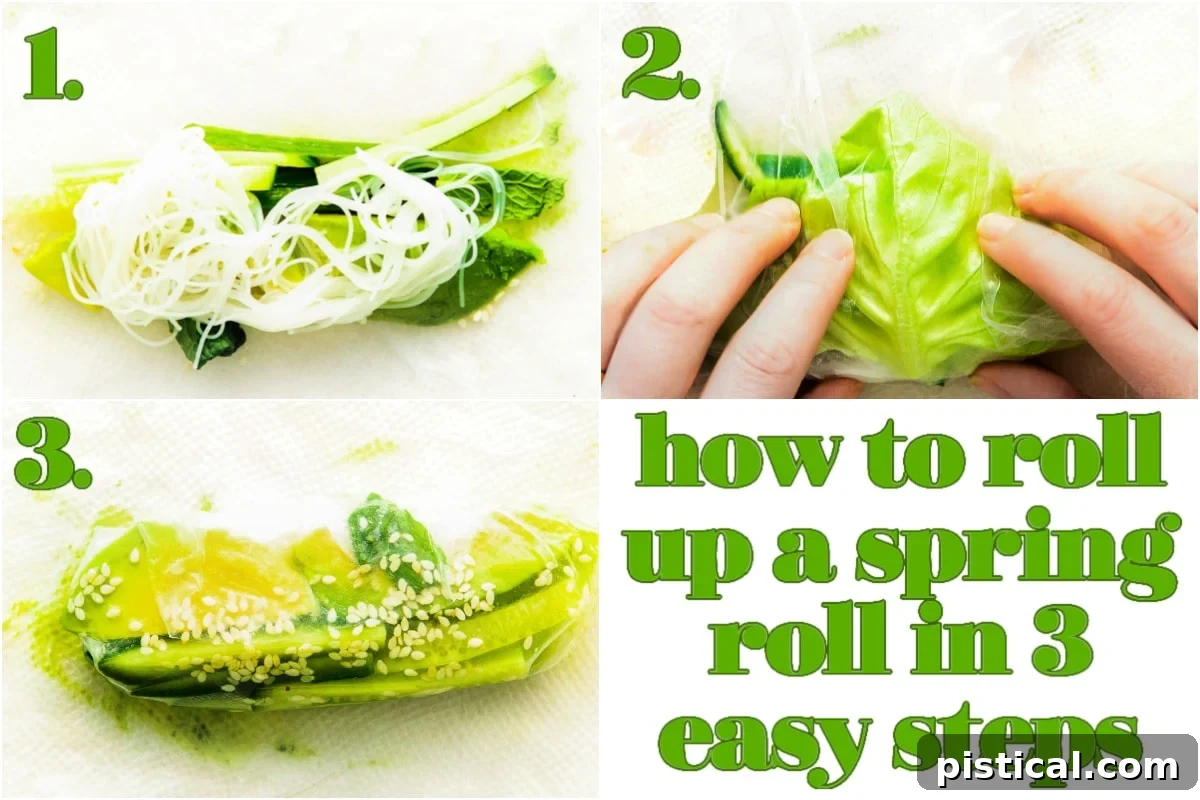
Achieving Rolling Perfection: The ultimate goal is to roll each spring roll tightly enough so that all the delicious ingredients remain securely inside, yet not so tight that you risk tearing the delicate rice paper. Don’t be discouraged if your first few attempts aren’t flawless; practice truly makes perfect when it comes to mastering the art of spring roll rolling!
Creating the Signature Creamy Peanut Dipping Sauce: Effortless Flavor
- Combine Ingredients: In a small, clean mixing bowl, meticulously whisk together all the peanut sauce ingredients: creamy peanut butter, soy sauce, rice vinegar, freshly grated ginger, and finely grated garlic. Whisk vigorously until the mixture is thoroughly combined and achieves a beautifully smooth consistency.
- Adjust Consistency & Flavor: If, after mixing, the sauce appears too thick for easy dipping, gradually add water or a tiny splash of milk, one teaspoon at a time, whisking continuously. Continue until you achieve a smooth, pourable, yet adequately thick consistency that is perfect for coating your spring rolls. Taste the sauce and adjust the sweetness with honey or maple syrup, or enhance the spiciness with chili garlic sauce, according to your personal preference.
- Chill for Optimal Flavor: Once your perfect sauce is ready, transfer it to an airtight container. Cover it tightly and refrigerate until you are ready to serve. This sauce can be effortlessly prepared several days in advance, allowing its flavors to meld and deepen beautifully.
Frequently Asked Questions About Fresh Spring Rolls
How long do fresh spring rolls stay fresh in the refrigerator?
Fresh spring rolls are undeniably at their absolute best in terms of flavor and texture on the very day they are prepared. However, if you happen to have delicious leftovers, they can be safely stored in the refrigerator for approximately 2 to 3 days. To meticulously prevent them from sticking together and to maintain their delicate moisture, it is highly recommended to wrap each individual roll tightly in plastic wrap before placing them in an airtight container. As for the star peanut dipping sauce, it is remarkably robust and will stay fresh and flavorful in the refrigerator for up to a full week! While the temptation might be strong, try to resist eating it straight from the container (though, we certainly wouldn’t judge you!).
Are these spring rolls gluten-free?
Absolutely! The fresh spring rolls themselves, crafted with naturally gluten-free rice paper wrappers and an array of wholesome vegetables and rice noodles, are inherently gluten-free. To ensure that the entire dish, including the essential dipping sauce, adheres to a gluten-free diet, simply make a crucial substitution: switch out regular soy sauce in the peanut dipping sauce with a certified gluten-free tamari or a specifically labeled gluten-free soy sauce. It is always wise to double-check the labels of all your ingredients for any potential hidden gluten.
Endless Variations to Personalize Your Summer Rolls
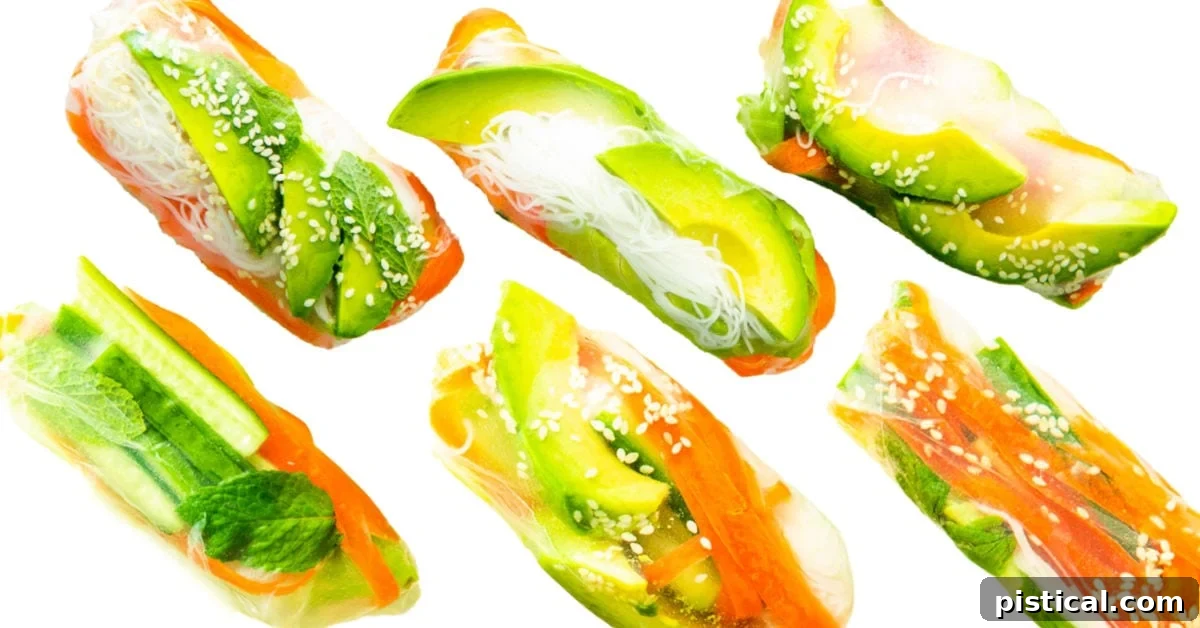
The inherent beauty of summer rolls lies in their incredible adaptability and versatility. You are truly empowered to make them entirely your own by experimenting with a vast array of fillings. This allows you to create unique flavor combinations, cater to diverse tastes, or even prepare several different versions for a beautifully diverse and colorful platter. The culinary possibilities are virtually endless, limited only by your imagination and what’s fresh in your kitchen!
Consider incorporating ingredients such as thinly sliced radish for a crisp, peppery bite, vibrant bell peppers (red, yellow, or orange) for added sweetness and crunch, fresh sprigs of mint or cilantro for invigorating herbal notes, or finely chopped green onions for a mild oniony zest. For those who appreciate a touch of heat, a few slivers of fresh jalapeno can introduce a welcome, fiery kick. Adding sweet, ripe mango provides a delightful tropical sweetness that pairs wonderfully with savory elements, creating an exciting flavor contrast.
Elevate with Protein: While undeniably delicious as a vegetarian option, fresh spring rolls are also fantastic and more filling with the strategic addition of protein. Marinated and pan-fried or baked tofu offers a superb plant-based protein boost and a pleasing textural contrast. Perfectly cooked and chilled shrimp brings a classic, delicate seafood flavor that is traditional and popular. Alternatively, shredded chicken (from leftover rotisserie chicken or freshly cooked breast) provides a lean, hearty, and satisfying option. Don’t hesitate to experiment with grilling or lightly sautéing your chosen protein beforehand for maximum flavor and aroma before adding it to your rolls.
Delightful Appetizer Pairings to Complement Your Meal
Looking for other equally delicious and impressive appetizers to serve alongside your fresh spring rolls, or perhaps to complete a multi-course meal spread? Here are some fantastic recipes that are sure to impress your guests and enhance any gathering:
- Creamy Homemade Coleslaw
- Best Ever Charcuterie Board
- Fresh Pico de Gallo
- Savory Turkey Cranberry Pinwheels
- Slow Cooker Cocktail Meatballs
- Creative Watermelon Pizza
- Hummus Stuffed Veggie Tray
Fresh Spring Rolls Recipe Card
Spring Rolls with Creamy Peanut Dipping Sauce
These vibrant Fresh Spring Rolls are a refreshing appetizer packed with crisp vegetables and served with an incredibly flavorful peanut dipping sauce. Light, healthy, and easy to customize, they are perfect for any summer gathering!
Prep Time: 10 minutes
Cook Time: 0 minutes
Servings: 8 rolls
Cuisine: Asian, Thai
Course: Appetizer
Keywords: spring roll recipe, spring rolls, summer rolls, healthy appetizer, peanut sauce, fresh spring rolls
Ingredients
For the Fresh Spring Rolls:
- 8 rice paper sheets (find them here)
- 2 ounces rice noodles, cooked according to package directions
- 1 cup butter lettuce, ribs removed, leaves separated
- 1 large avocado, thinly sliced
- 1 cup shredded purple cabbage
- 1 medium cucumber, cut into thin matchsticks
- 1 medium carrot, thinly shaved or cut into matchsticks
- ½ cup fresh Thai basil leaves (optional, but highly recommended for authentic flavor)
- 1 tablespoon sesame seeds (for sprinkling inside the rolls)
For the Creamy Peanut Dipping Sauce:
- ¼ cup creamy peanut butter
- 2 tablespoons soy sauce (use Tamari for gluten-free option)
- 1 to 2 tablespoons rice vinegar (start with 1, add more to taste)
- ½ teaspoon grated fresh ginger
- ½ teaspoon grated fresh garlic
Optional Peanut Sauce Enhancements:
- Chili garlic sauce or chili paste (add sparingly for heat, to taste)
- ½ teaspoon toasted sesame oil (adds a rich, nutty depth)
- 1-2 teaspoons honey or maple syrup (for added sweetness)
- Water or milk (to thin sauce, if needed)
Instructions
Preparing the Spring Rolls:
- Soften Rice Paper: Fill a large, shallow dish or bowl with warm water. Dip one rice paper sheet into the water for 5-10 seconds, or until it becomes soft and flexible. Do not over-soak.
- Arrange Fillings: Carefully transfer the softened rice paper to a clean, flat surface (like a cutting board). Place a small amount of butter lettuce near the edge closest to you, followed by a small portion of cooked rice noodles. Then, add a selection of sliced avocado, shredded cabbage, cucumber matchsticks, carrot matchsticks, and a few Thai basil leaves. Remember not to overfill.
- Fold and Roll: Fold the left and right sides of the rice paper inwards over the filling. Then, lift the edge closest to you up and over the ingredients, pulling it gently but firmly towards the opposite side. Continue to roll tightly until you reach the far edge, creating a neat, compact roll.
- Store: Place completed spring rolls on a plate, ensuring they do not touch to prevent sticking. For longer storage, wrap each roll individually in plastic wrap. Refrigerate until ready to serve.
Making the Peanut Dipping Sauce:
- Whisk Ingredients: In a small bowl, whisk together the creamy peanut butter, soy sauce, rice vinegar, grated ginger, and grated garlic until smooth.
- Adjust Consistency & Flavor: If the sauce is too thick, add water or milk one teaspoon at a time, whisking until you achieve a smooth, pourable, yet thick consistency suitable for dipping. Taste and adjust sweetness with honey/maple syrup or spiciness with chili garlic sauce as desired.
- Chill: Cover and refrigerate the peanut sauce until ready to serve. It can be prepared several days in advance.
Nutrition Information (per serving, approximate)
Calories: 189 kcal | Carbohydrates: 23g | Protein: 6g | Fat: 9g | Saturated Fat: 2g | Polyunsaturated Fat: 2g | Monounsaturated Fat: 5g | Cholesterol: 2mg | Sodium: 421mg | Potassium: 309mg | Fiber: 3g | Sugar: 2g | Vitamin A: 1464IU | Vitamin C: 11mg | Calcium: 40mg | Iron: 1mg