
Source: Environmental Working Group (EWG)
Navigating Organic Choices: The Essential Guide to the Dirty Dozen and Clean Fifteen
As parents and health-conscious individuals, we all strive to provide the best for our families. For many, this aspiration extends to the food we eat, particularly fresh produce. The desire to choose organic fruits and vegetables often stems from a commitment to reduce exposure to harmful pesticides, support sustainable farming, and enjoy foods grown with integrity. However, the reality of a household grocery budget can make buying everything organic an unrealistic goal for most families.
This common dilemma leads to a crucial question: how do we prioritize our organic purchases to maximize health benefits without breaking the bank? Fortunately, the Environmental Working Group (EWG), a non-profit organization dedicated to protecting human health and the environment, offers an invaluable resource to help consumers make informed decisions. Each year, the EWG publishes its highly anticipated Shopper’s Guide to Pesticides in Produce. This comprehensive guide meticulously identifies the 12 produce items most contaminated with pesticides (dubbed the Dirty Dozen) and, conversely, the 15 produce items with the lowest pesticide residues (known as the Clean Fifteen).
Understanding and utilizing these lists is a game-changer for anyone navigating the organic aisle on a budget. By knowing which foods are critical to buy organic and which are generally safe to purchase conventionally, you can strategically allocate your “organic shopping dollars” for maximum impact on your family’s health. It empowers you to make smarter, healthier choices without compromising your financial well-being.
Understanding the EWG’s Methodology: How the Lists Are Created
The EWG’s Shopper’s Guide isn’t based on guesswork; it’s the result of rigorous analysis. The organization analyzes data from more than 40,000 samples of fruits and vegetables tested by the U.S. Department of Agriculture (USDA) and the Food and Drug Administration (FDA). These samples are prepared as consumers typically would, meaning they are washed and, where applicable, peeled, before being tested for pesticide residues. This real-world approach provides a practical perspective on the actual pesticide exposure consumers might face.
The rankings are determined by six factors: the percentage of samples with detectable pesticides, the percentage of samples with two or more pesticides, the average number of pesticides on a single sample, the average quantity of total pesticides, the maximum number of pesticides found on a single sample, and the total number of pesticides found on all samples for each item. This thorough methodology ensures the lists are as accurate and helpful as possible, reflecting the levels of pesticides present on produce items commonly found in grocery stores.
Source: Environmental Working Group (EWG)
The Dynamic Nature of the Lists: What’s New This Year?
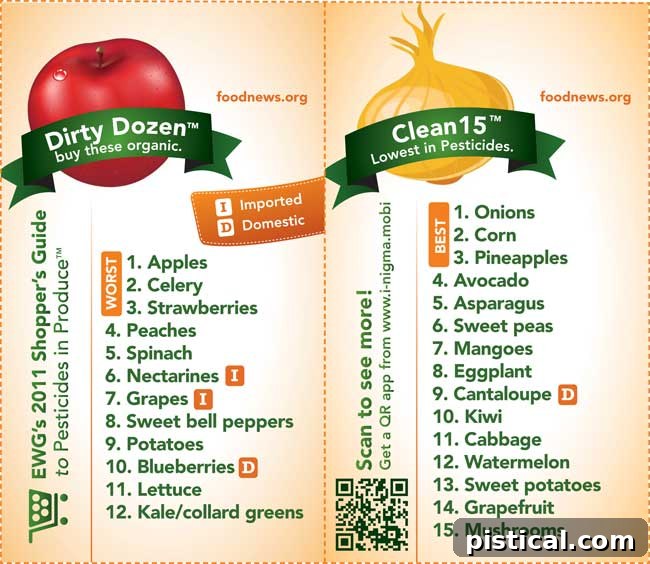
It’s important to note that the EWG’s lists are not static; they are updated annually to reflect changes in agricultural practices, pesticide use, and testing results. For instance, comparing the most recent guide to previous years’ lists often reveals shifts in rankings. Apples, for example, have consistently topped the Dirty Dozen for many years, indicating persistent challenges with pesticide residues on this popular fruit. However, other items frequently change positions, highlighting the importance of consulting the most current guide.
The EWG makes their full guide easily accessible. You can download the complete Shopper’s Guide as a PDF here, making it convenient to print and take to the store. Furthermore, for modern shoppers, the guide is readily available as an app in the Android Market, Apple App Store, and Windows Marketplace, putting crucial information at your fingertips while you shop.
The Dirty Dozen Plus: Your Priority Organic Shopping List
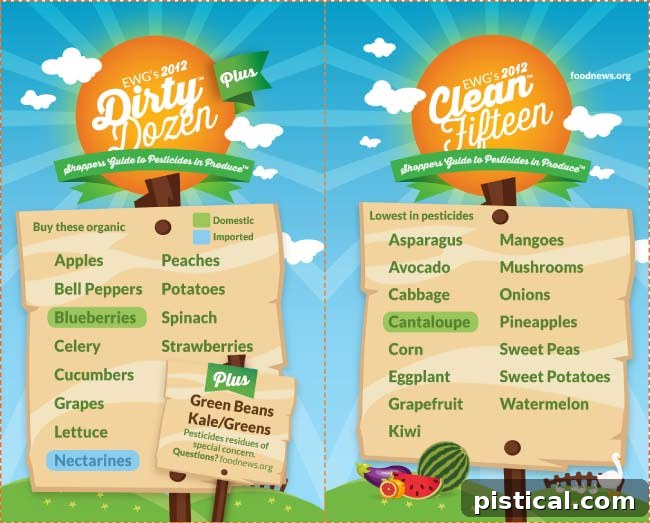
When budget limitations mean you can’t buy every fruit and vegetable organically, the Dirty Dozen list becomes your essential guide. These are the produce items that the EWG recommends buying organic whenever possible due to their high pesticide load. These items typically have thin skins, are more susceptible to pest infestations, or are grown using methods that involve significant pesticide application. By prioritizing organic versions of these foods, you can significantly reduce your family’s exposure to a wide range of agricultural chemicals.
Dirty Dozen Plus (Current Year’s List)
- Apples
- Celery
- Sweet Bell Peppers
- Peaches
- Strawberries
- Nectarines – Imported
- Grapes
- Spinach
- Lettuce
- Cucumbers
- Blueberries – Domestic
- Potatoes
Plus:
+Green Beans
+Kale/Greens
Note: These “Plus” items may contain pesticide residues of special concern, often due to high toxicity or prevalence, warranting additional caution.
The “Dirty Dozen Plus” designation for items like green beans and kale/greens indicates that while they might not always make the core 12 list, they frequently carry pesticide residues of particular concern, either in terms of their quantity or toxicity. This added category serves as an extra layer of caution for consumers.
The Clean Fifteen: Smart Conventional Choices for Your Plate
Conversely, the Clean Fifteen list offers a sigh of relief for budget-conscious shoppers. These produce items are found to have the lowest levels of pesticide residues, making them generally safe to buy conventionally. Many of these items have thick, protective outer layers that are removed before eating, or they naturally resist pests, requiring fewer chemical interventions during growth. Knowing these options allows you to save money while still enjoying a diverse range of healthy fruits and vegetables.
Clean Fifteen (Current Year’s List)
- Onions
- Sweet Corn
- Pineapples
- Avocado
- Cabbage
- Sweet Peas
- Asparagus
- Mangoes
- Eggplant
- Kiwi
- Cantaloupe (Domestic)
- Sweet Potatoes
- Grapefruit
- Watermelon
- Mushrooms
You can see the full list of 45 fruits and vegetables and their detailed rankings on the EWG website here. Did any produce item surprise you by being on either the “Dirty” or “Clean” list? For instance, many are pleasantly surprised to see asparagus on the “clean” list, given its popularity and health benefits. Such insights can genuinely reshape our shopping strategies.
Beyond the Lists: Practical Tips for Healthier Eating on a Budget
While the Dirty Dozen and Clean Fifteen are powerful tools, they are just one piece of a larger strategy for healthy eating. Here are additional tips to ensure your family enjoys nutritious produce while sticking to a budget:
- Wash All Produce Thoroughly: Regardless of whether it’s organic or conventional, always wash your fruits and vegetables under running water. This can help remove surface dirt, bacteria, and some pesticide residues.
- Prioritize Seasonal and Local: Buying produce that’s in season and sourced locally can often reduce costs and ensure freshness. Local farmers’ markets are excellent places to find fresh produce, and sometimes, even locally grown conventional produce might have fewer transit-related pesticide applications.
- Grow Your Own: For those with a green thumb and some space, growing your own herbs, leafy greens, or even tomatoes can be a rewarding and cost-effective way to get truly organic produce.
- Don’t Let Perfect Be the Enemy of Good: The EWG itself emphasizes a critical point: The benefits of consuming fruits and vegetables outweigh the risks of pesticide exposure. If buying organic is consistently out of reach for a particular item, it’s still far better to eat conventional fruits and vegetables than to skip them altogether. The nutritional value they provide is immense and essential for health.
- Understand Labels: Familiarize yourself with labels like “USDA Organic” to ensure you’re getting genuinely organic products.
Making Informed Choices for a Healthier Future
Empowering yourself with information like the EWG’s Shopper’s Guide allows you to make conscious, budget-friendly decisions about the food you bring into your home. It’s about being an informed consumer, understanding the nuances of food production, and ultimately, fostering a healthier environment for your family.
Will these lists make you think differently about how you purchase produce, or will you continue with your current shopping habits? Share your thoughts and strategies!

Connect with me and share your thoughts on healthy eating!
Linking up here, Home Stories A2Z, Savvy Southern Style, and My Repurposed Life.